
Key takeaways
- Fluke's CAT III 1000V / CAT IV 600V ratings make it the standard for live electrical work in switchboards, motor control centres, and field environments.
- Yokogawa's TY720 series offers basic DC voltage accuracy of ±0.025% (significantly tighter than Fluke's 87V at ±0.05%), making it the choice where measurement uncertainty matters.
- Both brands require periodic calibration; as a Fluke-authorised distributor, Unitest calibrates Fluke instruments against NMC-traceable references and issues SAC-SINGLAS accredited certificates.
- Yokogawa instruments are widely used in Japan and process industries across Asia. Their calibration ecosystem is mature in the region, but factory-calibration support in Singapore is less accessible than Fluke's.
- For most Singapore SME and manufacturing applications (HVAC, building services, general electrical maintenance), the Fluke 87V remains the benchmark choice; the price premium over generic brands is justified by safety, accuracy, and calibration support.
Why the brand comparison matters, and the honest answer upfront
Fluke and Yokogawa are both premium, calibrated, technically sound instruments. This comparison is not about which brand is "better" in the abstract. It is about which instrument is better matched to your specific application, your environment, and the compliance evidence you need to produce. Understanding where each brand excels will save you from either overspending on laboratory precision you do not need in the field, or under-specifying an instrument for work that demands tighter measurement uncertainty.
Fluke's dominance in industrial site use is not accidental. The brand has spent decades building instruments around the reality of field work: electricians and maintenance engineers working in control rooms and switchgear rooms, dealing with non-linear loads, variable-speed drives, and distorted waveforms, in environments where the instrument will be dropped, exposed to moisture, and pressed into service daily. Fluke instruments are designed to survive that environment and to give reliable readings in it.
Yokogawa comes from a different heritage. The company's core business is process control instrumentation. The sensors, transmitters, controllers, and analysers that run refineries, chemical plants, and semiconductor fabs across Japan and Asia-Pacific. Their multimeters reflect that heritage: precision, stability, low measurement uncertainty, and performance in controlled environments where the measurement is being used to verify process parameters rather than diagnose a fault in the field.
Both brands produce instruments that are made to be calibrated. Neither brand guarantees permanent accuracy. Every multimeter drifts over time, and the drift rate is affected by usage, environment, and handling. A calibration certificate from an accredited laboratory is what gives you documented confidence that the instrument's readings are within its stated specifications at the time of use. For any work that feeds into compliance records (ISO 9001, QESH audits, insurance inspections, or regulatory submissions), that certificate is the evidence, regardless of which brand it covers.
A brief note on cheap alternatives. Generic and unbranded multimeters are available at a fraction of the price of either Fluke or Yokogawa. For any application where the measurement will be used to make a compliance decision, a safety judgement, or a maintenance record that anyone will rely on, generic instruments are a false economy. Their safety ratings are often unverified or falsified, their accuracy specifications are aspirational rather than tested, and their calibration history is typically non-existent. The risk-adjusted cost of a measurement error (a missed fault, a failed audit, an instrument failure on live equipment), vastly exceeds the price difference.
Fluke's case for field electrical measurement
The Fluke 87V Industrial Multimeter is the instrument most Singapore electrical engineers and M&E contractors reach for. Its reputation is built on a specific set of design choices that matter in industrial field environments, and it is worth understanding what those choices are and why they matter.
CAT ratings and why they exist
The CAT III 1000V / CAT IV 600V ratings on the Fluke 87V are not marketing figures. They are defined by IEC 61010 and represent the instrument's ability to survive transient overvoltages in high-energy electrical environments. CAT III covers distribution-level circuits: the busbars, feeders, panel boards, and motor control centres that an industrial electrician works on daily. CAT IV covers the origin of the installation. Incoming utility supply, outdoor conductors, service entrance equipment. The 1000V working voltage covers medium-voltage distribution circuits where the sustained voltage can reach 690V in Singapore's three-phase industrial supply. An instrument rated below these levels used in a high-energy environment creates a genuine arc-flash and instrument-failure risk.
TrueRMS and distorted waveforms
Singapore's industrial power environment is not a clean sine wave. Variable-speed drives, LED lighting installations, welding equipment, and UPS systems all introduce harmonic distortion into the supply. A multimeter that measures only the average voltage, scaled to the RMS value of a perfect sine wave, will read incorrectly on a distorted waveform, and the error can be substantial. Fluke's TrueRMS measurement calculates the true root-mean-square value regardless of waveform shape, using a 20kHz bandwidth that captures most harmonic content relevant to industrial applications. This is essential for accurate measurements on VSD-fed motor circuits and non-linear loads.
Built-in thermocouple input
The Fluke 87V includes a K-type thermocouple input that allows simultaneous temperature measurement alongside electrical parameters. This is more useful in practice than it first appears: when troubleshooting a motor or transformer, measuring both the voltage/current and the surface temperature in a single instrument pass (without switching tools or carrying a separate thermometer), saves time and gives a more complete picture of the equipment's condition. Motor overheating combined with voltage imbalance tells a different story than voltage imbalance alone.
The Fluke 289 for data-intensive applications
Where the 87V is the standard field diagnostic instrument, the Fluke 289 steps up for applications requiring data capture over time. The 289 adds a larger display, enhanced logging capability, a TrendCapture function that records min/max/average values over defined periods, and PC connectivity for downloading measurement records. For maintenance programs that require documented measurement histories (energy audits, predictive maintenance on critical equipment, commissioning records), the 289 provides the logging capability without leaving the Fluke ecosystem. The 87V and 289 are both calibrated under the same instrument family specifications and carry the same CAT ratings.
The wider Fluke range
Fluke's 170 series (the 175, 177, and 179), provides a lighter, lower-cost option for general electrical maintenance that does not demand the 87V's full capability. These instruments share the Fluke safety ratings and TrueRMS measurement engine but omit some of the 87V's specialised features. For building services technicians, HVAC engineers, and general maintenance staff who need a reliable, safe, everyday instrument without the premium price of the 87V, the 170 series is the appropriate choice in the Fluke range.
Yokogawa's case for precision measurement
Yokogawa Electric Corporation is one of Japan's leading precision instrument and process control manufacturers. Founded in 1915, the company's instrumentation heritage runs through the power meters, recorders, and process analysers used in Japan's postwar industrial expansion and through the digital instrumentation that runs modern petrochemical plants, power generation facilities, and semiconductor fabs across Asia. Their multimeters are designed by engineers who work in that tradition.
The TY720 and display resolution
Yokogawa's TY720 series offers 60,000-count display resolution. Ten times the 6,000-count resolution of the Fluke 87V. In practical terms, 60,000 counts means the instrument can display a 600V measurement to the nearest 0.01V, versus the Fluke 87V's nearest 0.1V. This is not meaningful for most industrial diagnostics where the question is "is this motor supply within ±5% of nominal", but it matters significantly in calibration work, process verification, and any application where you are measuring small deviations from a set point and need to resolve them clearly.
Basic accuracy specifications
The TY720's DC voltage accuracy of ±0.025% is the headline figure that distinguishes it from the Fluke 87V's ±0.05%. This is a genuine difference that becomes important when the measurement is being used in an uncertainty budget, for example, when you are using the multimeter to verify the output of a precision voltage source or to check a reference standard against a nominal value. In a calibration laboratory context, the measurement uncertainty of the instrument under test feeds directly into the measurement uncertainty of the calibration result, and tighter instrument accuracy produces tighter calibration uncertainty.
The TY720's AC voltage accuracy advantage is more pronounced: ±0.1% at 45–500Hz versus the Fluke 87V's ±0.7%. This matters in power quality measurement and harmonic analysis where you need accurate amplitude readings across the frequency range, not just at the fundamental. For most industrial diagnostics (checking that a motor supply is within tolerance), the Fluke's 0.7% AC accuracy is more than adequate.
Process industry heritage in Asia-Pacific
Across Japan and the broader Asia-Pacific process industries (oil and gas, chemicals, power generation, semiconductor manufacturing), Yokogawa instrumentation is the standard. Engineers trained in those environments are accustomed to Yokogawa instruments, and the TY720 fits naturally into a toolkit that may include Yokogawa power analysers, data recorders, and process calibrators. For companies with Yokogawa process instrumentation throughout their facility, standardising on Yokogawa multimeters has logistical and training advantages.
Where Yokogawa falls short
The TY720's CAT III 600V rating is a genuine limitation for high-voltage distribution work. It excludes the instrument from use at distribution boards, switchgear, and motor control centres operating above 600V. A common situation in Singapore's industrial supply, which runs at up to 690V three-phase. In those applications, the Fluke 87V's CAT III 1000V rating is not optional. The TY720 is the right instrument in a laboratory or controlled process environment; it is not the right instrument for a maintenance electrician working on live switchgear.
The local calibration and support ecosystem for Yokogawa multimeters in Singapore is also less developed than Fluke's. Fluke maintains an authorised distributor network that includes calibration support, spare parts, and instrument repair. Yokogawa's multimeter calibration in Singapore is primarily handled by independent accredited labs, which is perfectly adequate technically, but means there is no Yokogawa-direct calibration service in the market.
Full specification comparison
The table below compares the Fluke 87V and Yokogawa TY720 directly across the parameters that matter for an industrial purchasing decision. Both instruments represent the premium tier of their respective brands' handheld multimeter ranges.
| Feature | Fluke 87V | Yokogawa TY720 |
|---|---|---|
| DC Voltage accuracy | ±0.05% + 1 count | ±0.025% + 3 counts |
| AC Voltage accuracy | ±0.7% (50–500 Hz) | ±0.1% (45–500 Hz) |
| DC Current accuracy | ±0.2% + 1 count | ±0.07% + 5 counts |
| Resistance accuracy | ±0.2% + 1 count | ±0.05% + 3 counts |
| CAT safety rating | CAT III 1000V / CAT IV 600V | CAT III 600V |
| Input impedance | 10 MΩ | 10 MΩ |
| Display resolution | 6,000 counts | 60,000 counts |
| Frequency response | True RMS, 20 kHz | True RMS, 100 kHz |
| Datalogging | Min/Max/Avg | Min/Max/Avg |
| Temperature measurement | Yes (K-type thermocouple) | Yes (K-type probe) |
| Battery life | 400 hours | 450 hours |
| Dimensions (mm) | 191 × 91 × 55 | 196 × 92 × 54 |
| Typical price (SG$) | S$420–480 | S$650–800 |
| Calibration interval | 12 months (recommended) | 12 months (recommended) |
Several rows deserve additional commentary beyond the numbers.
Display resolution: 60,000 vs 6,000 counts. A count is the smallest increment the display can show. With 6,000 counts on a 600V range, the smallest display increment is 0.1V. With 60,000 counts, it is 0.01V. For a technician checking that a motor supply is within 5% of 415V, the difference is invisible. Both instruments will clearly show whether the reading is 394V or 436V. For a calibration engineer verifying that a precision voltage source outputs exactly 10.0000V, the 60,000-count resolution is essential. Understand your use case before treating higher counts as inherently better.
CAT safety rating gap. This is not a tie or a minor difference. CAT III 1000V versus CAT III 600V means the Fluke 87V can be used on circuits operating up to 1000V at distribution level (including Singapore's standard 690V three-phase industrial supply), while the TY720 is limited to 600V at the same category. For any work involving Singapore's industrial supply system, the Fluke's higher CAT rating is functionally required. The relevant Singapore standard is SS CP 5 (Code of Practice for Electrical Installations), and compliance with IEC 61010 measurement category ratings is part of safe working practice for electrical work.
AC voltage accuracy at extended frequency. The TY720's ±0.1% AC accuracy extends to a frequency measurement bandwidth of 100kHz, versus the Fluke's 20kHz. For power quality analysis involving high-order harmonics (where harmonic content beyond the 33rd harmonic at 50Hz exceeds 1.65kHz), the TY720's wider bandwidth provides more accurate amplitude readings. For standard industrial power quality work at the 3rd, 5th, and 7th harmonics (150Hz, 250Hz, 350Hz), both instruments perform adequately.
Calibration requirements: both brands need it, and intervals matter
Every multimeter drifts. The components that determine measurement accuracy (resistor networks, voltage references, ADC circuits), change their characteristics over time due to temperature cycling, component ageing, mechanical stress, and chemical effects. Fluke and Yokogawa both publish drift specifications that define how much their instruments are expected to drift over a 12-month interval under specified storage and use conditions. Those specifications assume the instrument starts the interval in calibration. If it was already out of spec, the drift budget is not the relevant concern.
What happens when a multimeter drifts out of specification is straightforward: it gives wrong readings. A voltage measurement that reads 410V when the actual value is 427V is not just technically incorrect. It can lead to a maintenance decision (the supply is within tolerance) that conceals an actual problem (the supply is 3% high). In industrial environments where decisions about equipment condition, protective relay settings, and supply quality are made on the basis of multimeter readings, an out-of-calibration instrument is a direct source of risk.
A proper calibration certificate should contain: the date of calibration, the identification of the instrument (model, serial number), the measured values at each calibration point, the reference standard used and its own calibration traceability, the measurement uncertainty for each result, and a clear indication of whether the instrument passed or was adjusted. A sticker on the instrument with a date and a lab name is not a calibration certificate, it is a sticker. For any work that requires calibration evidence under ISO 9001, QESH, or a customer quality requirement, the certificate with measurement uncertainty and traceability is what auditors require.
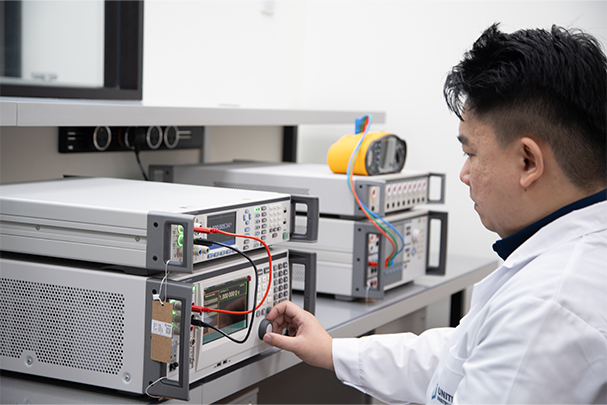
Unitest holds SAC-SINGLAS accreditation (no. LA-2023-0845-C) for the electrical parameters covered by both Fluke and Yokogawa multimeter calibration. As an authorised Fluke distributor, we calibrate Fluke instruments directly within Fluke's recommended specification. Yokogawa instruments are calibrated using comparison methods against the same NMC-traceable reference standards. The calibration process is technically equivalent, and the resulting certificates carry the same accreditation authority.
Calibrate your Fluke or Yokogawa multimeter with a traceable SAC-SINGLAS certificate
Unitest calibrates Fluke and Yokogawa multimeters against NMC-traceable references. Accredited certificates ready for ISO 9001, QESH, and procurement audits. Typical turnaround 3–5 working days.
Fluke vs Yokogawa for specific Singapore applications
Rather than a generic recommendation, it is more useful to map the instrument choice to the actual work being done. Four application areas cover most of Singapore's industrial and commercial electrical sector.
Building services and M&E contractors
For building services engineers and M&E contractors working on Singapore's commercial and industrial buildings. HVAC installations, LV distribution, lighting systems, building management systems, lift and escalator electrical maintenance. The Fluke 87V is the correct instrument. The CAT III 1000V rating covers the full range of distribution-level work. The TrueRMS measurement handles the harmonic-rich loads common in modern buildings. The thermocouple input allows temperature measurements during commissioning and fault-finding without a second instrument. The instrument is familiar, widely understood, and supported by a calibration ecosystem that covers the whole country. There is no practical reason to choose Yokogawa for this application.
Semiconductor and electronics manufacturing
Semiconductor and electronics manufacturing facilities in Singapore (concentrated in the Woodlands and Tuas industrial zones), operate both precision process instrumentation and standard electrical maintenance. For process-level electrical measurements where tolerances are tight and the reading feeds into a process control decision, the Yokogawa TY720's resolution and accuracy advantage is meaningful. For general electrical maintenance on the facility's LV distribution (the same motor control centres, panel boards, and distribution boards found in any industrial facility), the Fluke 87V's CAT rating and ruggedness apply. Many facilities in this sector maintain both instruments for their respective roles.
Calibration labs and metrology
For a calibration laboratory using a multimeter as a reference instrument. To check a voltage source's output, to verify a reference standard's value, or to make precision measurements that feed into a calibration certificate. The Yokogawa TY720's accuracy specification is genuinely better. However, both instruments should be calibrated before use as a reference in any calibration work. The instrument's specification at purchase is not the same as its current specification after use. A Yokogawa TY720 that has not been calibrated for 18 months may be less accurate than a Fluke 87V that was calibrated last month. The calibration certificate, not the manufacturer's specification, is the evidence of current performance.
ISO 9001 and inspection and measurement
For a manufacturing or service company maintaining a measurement and monitoring equipment register under ISO 9001:2015 clause 7.1.5, the choice between Fluke and Yokogawa is secondary to the calibration certificate. What the standard requires (and what an auditor will check), is that the instrument is calibrated against standards traceable to national measurement standards, that the calibration results are recorded with measurement uncertainty, and that the instrument is re-calibrated at defined intervals. A Fluke 87V with a current SAC-SINGLAS accredited calibration certificate fully satisfies clause 7.1.5. So does a Yokogawa TY720 with the same. The brand does not determine compliance, the certificate does.
The practical implication for MSA (Measurement System Analysis) work under ISO 9001 or IATF 16949 is that the calibration certificate is the input to the gauge R&R study or measurement uncertainty analysis, and the numbers on that certificate (the measured errors and the stated uncertainty), are what matter. Both instruments, properly calibrated, provide those numbers.
Price, availability, and after-sales in Singapore
The price gap between Fluke 87V (S$420–480) and Yokogawa TY720 (S$650–800) is real and significant for budget-constrained purchasing decisions. However, price at point of purchase is only one component of the total cost of ownership for a calibrated instrument.
Fluke instruments are available through Unitest and other authorised Fluke distributors in Singapore. Authorised distributors carry genuine instruments (important given the counterfeit problem discussed below), can provide instrument registration, and are part of Fluke's warranty and repair network. Calibration is available locally with SAC-SINGLAS accreditation and typical turnaround times of 3–5 working days. Replacement accessories (probes, test leads, K-type thermocouples, carrying cases), are stocked locally.
Yokogawa multimeters are available in Singapore through general instrument distributors and some specialist electrical equipment suppliers. The local calibration ecosystem for Yokogawa handheld multimeters is primarily independent accredited labs rather than an authorised Yokogawa network, which is adequate technically, but means there is no Yokogawa-direct calibration or repair path in Singapore. If the instrument requires repair under warranty, the process is less streamlined than for Fluke. For a company that values local, responsive after-sales support as well as the instrument itself, this difference is worth factoring into the purchasing decision.
Factor in calibration cost over the instrument's useful life. Both instruments should be calibrated every 12 months. Calibration costs for a multimeter at an accredited lab in Singapore typically run S$80–150 per instrument depending on the parameter scope and turnaround time required. Over a five-year ownership period, calibration costs add S$400–750 to the total cost of ownership. A significant fraction of the instrument's purchase price. Buying the lowest-cost instrument and then skipping calibration is not a cost-saving strategy; it is a liability-creation strategy.
The instruments we have not mentioned: the wider multimeter landscape
Fluke and Yokogawa are not the only premium multimeter brands available in Singapore, and a purchasing decision that ignores the broader market may miss relevant options.
Hioki (covered in our separate Fluke vs Hioki comparison) is a Japanese precision instruments manufacturer with a strong presence in Singapore's electrical and energy measurement market. The Hioki DT4281 and DT4282 are direct competitors to both the Fluke 87V and the Yokogawa TY720, with strong accuracy specifications and a complete calibration ecosystem. For organisations already using Hioki clamp meters or power analysers, standardising on Hioki multimeters may offer logistical advantages.
Keysight Technologies (formerly Agilent, formerly Hewlett-Packard) produces benchtop digital multimeters (the 34461A and 34465A), that are standard reference instruments in electronics laboratories and calibration labs. These are not handheld instruments designed for field use; they belong in a different category. Keysight's handheld range is less prominent in Singapore's industrial market.
APPA Technology (Taiwan) offers a value-tier option for organisations that need a functional, reasonably accurate instrument without the premium pricing of Fluke or Yokogawa. APPA instruments are available with calibration certificates, but their specifications and safety ratings are typically below the premium tier. They are appropriate for non-critical indicating use where the measurement will not feed into a compliance record.
Generic and unbranded instruments (widely available on e-commerce platforms and at general hardware suppliers), are the false economy discussed above. No accredited calibration laboratory can meaningfully calibrate an instrument whose specifications are unknown or falsified, and the safety implications of using an unverified CAT rating on live equipment are serious.
Buying decision framework: how to choose
Five questions will resolve the right choice for most Singapore industrial purchasing decisions.
1. Will you use it for live panel or distribution work? If yes (switchboards, motor control centres, distribution boards, live busbars), the instrument must be rated CAT III 1000V or CAT IV 600V at minimum for Singapore's supply voltages. This requirement immediately points to Fluke. The Yokogawa TY720's CAT III 600V limit is insufficient for this application.
2. Is measurement uncertainty reported on a specification sheet or used in calculations? If the measurement result from the multimeter feeds into a calibration certificate, an MSA study, a power quality report, or any documented uncertainty budget, the Yokogawa TY720's tighter accuracy specification provides a better starting point. If the measurement is a go/no-go check or a diagnostic reading that will not be cited in a formal document, the Fluke's accuracy is adequate.
3. Do you need local calibration support with accredited certificates on a short turnaround? Fluke's authorised distributor network (including Unitest), provides SAC-SINGLAS accredited calibration with typical 3–5 working day turnaround. If your quality management system requires instruments to be returned to service quickly, local Fluke calibration support is an advantage.
4. Is this primarily for laboratory or controlled process verification work? If the environment is controlled, the voltage levels are low, and the emphasis is on accuracy and resolution rather than ruggedness and safety category, the Yokogawa TY720's specification profile is the better match.
5. Is the budget under S$500? At this price point, the Fluke 87V is the standard choice. There is no Yokogawa option in this price range that provides comparable performance to the 87V, and the Fluke 87V at its price point offers an exceptional combination of safety, accuracy, and durability for industrial applications.
A note on counterfeit and grey-market instruments
Counterfeit Fluke instruments are a documented problem in Asia, including in Singapore and neighbouring markets. Counterfeit versions of the Fluke 101, 115, and 117 models (and to a lesser extent the 87V), have been found in the market, replicating the visual appearance of the genuine instrument while using components that do not meet the safety or accuracy specifications the genuine instrument is designed to provide.
The risk is not merely that the accuracy is worse. A counterfeit instrument sold as CAT III 1000V rated may not have been tested or designed to survive the transient overvoltages that specification covers. Using it on live switchgear could result in catastrophic instrument failure, and arc flash injury to the operator. The visual resemblance to a genuine Fluke instrument means the user has no warning that the safety ratings are false.
The practical protection is straightforward: buy from authorised Fluke distributors. Unitest is an authorised Fluke distributor in Singapore. Every Fluke instrument we supply is sourced directly through the authorised distribution chain, comes with manufacturer warranty, and can be registered with Fluke. If you have an instrument whose provenance is uncertain, you can verify the serial number through Fluke's official verification service before placing it in service.
Grey-market imports (genuine Fluke instruments imported outside the authorised distribution channel), present a different but related problem. These instruments may be genuine, but they typically do not carry local warranty support, may have been stored improperly during transit, and have no calibration history from the point of manufacture to the point of purchase. An instrument with an unknown calibration history at purchase has an unknown measurement uncertainty at purchase. For any compliance-critical application, the first step after purchasing any instrument (including from grey-market sources), should be accredited calibration before placing it in service.
Yokogawa multimeters are not as widely counterfeited as Fluke (the brand is less ubiquitous in the consumer channel), but grey-market sourcing applies equally. Whether you purchase Fluke or Yokogawa, buying through a recognised distributor with a documented supply chain is the appropriate practice for instruments that will be used in regulated or safety-critical applications.
Frequently asked questions
In terms of basic DC voltage accuracy, yes, yokogawa's TY720 specifies ±0.025% compared to the Fluke 87V's ±0.05%. For precision laboratory and process verification work where measurement uncertainty matters and feeds into documented calculations, Yokogawa's tighter spec is a genuine advantage. However, for typical field electrical work (troubleshooting circuits, checking motor voltages, measuring supply quality in an MCC), the Fluke 87V's accuracy is more than sufficient. The accuracy gap only becomes practically significant when you are measuring small deviations at high precision, or when the uncertainty budget on a calibration certificate is constrained by the reference instrument's performance.
For live panel work (switchboards, motor control centres, distribution boards), Fluke is the correct choice. The Fluke 87V and similar models carry CAT III 1000V / CAT IV 600V safety ratings, which are appropriate for work at the distribution level and upstream of it. Yokogawa's TY720 is rated CAT III 600V, which excludes it from high-voltage distribution applications and from Singapore's standard 690V three-phase industrial supply. Singapore's electrical safety practices and the requirements of SS CP 5 align with using CAT III/IV rated instruments for live panel work. Do not use a CAT III 600V instrument where CAT III 1000V or CAT IV ratings are required. The safety category exists for a reason.
Fluke's published recommendation for the 87V is a 12-month calibration interval, and this aligns with the interval most ISO 9001 quality management systems apply to critical measuring instruments. If your instrument is used heavily, exposed to extreme temperatures or humidity, or has been dropped or subjected to an electrical overload event, you should arrange calibration immediately regardless of the scheduled interval. Any of these events can cause drift that is not visible on the instrument's face. Unitest can calibrate your Fluke 87V against NMC-traceable references and issue a SAC-SINGLAS accredited certificate with stated measurement uncertainty, typically within 3–5 working days.
Yes. Unitest calibrates Yokogawa multimeters (including the TY720 series), using comparison methods against NMC-traceable reference standards within our SAC-SINGLAS accredited scope. The calibration process follows the same traceability chain as Fluke instruments: we measure the Yokogawa instrument against a reference standard whose calibration is traceable to Singapore's National Metrology Centre. The resulting certificate states measurement uncertainty and is accredited under ISO/IEC 17025, accreditation no. LA-2023-0845-C. Yokogawa does not operate an authorised calibration distributor network in Singapore comparable to Fluke's, so accredited independent labs are the primary route for Yokogawa calibration in the region.
IEC 61010 defines measurement categories (CAT I through CAT IV) based on the energy available in the circuit and the severity of transient overvoltages. CAT III covers distribution-level circuits. Panel boards, bus bars, motor control centres, feeders, and permanently installed loads. CAT IV covers the origin of the installation. Utility connection, incoming supply, and outdoor conductors. The voltage figure (e.g. 1000V) is the maximum working voltage within that category. A CAT III 1000V rating means the instrument is designed to survive the energy-level transients generated at distribution level with working voltages up to 1000V. Using an instrument with a lower CAT rating in a higher-energy environment risks arc flash and instrument failure, with serious injury consequences for the operator.
Yes, a significant one. Any lab can issue a document called a calibration certificate. SAC-SINGLAS accredited calibration means the lab's traceability chain, measurement uncertainty calculations, equipment, and personnel competence have been independently assessed and verified by Singapore's national accreditation body under ISO/IEC 17025. An accredited certificate carries an accreditation number verifiable at sac.gov.sg and must state measurement uncertainty for every accredited result. ISO 9001 auditors, GMP inspectors, and most Singapore regulatory bodies accept it on sight. A non-accredited certificate (even if technically competent), cannot provide the same level of independently verified, publicly confirmable assurance. See our full guide on accredited vs non-accredited calibration.
Yes. Counterfeit Fluke instruments (particularly the 101, 115, and 117 models, and to a lesser extent the 87V), are documented in Asia, including Singapore and neighbouring markets. They replicate the visual appearance of genuine Fluke instruments but do not meet the safety or accuracy specifications the genuine instrument carries. A counterfeit instrument cannot be meaningfully calibrated: the specifications it claims are false. More seriously, its safety ratings may not be backed by any actual testing. An instrument labelled CAT III 1000V that has not been tested to that standard can fail catastrophically on live equipment. Buy only from authorised Fluke distributors and verify serial numbers through Fluke's official channels. If the price is significantly below market rate, treat it as a warning sign.
Unitest Instruments Pte. Ltd. is a SAC-SINGLAS accredited calibration laboratory (ISO/IEC 17025, no. LA-2023-0845-C) and authorised Fluke distributor based in Singapore. We calibrate electrical, temperature, pressure, humidity, and related instruments for manufacturers, service providers, and regulated industries across Singapore and the region.
Get your Fluke or Yokogawa multimeter calibrated. SAC-SINGLAS accredited
As an authorised Fluke distributor, Unitest calibrates electrical instruments against NMC-traceable references. Accredited certificates verifiable at sac.gov.sg.
Verifiable at sac.gov.sg · Acc. No. LA-2023-0845-C · Fluke Authorised Distributor