
Key Takeaways
- Match your meter type to the parameter priority: pH-only, conductivity-only, or multi-parameter (pH + EC + DO + temperature).
- Optical (luminescent) DO sensors are significantly lower maintenance than polarographic membrane sensors and preferred for wastewater and field work.
- IP67 or higher waterproof rating is essential for outdoor Singapore field work in tropical conditions. Heat, humidity, and sudden rain are constant factors.
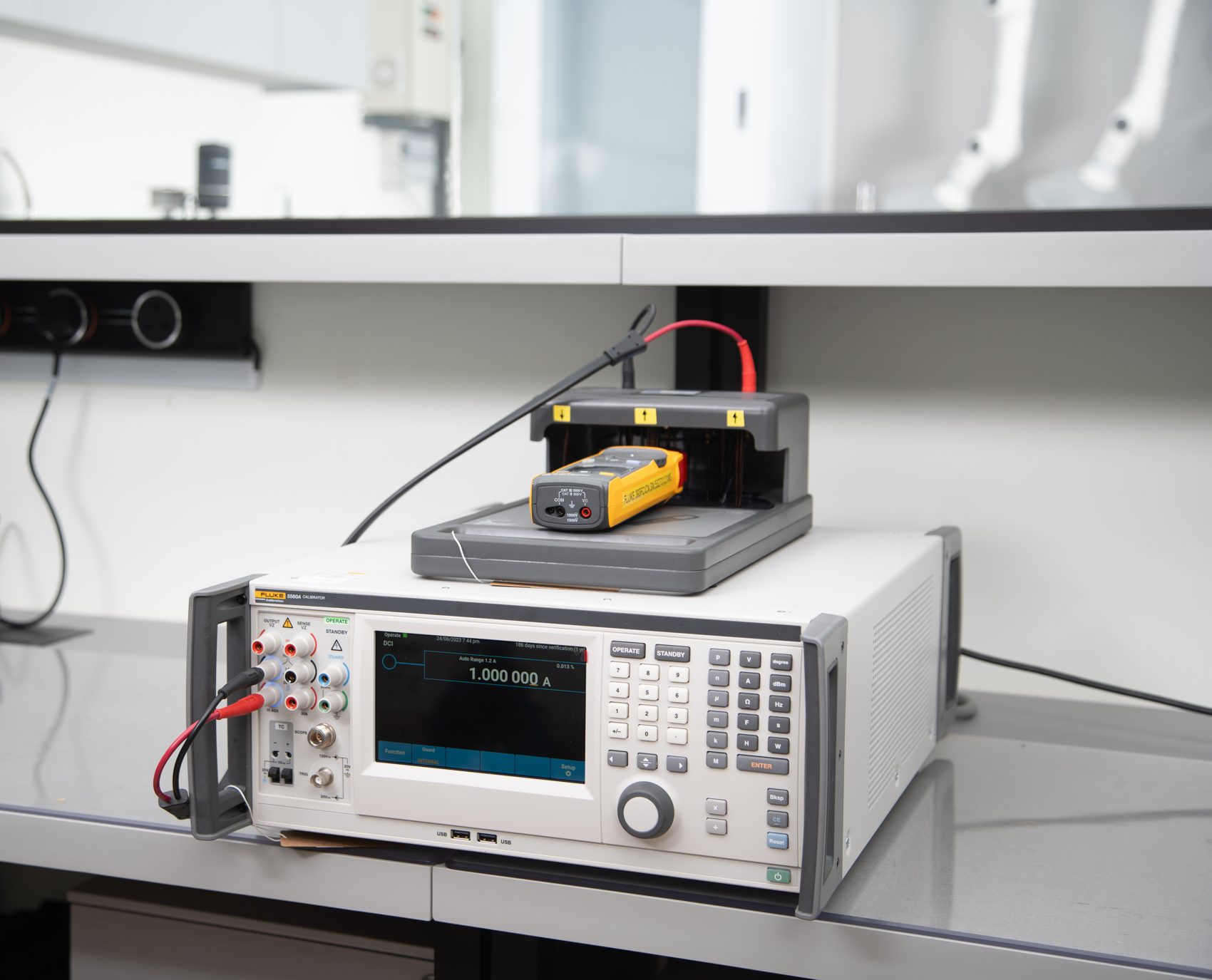
- For NEA effluent reporting, PUB compliance, or ISO 9001/14001 audits, your calibration certificate must come from a SAC-SINGLAS accredited laboratory (ISO/IEC 17025).
- Data logging and PC connectivity (USB or Bluetooth) are increasingly required for GLP/GMP traceability and digital record-keeping in Singapore's regulated industries.
Who Needs a Portable Water Quality Meter?
Portable water quality meters are used across a wide spectrum of industries in Singapore. Environmental consultants conducting quarterly effluent monitoring under the National Environment Agency's (NEA) Trade Effluent Regulations need field-grade instruments that can deliver reliable pH, conductivity, and biochemical oxygen demand (BOD) proxy readings at the point of discharge. PUB's Active, Beautiful, Clean Waters (ABC Waters) programme has further expanded the requirement for on-site water quality assessment at reservoirs, drains, and canals islandwide.
In the pharmaceutical and biomedical sector (one of Singapore's most regulated manufacturing verticals), ultra-pure water systems for injection and clean-in-place processes require continuous and periodic portable verification of conductivity and total dissolved solids (TDS), typically to USP <645> or EP 2.2.38 standards. Meanwhile, food and beverage manufacturers, semiconductor fabs, and aquaculture operators all have distinct but equally exacting requirements.
The common thread: the instrument must be accurate enough to mean something, robust enough to survive the field, and paired with a calibration certificate that regulators and auditors will accept. That last point is non-negotiable in Singapore's compliance-driven environment.
Key Specifications to Evaluate Before You Buy
Buying a portable water quality meter is not simply a matter of choosing the cheapest instrument that covers the right parameters. Several specification dimensions materially affect whether the meter will perform in your specific application.
pH Range and Resolution
Most portable pH meters cover pH 0–14, which is adequate for environmental water work. However, accuracy specifications vary considerably: entry-level instruments may specify ±0.1 pH, while research-grade or compliance meters specify ±0.01 pH or better. For NEA effluent monitoring, ±0.02 pH is the practical minimum. Pay attention to the temperature compensation method. Automatic temperature compensation (ATC) using a built-in temperature sensor is essential in Singapore's ambient temperatures of 27–34°C, where uncorrected pH readings can drift significantly.
Conductivity Range and Cell Constant
Conductivity meters are characterised by their cell constant (K), which determines the optimum measurement range. A K = 1.0 cell covers roughly 1 µS/cm to 2000 µS/cm and suits drinking water and freshwater streams. A K = 10 cell extends to 200 mS/cm and is required for seawater and brine. Auto-ranging instruments with selectable or interchangeable cells offer the most flexibility. For TDS and salinity calculations, confirm the instrument uses the correct conversion factor for your water matrix. The default NaCl-based conversion is not appropriate for all samples.
Dissolved Oxygen: Optical vs. Polarographic
Polarographic (Clark cell) DO sensors are mature, well-understood, and widely available, but require regular membrane and electrolyte replacement, a stabilisation warm-up period, and minimum sample flow to function correctly. Optical (luminescent) sensors (sometimes marketed as "optical DO" or "LDO"), measure quenching of a luminescent dye by oxygen molecules. They require no electrolyte, virtually no warm-up, and are unaffected by flow rate, hydrogen sulphide, or chlorine interferences. For Singapore wastewater and environmental field work, optical sensors represent a clear operational advantage despite a higher upfront cost.
IP Rating and Build Quality
Singapore's tropical climate demands genuine environmental protection. IP67 (dust-tight, immersible to 1 metre for 30 minutes) is the minimum recommended rating for regular outdoor use; IP68 adds continuous submersion protection for boat-based or intertidal monitoring. Rubberised housing, reinforced probe connections, and drop ratings (typically 1–2 metres) are worth specifying for instruments used in the field by multiple operators.
Top Portable Water Quality Meters Available Through Unitest
Unitest Instruments distributes instruments from several leading metrology brands in Singapore. The models below represent the most commonly specified portable water quality instruments across our customer base, spanning environmental, industrial, pharmaceutical, and research applications. All instruments listed are available with SAC-SINGLAS accredited calibration upon purchase.
| Model | Parameters | Key Spec | IP Rating | Price Range (SGD) | Best For |
|---|---|---|---|---|---|
| Hach HQ40D | pH, DO, Conductivity, ORP, ISE | pH ±0.002; LDO ±0.1 mg/L; EC ±0.5% | IP67 | $1,800–$2,600 | Wastewater treatment, environmental field surveys |
| Hach HQ11D | pH + Temperature | pH ±0.002; Temp ±0.1°C | IP67 | $680–$950 | Single-parameter pH monitoring, lab and field |
| Hach HQ30D | pH, DO, Conductivity (single at a time) | pH ±0.01; LDO ±0.2 mg/L | IP67 | $1,100–$1,500 | Budget multi-parameter, environmental inspectors |
| Fluke 9040 Series | pH, Conductivity, TDS, Salinity, Temp | pH ±0.01; EC 0.01 µS/cm–200 mS/cm | IP65 | $900–$1,400 | Industrial process water, semiconductor ultrapure water |
| Comark C9800 | pH, ORP, Conductivity, TDS, Salinity, Temp | pH ±0.01; auto-ranging conductivity | IP67 | $750–$1,100 | Food & beverage, water quality spot checks |
All prices are indicative SGD ranges and subject to exchange rates and configuration. Contact unitestshop.com for current pricing and availability. Unitest can also advise on probe and sensor configurations matched to your specific water matrix.
Singapore Standards and Regulatory Context
Water quality measurement in Singapore is governed by a layered framework of legislation, codes of practice, and international standards. Understanding which standards apply to your operation determines the minimum instrument specifications and calibration requirements you must satisfy.
NEA Trade Effluent Regulations
Under the Environmental Protection and Management Act (EPMA) and its subsidiary Trade Effluent Regulations, industries discharging wastewater into public sewers or watercourses must comply with specific pH limits (typically pH 6–9 for direct discharge) and conductivity thresholds for certain trade types. Self-monitoring records must be kept and, in many cases, submitted to NEA. Instruments used for these measurements must be calibrated with traceable certificates. SAC-SINGLAS accredited calibration certificates from Unitest meet this requirement.
PUB Water Supply (Quality) Regulations
Singapore's national water agency PUB sets drinking water quality standards aligned with the World Health Organization (WHO) Guidelines for Drinking-Water Quality. pH must be maintained between 6.5 and 9.5, and conductivity is used as a proxy indicator for total dissolved solids. Facilities operating water treatment systems, including NEWater users and industrial potable water systems, require calibrated portable meters for routine verification and incident response.
ISO 9001 and ISO 14001 Audits
Both ISO 9001 (Quality Management) and ISO 14001 (Environmental Management) require that monitoring and measuring equipment be calibrated at specified intervals against measurement standards traceable to national or international standards. In Singapore, the national measurement standards are maintained by A*STAR's National Metrology Centre (NMC). SAC-SINGLAS accredited laboratories like Unitest provide the formal traceability link, your calibration certificate is the documentary evidence auditors look for during third-party assessments.
Calibrate your water quality meter with a certificate auditors accept
Unitest Instruments (Acc. No. LA-2023-0845-C) provides SAC-SINGLAS accredited calibration for pH, conductivity, and dissolved oxygen instruments. Same-week turnaround available for most portable meters.
Model Deep-Dives: What to Know Before You Buy
Hach HQ40D. The Field Standard for Singapore Environmental Monitoring
The Hach HQ40D is the most widely deployed multi-parameter portable meter among Singapore's environmental consultants and wastewater operators. Its key advantage is the Intellical smart sensor system: probes store their own calibration data on an RFID chip, so when you swap between different probe types (LDO optical DO, pH, ISE, ORP), the meter automatically loads the correct calibration, date, and slope. Eliminating operator error and simplifying audit trails.
The LDO101 optical dissolved oxygen probe compatible with the HQ40D requires no membrane changes and no electrolyte refilling. In Singapore's humid environment, where polarographic membranes can fail prematurely due to condensation and biological fouling, this translates to significantly lower total cost of ownership over a three-year instrument life. Data logging to USB and Bluetooth connectivity to Hach's WIMS data management system are available for operators who need GLP-compliant electronic records. Browse the Hach HQ40D at unitestshop.com for current configurations and probe bundles.
Fluke 9040 Series. Precision for Industrial Process Water
The Fluke 9040 series brings Fluke's industrial durability heritage to water quality measurement. It is particularly well suited to semiconductor fabrication, pharmaceutical clean utilities, and cooling tower monitoring. Applications where conductivity measurement of ultrapure or process water is the primary concern. The instrument covers conductivity from 0.01 µS/cm (ultrapure) to 200 mS/cm (seawater/brine) with auto-ranging, making it unusually versatile across water matrices.
The Fluke 9040 is rated IP65 rather than the full IP67 of the Hach HQ40D, making it more suitable for indoor industrial environments than extended outdoor field deployment. Its intuitive interface and Fluke's strong local service network through Unitest Instruments make it a popular choice for facilities teams who need reliable results with minimal training overhead.
Comark C9800. Value Multi-Parameter for Food and Beverage
The Comark C9800 delivers reliable multi-parameter measurement at a price point accessible to smaller F&B manufacturers and food safety teams. Key for this application is the instrument's built-in ORP (oxidation-reduction potential) measurement, which is used to verify sanitiser efficacy in clean-in-place (CIP) systems and cooling water biocide dosing. The IP67 rating and rugged housing make it suitable for production floor and process area use. While its specifications are less precise than the Hach or Fluke instruments, it meets the practical accuracy requirements for food safety monitoring and process control spot checks.
Hach HQ11D. Dedicated pH for Laboratories and Field Teams
When pH is your only parameter and you need the best possible accuracy in a portable form factor, the Hach HQ11D is difficult to beat at its price point. The ±0.002 pH accuracy (with the PHC101 probe) satisfies even pharmaceutical USP and EP compendial testing requirements. The simple interface reduces training requirements for lab technicians, and the IP67 rating means it can travel to field sampling points without concern. For teams that already have separate conductivity or DO instruments and simply need a best-in-class portable pH reference, the HQ11D represents a focused, cost-effective choice.
Calibration: Why It Matters More Than the Model You Choose
An expensive instrument with a lapsed or non-traceable calibration is worthless for compliance purposes. This is a point that cannot be overstated in Singapore's regulatory environment, where both public agencies and ISO auditors specifically require documented evidence of traceability to national measurement standards.
Understanding the difference between accredited and non-accredited calibration is critical before you commit to a calibration provider. Non-accredited calibration (even if performed by a competent technician using good reference standards), does not provide the formal traceability chain required by ISO 9001, ISO 14001, NEA, or PUB auditors. Only SAC-SINGLAS accredited calibration certificates, issued by laboratories holding a current accreditation scope that covers the relevant parameter and measurement range, satisfy this requirement.
Unitest Instruments holds SAC-SINGLAS accreditation (Acc. No. LA-2023-0845-C) under ISO/IEC 17025 for calibration of pH, conductivity, and temperature instruments. Our calibration scope covers the measurement ranges relevant to environmental water quality work. Calibration intervals of 6–12 months are recommended for most portable water quality meters; instruments used in aggressive or high-frequency field work should be calibrated every 3–6 months. For a detailed breakdown of what a calibration certificate must contain to be audit-ready, see our guide on reading a calibration certificate.
Buying Checklist: Six Questions Before You Purchase
- Which parameters do you need to measure?. PH only, conductivity only, or multi-parameter (pH + EC + DO + Temp)? Avoid paying for parameters you will never use; conversely, avoid a single-parameter meter if your regulatory obligations require simultaneous readings.
- What is the target water matrix?. Freshwater, brackish, seawater, ultrapure, wastewater effluent, or industrial process water? Each has a different conductivity range, potential interfering species, and fouling risk that affects probe selection.
- What accuracy is required by your regulatory obligation or quality system?. Map instrument accuracy specifications to the tolerance required by your standard or reporting requirement before comparing prices.
- Where will the instrument be used?. Controlled laboratory, industrial production floor, or outdoor field sites? This determines IP rating, drop protection, and battery life requirements. Singapore's humidity and heat accelerate sensor degradation in low-IP instruments.
- Do you need data logging?. If your quality system or customer contract requires electronic records of measurement results, ensure the instrument has onboard data storage and a compatible data transfer method (USB, Bluetooth, or cloud).
- Is accredited calibration available for the model?. Confirm before purchase that the instrument is within the calibration scope of an SAC-SINGLAS accredited laboratory. Unitest covers all models listed in this guide.
Frequently Asked Questions
A pH meter measures only the hydrogen ion activity (acidity/alkalinity) of a solution on a 0–14 scale. A multi-parameter water quality meter integrates multiple sensors (commonly pH, conductivity, dissolved oxygen (DO), and temperature), into a single handheld instrument. Multi-parameter meters are preferred in field work and industrial settings because they reduce the number of instruments required, allow simultaneous readings, and often log data for compliance reporting.
For effluent discharge reporting under the Singapore Environmental Protection and Management Act (EPMA) and PUB's Water Reclamation (Network) Code, a pH measurement accuracy of ±0.02 pH or better is generally required. Instruments must be calibrated against traceable reference standards; SAC-SINGLAS accredited calibration (ISO/IEC 17025) certificates from a laboratory such as Unitest Instruments are the accepted form of evidence.
Most manufacturers and ISO 9001 quality systems recommend calibration every 6 to 12 months under normal use conditions, with more frequent calibration (every 3 months) for instruments used in harsh environments or high-frequency field work. pH electrodes should also be checked and two-point calibrated using certified buffer solutions before each measurement campaign. For regulatory compliance in Singapore, SAC-SINGLAS accredited calibration certificates are required.
For wastewater applications, optical (luminescent) DO sensors are preferred over polarographic (membrane) types because they require minimal maintenance, are unaffected by water flow rate, and do not consume oxygen during measurement. The Hach HQ40D Portable Multi-Parameter Meter with an LDO101 optical sensor is widely used in Singapore's wastewater treatment plants. Conductivity-based salinity compensation is important for accurate DO readings in brackish or saline water.
Yes, for regulatory compliance submissions to Singapore government agencies (NEA, PUB, MOM) and for ISO 9001 or ISO 14001 audits, calibration certificates must be traceable to national measurement standards. SAC-SINGLAS accredited laboratories (such as Unitest Instruments (Acc. No. LA-2023-0845-C)), issue ISO/IEC 17025 calibration certificates that are accepted by auditors and regulators. Non-accredited calibration certificates do not satisfy this requirement.
In-house calibration using certified buffer solutions and standard references is appropriate for daily operational checks. However, in-house calibration alone does not provide the traceability chain required for compliance reporting. At least annually, the instrument should be sent to a SAC-SINGLAS accredited laboratory for a formal calibration with an ISO/IEC 17025 certificate. This two-tier approach (frequent in-house verification plus annual accredited calibration), is the recognised best practice.
Drinking water typically measures between 50 and 800 µS/cm, requiring a meter with a range of at least 0–2000 µS/cm and resolution of 0.1 µS/cm. Brackish water and industrial process water can reach 10,000–100,000 µS/cm, while seawater is typically 45,000–55,000 µS/cm (approximately 35 ppt salinity). For seawater or brine monitoring, select an instrument with an auto-ranging conductivity function covering at least 0–200 mS/cm and built-in salinity and TDS conversion.
Choose a single-parameter meter (e.g. dedicated pH pen) if you only need one measurement, value simplicity, and have a tight budget. Choose a multi-parameter meter if you need simultaneous readings of pH, conductivity, DO, and temperature; if you conduct field surveys requiring data logging; or if you need to satisfy regulatory reporting that mandates multiple parameters per sample. Multi-parameter meters typically cost more upfront but reduce total cost of ownership when multiple parameters are required.
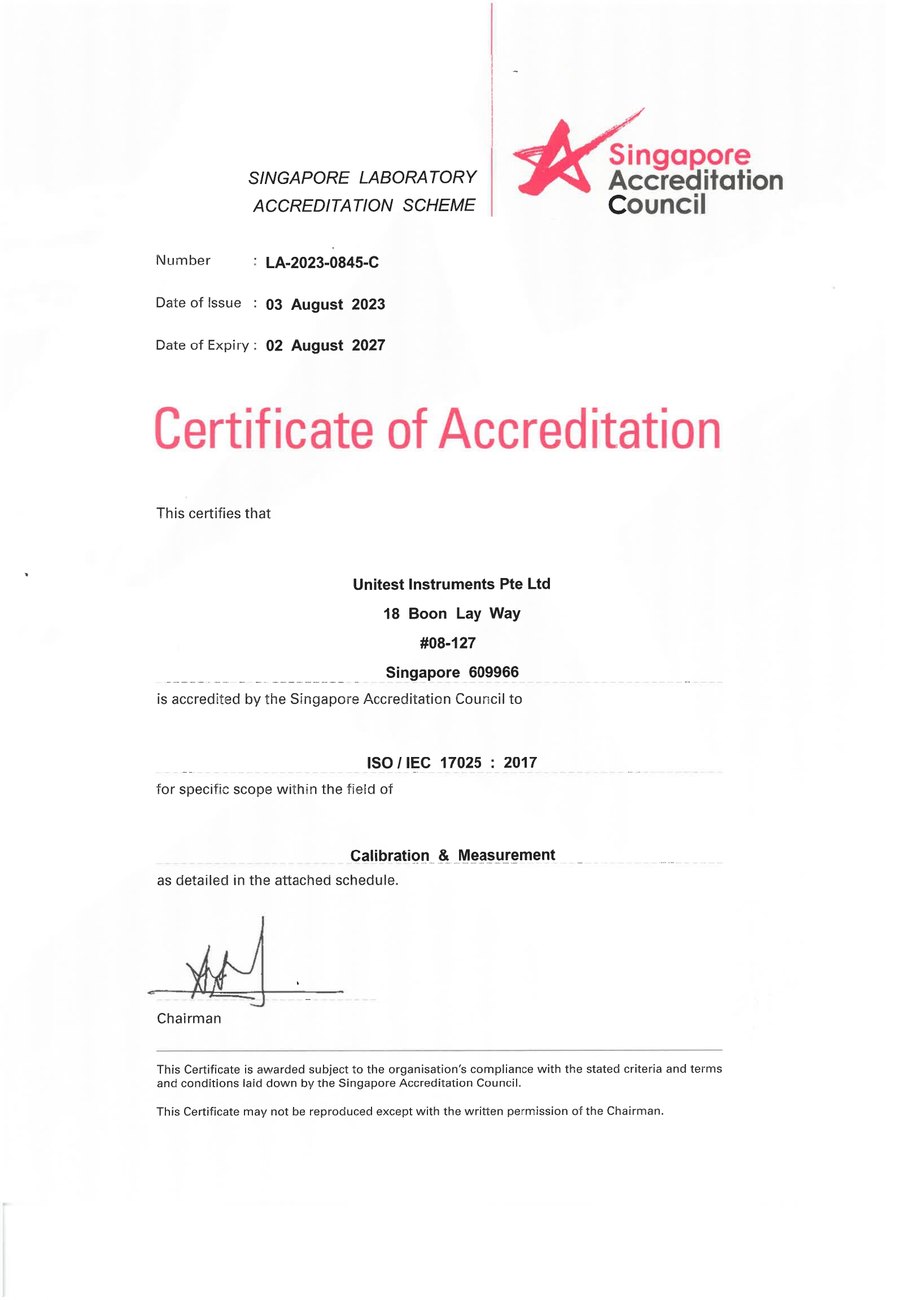
SAC-SINGLAS accredited calibration laboratory (Acc. No. LA-2023-0845-C) serving Singapore's industrial, pharmaceutical, and manufacturing sectors. All content reflects our ISO/IEC 17025 accredited scope and is reviewed by our technical calibration team.
Need water quality instrument calibration in Singapore?
Unitest Instruments is SAC-SINGLAS accredited (Acc. No. LA-2023-0845-C) to ISO/IEC 17025. Same-week turnaround, certificates accepted by ISO 9001 auditors.