
Key Takeaways
- COD (Chemical Oxygen Demand) measures all oxidisable matter; BOD (Biochemical Oxygen Demand) measures only biodegradable organic matter. COD ≥ BOD always.
- Singapore's NEA sets trade effluent limits at COD ≤ 1,000 mg/L and BOD5 ≤ 400 mg/L for sewer discharge; COD ≤ 100 mg/L and BOD5 ≤ 20 mg/L for watercourse discharge.
- COD is determined via dichromate oxidation (APHA 5220B/C/D or ISO 6060); BOD5 via the 5-day dilution and seeding method (APHA 5210B or ISO 5815-1:2019).
- A COD/BOD ratio above 2.5 indicates significant non-biodegradable content, signalling the need for chemical pre-treatment before biological treatment.
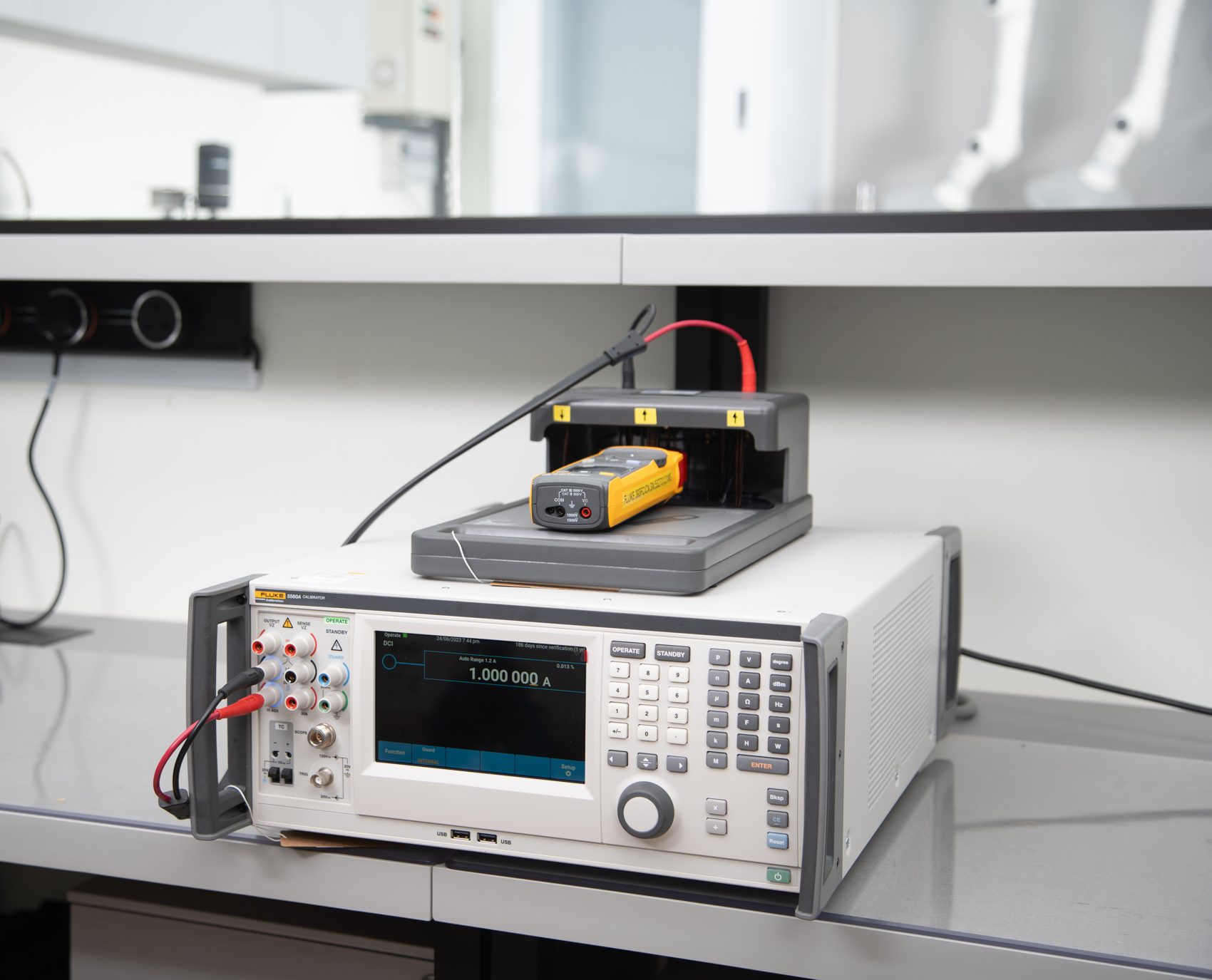
- Instrument calibration (spectrophotometers for COD, DO meters for BOD), is required to maintain traceable, legally defensible measurements under ISO/IEC 17025.
- Chloride interference is the most common source of falsely elevated COD readings and is controlled by adding mercuric sulfate before digestion.
What COD and BOD Actually Measure
Both parameters express a concentration of oxygen in milligrams per litre (mg/L), but the oxygen they refer to comes from very different places. Chemical Oxygen Demand (COD) quantifies the equivalent mass of dissolved oxygen that would be consumed if all oxidisable substances in a water sample were completely oxidised by a powerful chemical reagent. Potassium dichromate (K₂Cr₂O₇) in concentrated sulfuric acid at 148°C. Because potassium dichromate is an indiscriminate oxidant, it attacks virtually all organic compounds as well as some inorganic reducing agents (iron(II), sulfides, nitrites).
Biochemical Oxygen Demand (BOD) quantifies the dissolved oxygen consumed by living microorganisms (primarily bacteria), as they metabolise biodegradable organic compounds under aerobic conditions. By convention, the standard test uses a 5-day incubation at 20 ± 1°C in the dark, giving the parameter its common name BOD5. The result is expressed as the mass of oxygen consumed per litre of the original (undiluted) sample. BOD5 is typically 60–70% of the ultimate BOD (BODu), the oxygen demand when biodegradation is essentially complete (approximately 20 days).
The two measurements answer different engineering questions. COD answers: how much oxygen would this sample exhaust from a river if discharged? BOD answers: how much of that oxygen demand can a biological treatment system actually remove? Neither measurement identifies which compounds are present (for that, you need chromatographic analysis), but together they provide a remarkably powerful characterisation of organic loading.
The Chemistry Behind Each Test
COD: Dichromate Oxidation
In the closed reflux colorimetric method (APHA 5220D), a precisely measured volume of sample (typically 2 mL) is combined with potassium dichromate reagent, concentrated sulfuric acid, and silver sulfate catalyst in a sealed glass vial. The vial is heated at 148 ± 2°C for exactly 120 minutes in a COD digester. During digestion, organic matter reduces dichromate (Cr⁶⁺, yellow-orange) to chromic ion (Cr³⁺, green). The degree of colour change is proportional to the COD and is measured spectrophotometrically at 600 nm (for high-range vials, typically 20–1500 mg/L) or 420 nm (for low-range vials, 3–150 mg/L). A COD meter is essentially a dedicated, pre-calibrated spectrophotometer that converts absorbance at these wavelengths into COD in mg/L using a factory calibration curve verified against certified reference standards.
The complete oxidation half-reaction, simplified, is: Cr₂O₇²⁻ + 14H⁺ + 6e⁻ → 2Cr³⁺ + 7H₂O. Each mole of electrons transferred corresponds to a defined mass of oxygen equivalence. Silver sulfate serves as a catalyst to oxidise short-chain aliphatic compounds and aromatics that would otherwise resist chromate oxidation. Mercuric sulfate is added to complex chloride ions and prevent their oxidation, which would otherwise artificially inflate COD readings by up to several hundred mg/L in saline or brackish samples. A critically important consideration for Singapore's coastal industrial dischargers.
BOD: Microbial Respiration
In the standard dilution and seeding method (APHA 5210B), the sample is diluted with well-oxygenated, nutrient-supplemented dilution water to ensure that: (a) the initial dissolved oxygen (DO) is near saturation (8–9 mg/L at 20°C), and (b) the DO depletion over 5 days falls within a valid window of 2–7 mg/L (to avoid anaerobic conditions that would distort the result). The dilution factor is selected based on an estimated COD/4 rule of thumb, or a preliminary BOD estimate. If the sample lacks adequate microbial diversity (as is common with industrial effluents, chlorinated water, or highly acidic/alkaline samples), a "seed" of acclimated microbial culture from a nearby sewage treatment plant or a commercial freeze-dried seed is added. BOD is then calculated as:
BOD5 (mg/L) = [(DO₀ – DO₅) – (Bs × (DOb₀ – DOb₅))] / P
Where DO₀ and DO₅ are initial and final dissolved oxygen of the diluted sample; DOb₀ and DOb₅ are the corresponding values for the seed blank; Bs is the ratio of seed volume in the sample bottle to seed volume in the blank; and P is the decimal fraction of the sample used. This calculation depends critically on the accuracy of the DO meter used to measure dissolved oxygen at day 0 and day 5, which is why DO meter calibration is inseparable from valid BOD testing.
| Parameter | COD | BOD5 |
|---|---|---|
| Full name | Chemical Oxygen Demand | Biochemical Oxygen Demand (5-day) |
| Oxidant | Potassium dichromate (K₂Cr₂O₇) | Microbial respiration (O₂) |
| Test duration | 2 hours at 148°C | 5 days at 20°C |
| Scope | All oxidisable matter (organic + some inorganic) | Biodegradable organic matter only |
| Reference standard | APHA 5220D; ISO 6060:1989 | APHA 5210B; ISO 5815-1:2019 |
| Typical detection range | 3–15,000 mg/L (depending on range) | 2–4,000 mg/L (with dilution) |
| Interference | Chloride (controlled with HgSO₄) | Nitrification (controlled with allylthiourea inhibitor) |
| Singapore NEA sewer limit | ≤ 1,000 mg/L | ≤ 400 mg/L |
| Singapore NEA watercourse limit | ≤ 100 mg/L | ≤ 20 mg/L |
Singapore Regulatory Context
In Singapore, trade effluent standards are enforced under the Environmental Protection and Management Act (EPMA, Cap. 94A) and administered jointly by the National Environment Agency (NEA) and PUB, Singapore's National Water Agency. The Second Schedule of the Trade Effluent Regulations specifies numerical limits for COD and BOD5 that vary by discharge destination. Industries discharging to the public sewer system benefit from the treatment capacity of the Water Reclamation Plants (WRPs), which can absorb moderately loaded effluent (COD ≤ 1,000 mg/L; BOD5 ≤ 400 mg/L). Industries discharging directly to inland waters, coastal waters, or stormwater drains face much tighter limits that approximate receiving-water quality (COD ≤ 100 mg/L; BOD5 ≤ 20 mg/L).
NEA's Environmental Inspectorate conducts periodic effluent sampling at licensed premises. Samples are typically analysed at NEA's own accredited laboratories or by an approved third-party laboratory. To be legally defensible in enforcement proceedings, all COD and BOD results must originate from a laboratory holding SAC-SINGLAS accreditation under ISO/IEC 17025 for the specific test methods. This requirement flows from Singapore's Evidence Act and PUB's industrial effluent monitoring guidelines. Facilities operating self-monitoring programmes are expected to use calibrated, traceable instruments and to retain calibration records for at least 5 years.
The Urban Redevelopment Authority (URA) also references COD and BOD limits in environmental impact assessments for industrial rezoning applications, particularly for food processing, pharmaceutical manufacturing, and semiconductor fabrication facilities. Sectors with characteristically high organic or chemical loads.
Need calibration for your COD meter or DO meter in Singapore?
Unitest Instruments provides traceable calibration for spectrophotometers, dissolved oxygen meters, and process analysers used in water quality testing, with certificates accepted by NEA auditors and ISO 9001 registrars.
Calibration Requirements for COD and BOD Instruments
Instrument calibration is not optional. It is a technical requirement under both ISO/IEC 17025 (the laboratory accreditation standard) and APHA Standard Methods. Understanding what calibration means for each instrument type prevents common compliance failures.
COD Meters and Spectrophotometers
A dedicated COD meter or a general-purpose spectrophotometer used for COD measurement must be calibrated for wavelength accuracy and photometric linearity. Wavelength calibration verifies that the instrument's monochromator is delivering the specified wavelength (600 nm ± 2 nm for the high-range dichromate method). Photometric calibration verifies that the absorbance readings are linear across the instrument's measurement range, typically using NIST-traceable neutral density filters or certified reference solutions. For the COD application specifically, a calibration verification is performed before each batch of samples using potassium hydrogen phthalate (KHP) check standards. KHP has a theoretical COD of 1.175 mg/L per mg/L KHP (derived from its complete oxidation stoichiometry), making it the ideal reference material. A recovery of 95–105% of the theoretical COD value confirms method and instrument performance. As explained in our article on measurement uncertainty, even a well-calibrated instrument carries an expanded uncertainty, and this uncertainty must be reported on the calibration certificate and factored into compliance decisions.
Dissolved Oxygen Meters for BOD
BOD5 testing relies on accurate dissolved oxygen measurement at two time points separated by 5 days. DO meters (whether electrochemical (Clark-type membrane electrode) or optical (luminescence quenching)), drift over time due to membrane fouling, electrolyte depletion, or dye degradation. Before each BOD determination, DO meters must be calibrated using one or both reference points: air-saturated water (DO = f(temperature, barometric pressure), per APHA 4500-O B) and zero-oxygen solution (sodium sulfite + cobalt chloride catalyst, or nitrogen-purged water). The air-saturation calibration point must be adjusted for the actual barometric pressure at the test site. A correction of approximately 1% per hPa deviation from 1013 hPa that is often overlooked. For an accredited laboratory operating under ISO/IEC 17025, the DO meter is periodically calibrated against a gravimetrically prepared Winkler titration (APHA 4500-O C), the primary reference method, and a calibration certificate is issued with a stated measurement uncertainty. This traceability chain (from the DO meter to the Winkler titration to a certified standard), is what makes the BOD result defensible to an NEA auditor. Our guide on reading a calibration certificate explains exactly what to look for when assessing whether a DO meter certificate meets accreditation requirements.
Calibration Intervals
APHA Standard Methods require instrument calibration verification (using check standards) at the start of every analytical batch. Full instrument calibration (including wavelength verification for spectrophotometers and Winkler cross-check for DO meters), is typically performed quarterly or whenever a meter is repaired, relocated, or shows performance drift. ISO/IEC 17025 Section 6.4.7 requires laboratories to establish a calibration programme based on an assessment of measurement uncertainty contribution, not an arbitrary fixed interval. In practice, a heavily used DO meter in a high-throughput BOD laboratory may require more frequent calibration than one used once per week.
The COD/BOD Ratio in Practice
The ratio of COD to BOD5 is one of the most practically useful numbers in environmental engineering. It is dimensionless and independent of the absolute organic load, reflecting the fraction of total oxygen demand that is biologically accessible. Fresh municipal sewage typically has a COD/BOD ratio of 1.5–2.5. Ratios below 2 indicate highly biodegradable wastewater that is well-suited to conventional activated sludge treatment. Ratios between 2.5 and 3.5 suggest partial biodegradability (common in food processing, dairy, and brewery effluents), where process optimisation (longer hydraulic retention time, sludge management) can improve BOD removal efficiency. Ratios above 3.5 signal the presence of compounds that are chemically oxidisable but biologically resistant: phenols, formaldehyde, certain surfactants, heavy metals at inhibitory concentrations, or pharmaceutical intermediates. These wastestreams typically require pre-treatment by coagulation-flocculation, advanced oxidation (ozone or UV/H₂O₂), or activated carbon adsorption before biological treatment.
A special case worth noting is wastewater with a very low COD/BOD ratio, approaching 1.0. This is theoretically possible only if BOD is overestimated (e.g. due to nitrification in the BOD bottle, which consumes additional oxygen). Nitrification is controlled by adding allylthiourea (ATU) as a nitrification inhibitor, at a concentration of 0.5 mg/L per APHA guidance, when testing effluents from biological treatment plants where nitrifying bacteria are present.
Common Mistakes and How to Avoid Them
COD Testing Errors
The most prevalent errors in COD analysis are chloride interference, incorrect sample volume, and incomplete digestion. Chloride ions above approximately 2,000 mg/L will be oxidised by dichromate in the presence of silver catalyst, giving falsely elevated COD. A significant problem for marine or estuarine samples in Singapore's coastal industrial zones. The solution is to add mercuric sulfate at a mass ratio of 10:1 relative to the expected chloride concentration, converting Cl⁻ to insoluble mercuric chloride (HgCl₂) before the chromate oxidation proceeds. This is already incorporated into commercial COD vials rated for high-chloride matrices. Using the wrong vial range is a second common error: a sample with a true COD of 600 mg/L measured with a low-range vial (0–150 mg/L) will simply pin the absorbance off-scale and return a meaningless result. Always pre-screen samples with a quick COD estimate before selecting the vial range.
BOD Testing Errors
BOD5 testing has more sources of variability than COD because it depends on living organisms, precise temperature control, and a 5-day process chain. The three most common laboratory errors are: (1) allowing the DO in a BOD bottle to fall below 1 mg/L during incubation, which forces anaerobic metabolism and produces a falsely low BOD; (2) exposing samples or dilution water to light, which stimulates algal photosynthesis and re-oxygenates the sample, again depressing the apparent BOD; and (3) failing to acclimate the seed culture to the specific industrial effluent being tested. A domestic sewage seed will not efficiently degrade petrochemical or pharmaceutical compounds without an acclimatisation period, leading to artificially low BOD5 values that underestimate the true biodegradability of the waste. APHA 5210B explicitly requires that if the sample contains toxic or inhibitory substances, the analyst must use an acclimated seed and document the procedure.
Frequently Asked Questions
COD (Chemical Oxygen Demand) measures the total amount of oxygen required to chemically oxidise all organic and inorganic matter in a water sample. BOD (Biochemical Oxygen Demand) measures only the oxygen consumed by microorganisms to biologically degrade biodegradable organic matter over a fixed incubation period, typically 5 days at 20°C (BOD5). COD is always equal to or greater than BOD because it captures both biodegradable and non-biodegradable compounds. A high COD/BOD ratio (above 2.5) indicates a significant proportion of non-biodegradable or toxic compounds, which has direct implications for wastewater treatment plant design.
The primary internationally recognised methods for COD measurement are APHA Standard Methods 5220B (Open Reflux), 5220C (Closed Reflux, Titrimetric), and 5220D (Closed Reflux, Colorimetric), along with ISO 6060:1989 (Water quality. Determination of the chemical oxygen demand). In Singapore, the National Environment Agency (NEA) references these APHA Standard Methods in its discharge consent conditions. The closed reflux colorimetric method (5220D) is the most widely used in modern commercial laboratories because it uses pre-made reagent vials, requires smaller sample volumes (2–3 mL), and produces results within 2 hours.
The standard method for BOD is APHA Standard Method 5210B (5-Day BOD Test), which incubates a diluted water sample seeded with microorganisms at 20 ± 1°C for exactly 5 days in the dark, then measures the dissolved oxygen depletion. ISO 5815-1:2019 and ISO 5815-2:2015 govern BOD determination in an international context. Manometric methods (using respirometers) are increasingly used for continuous monitoring but must be validated against the reference dilution method. The 5-day incubation period is by convention. It typically represents 60–70% of ultimate BOD (BODu).
Under Singapore's Environmental Protection and Management Act (EPMA) and the Trade Effluent Regulations (Second Schedule), the permissible limits for discharge to public sewers are: COD ≤ 1,000 mg/L and BOD5 ≤ 400 mg/L. For direct discharge to watercourses (rivers, drains, sea), limits are significantly tighter: COD ≤ 100 mg/L and BOD5 ≤ 20 mg/L. The National Environment Agency (NEA) and PUB enforce these limits. Industries exceeding consent limits face enforcement action and may be required to install pre-treatment systems.
COD and BOD measurements both depend on instrument accuracy that drifts over time. Spectrophotometers used for COD colorimetric determination require wavelength accuracy calibration (at 600 nm or 420 nm depending on range) and photometric linearity checks using certified reference solutions such as potassium hydrogen phthalate (KHP) standards. Dissolved oxygen (DO) meters used in BOD testing require calibration against air-saturated water or sodium sulfite zero-oxygen solution, cross-referenced to barometric pressure. Uncalibrated instruments can report COD or BOD values that are 5–15% off the true value, causing facilities to inadvertently breach NEA consent limits or over-treat at unnecessary cost.
Potassium hydrogen phthalate (KHP, C8H5KO4) is the primary reference material for COD calibration because its theoretical COD is precisely calculable: 1 mg/L KHP = 1.176 mg/L COD. This stoichiometric relationship is used to verify that a COD test system (digestion + measurement) is functioning correctly. NIST-traceable KHP reference standards are used to prepare check standards at concentrations spanning the instrument's measurement range, typically 50, 250, and 500 mg/L COD. Results within ±10% of the theoretical value confirm method and instrument performance, per APHA QA/QC requirements.
The COD/BOD ratio indicates the fraction of organics that are biodegradable. A ratio below 2 suggests highly biodegradable wastewater amenable to biological treatment (e.g. food processing, domestic sewage). A ratio between 2 and 3.5 indicates moderate biodegradability. A ratio above 3.5 signals significant non-biodegradable or inhibitory compounds, typically seen in petrochemical, pharmaceutical, or metal-finishing effluents. The ratio guides treatment plant engineers in deciding whether biological treatment alone is sufficient or whether chemical pre-treatment is needed upstream.
Common COD errors: (1) chloride interference. Chloride ions above 2,000 mg/L cause falsely elevated COD; corrected using mercuric sulfate; (2) expired or incorrectly stored reagent vials; (3) insufficient sample mixing before digestion. Common BOD5 errors: (1) DO depletion below 1 mg/L or failure to deplete by at least 2 mg/L, invalidating the result; (2) inadequate seed acclimation; (3) sample temperature deviating from 20 ± 1°C during incubation; (4) light exposure during incubation causing photosynthetic oxygen production in algae-containing samples.
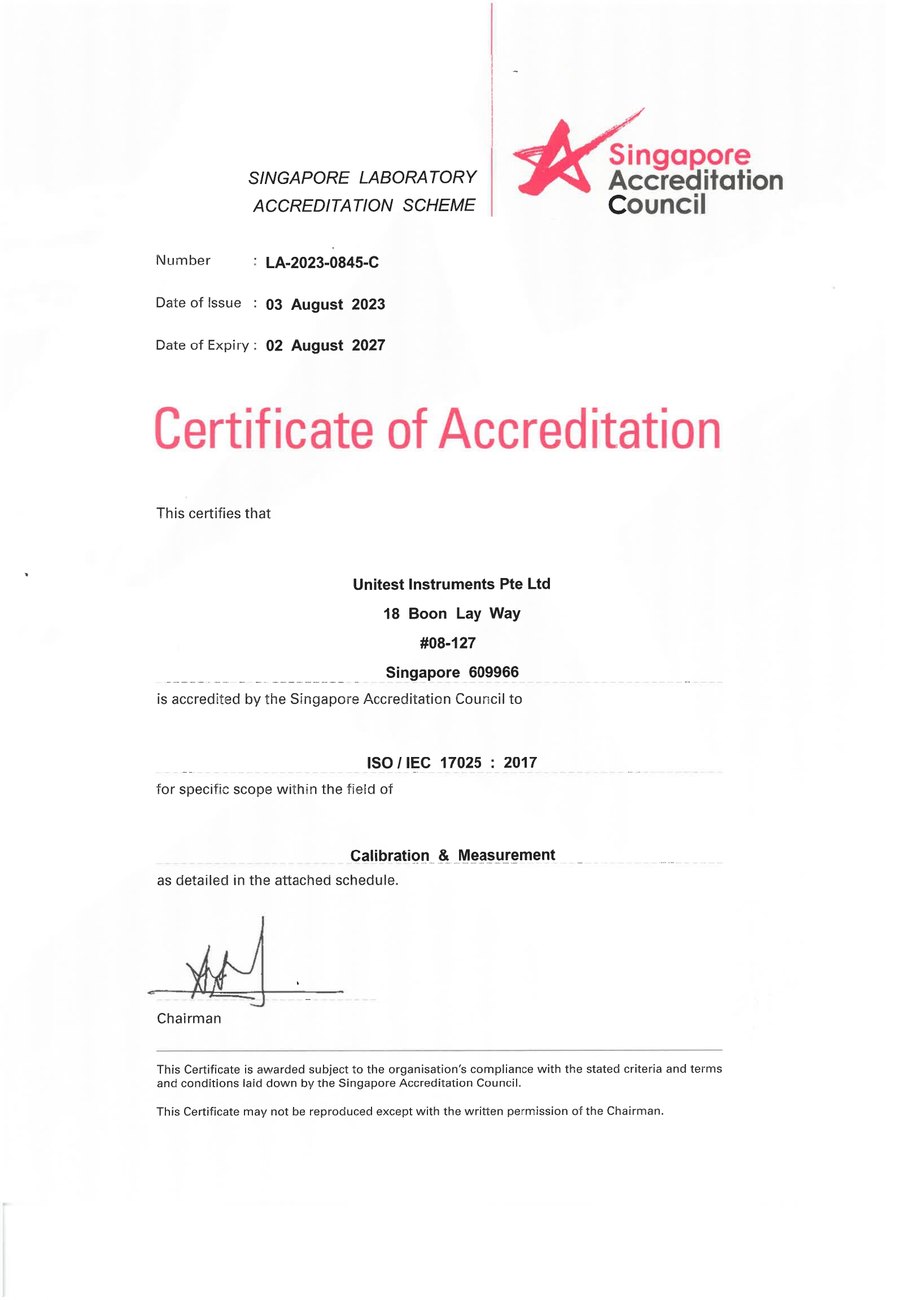
SAC-SINGLAS accredited calibration laboratory (Acc. No. LA-2023-0845-C) serving Singapore's industrial, pharmaceutical, and manufacturing sectors. All content reflects our ISO/IEC 17025 accredited scope and is reviewed by our technical calibration team.
Need water quality instrument calibration in Singapore?
Unitest Instruments is SAC-SINGLAS accredited (Acc. No. LA-2023-0845-C) to ISO/IEC 17025. Same-week turnaround, certificates accepted by ISO 9001 auditors and NEA enforcement.