
Key Takeaways
- All pharmaceutical and medical device storage areas in Singapore must be temperature-mapped under HSA GDP and PIC/S PE 011 before first use and after significant changes.
- Mapping studies must run for a minimum of seven continuous days under normal loaded operating conditions, capturing worst-case scenarios.
- All data loggers and reference sensors must be calibrated by a SAC-SINGLAS accredited laboratory with traceability to Singapore's NMC before and after each study.
- Humidity mapping is mandatory wherever the product storage specification includes a relative humidity limit.
- Critical deficiencies in temperature mapping can result in suspension or revocation of your HSA import or distribution licence.
- Requalification is required at least every one to two years and after any equipment repair, facility change, or significant temperature excursion.
Why Temperature Mapping is a Regulatory Requirement. Not Best Practice
Many facilities managers treat temperature mapping as an internal quality initiative. It is not. It is a hard regulatory requirement embedded in Singapore law through the Health Products Act (Cap. 122D) and its subsidiary regulations governing licensed manufacturers, importers, and distributors of medicinal products. HSA's GDP guidelines, which draw directly from the Pharmaceutical Inspection Co-operation Scheme (PIC/S) PE 011, establish that any area used to store temperature-sensitive health products must be formally qualified before products are placed in it.
The logic is straightforward: if you cannot demonstrate that your storage area consistently maintains the labelled storage condition (whether that is 15–25 °C (controlled room temperature), 2–8 °C (refrigerated), or ≤ −18 °C (frozen)), then you have no scientific basis to guarantee product quality at the point of dispensing or use. Temperature excursions degrade active pharmaceutical ingredients, accelerate microbial growth in biologics, and invalidate shelf-life claims. Mapping is the evidence that your facility can hold what it claims to hold.
For facilities managers and quality officers in Singapore, the practical implication is that GDP inspections by HSA will review your temperature mapping records as a primary document. A missing, incomplete, or outdated mapping report is a direct deficiency finding, not a paperwork technicality.
The Regulatory Framework: HSA GDP, PIC/S PE 011, and WHO TRS 961
Singapore's pharmaceutical distribution sector operates under a layered regulatory framework. At the apex is the Health Products Act, enforced by HSA's Therapeutic Products Branch. HSA's GDP guidelines are directly harmonised with PIC/S PE 011 (Guide to Good Distribution Practice for Medicinal Products), which Singapore adopted as a PIC/S member country. PIC/S PE 011 Annex 1 specifically addresses storage and transportation temperature qualification.
For WHO-prequalified products and those distributed to public health programmes, the additional reference standard is WHO Technical Report Series No. 961, Annex 9 (Model Guidance for the Storage and Transport of Time- and Temperature-Sensitive Pharmaceutical Products). This document provides the most detailed technical specifications for sensor density, study duration, and worst-case condition testing, and HSA inspectors often reference it during inspections of cold chain facilities.
| Storage Type | Specification | Minimum Study Duration | Humidity Required | Requalification Interval |
|---|---|---|---|---|
| Ambient / CRT | 15–25 °C (or 30 °C where justified) | 7 continuous days | Yes, if RH specified | Every 1–2 years |
| Refrigerated | 2–8 °C | 7 continuous days | Typically not required | Annually |
| Frozen | ≤ −18 °C or ≤ −25 °C | 7 continuous days | Not required | Annually |
| Ultra-Low / Cryogenic | ≤ −65 °C or ≤ −135 °C | 7–14 days (risk-based) | Not required | Annually or after every service |
| Walk-in Cold Room | 2–8 °C or 15–25 °C | 7 continuous days (loaded) | If product label requires | Annually or after renovation |
Step-by-Step: Executing a Compliant Temperature Mapping Study
Step 1. Write a Validation Protocol (VP)
Before placing a single sensor, you need an approved Validation Protocol that defines the study scope, acceptance criteria, sensor placement rationale, study duration, equipment list with calibration certificate numbers, and the name of the person responsible for executing and reviewing the study. The VP must be approved by your quality unit before execution. This is non-negotiable under PIC/S GMP Chapter 5 and HSA's expectations. Retrospective protocol writing is a critical finding.
Step 2. Risk-Based Sensor Placement
Sensor placement must be driven by a risk assessment of the thermal profile of the space. PIC/S and WHO TRS 961 guidance requires sensors at all corners at two heights (floor level and upper shelf level), the geometric centre, near air supply and return vents, near doors and windows, adjacent to any heat-generating equipment, and in any identified cool or warm zone from prior experience. As a practical minimum: a room up to 50 m² typically requires 9–15 sensors; a warehouse bay of 200–500 m² typically requires 20–30 sensors. Document the justification for your sensor count in the VP.
Step 3. Pre-Study Calibration of Data Loggers
Every data logger and reference sensor deployed must carry a valid calibration certificate issued within the validity period, with full traceability to the Singapore National Metrology Centre (NMC) of A*STAR. Or to an NMC of another NMI Economy where an MRA exists. In Singapore, this means the calibration certificate must be issued by a SAC-SINGLAS accredited laboratory. The certificate must state the measurement uncertainty, and that uncertainty must be fit for purpose: if your storage specification is 2–8 °C, using sensors with a ±1.5 °C uncertainty consumes most of your specification tolerance and is generally not acceptable.
To understand exactly what information should appear on a calibration certificate (including how to read stated uncertainty), see our detailed guide: How to Read a Calibration Certificate.
Step 4. Execute the Study Under Loaded, Steady-State Conditions
The study must be run with the storage area in its normal operating state: loaded to typical capacity, with normal staff access patterns, and with HVAC operating in its normal mode. Mapping an empty cold room is not acceptable. Product load significantly affects thermal distribution. The data loggers must record at intervals of no more than 10 minutes (5 minutes is preferred for cold rooms). Do not pause logging during the study; gaps in the data record will require the study to be restarted.
Step 5. Post-Study Calibration Verification
After the study, every data logger must be returned for a post-study calibration check against a reference standard. This is critical: it confirms that the logger did not drift during the study. If a logger is found to have drifted outside its specification, the data from that logger must be considered suspect, and a risk assessment must determine whether the study results remain valid or the study must be repeated.
Step 6. Prepare the Validation Report and Identify Hot/Cold Spots
Analyse the data to identify the hottest and coldest points in the facility. These become your "worst-case locations" where your continuous environmental monitoring sensors must be permanently installed. The Validation Report must document the statistical analysis (minimum, maximum, and mean temperature at each sensor location), a heat map of the space, identification of worst-case locations, a pass/fail conclusion against the acceptance criteria in your VP, and a list of any deviations and their impact assessment. The report must be reviewed and approved by your quality unit before the area is released for use.
Need calibrated data loggers for your GMP mapping study in Singapore?
Unitest Instruments (Acc. No. LA-2023-0845-C) calibrates temperature and humidity data loggers with full NMC traceability and stated uncertainty. Certificates accepted by HSA GDP inspectors and ISO 9001 auditors.
Calibration Instrument Requirements for GMP Mapping
The instruments used in a temperature and humidity mapping study are subject to specific technical requirements under PIC/S and HSA expectations. Using uncalibrated or insufficiently accurate equipment is the most common reason for a mapping study to fail regulatory scrutiny.
Temperature Data Loggers
For ambient (15–25 °C) storage mapping, data loggers with a calibrated accuracy of ±0.3 °C or better are typically required to leave adequate margin within the specification. For refrigerated (2–8 °C) storage, ±0.2 °C or better is preferred, as the 6 °C span leaves very little tolerance for instrument error. The calibration must cover the full measurement range that will be encountered during the study. A certificate covering only 20 °C is not valid for a cold room study.
Humidity Sensors
Where relative humidity must be mapped, sensors should carry calibration certificates stating accuracy at the relevant RH range (commonly 40–70% RH for ambient pharmaceutical stores). Typical acceptable accuracy is ±2–3% RH. Because humidity sensors are more susceptible to drift than temperature sensors, the post-study calibration check is especially important for humidity instruments.
Reference Standards Used in Calibration
The calibration laboratory must use reference standards that are themselves calibrated and traceable. This chain of traceability (from your data logger, through the calibration laboratory's reference standards, to Singapore's NMC), is what gives the calibration certificate its legal and regulatory validity. This concept of metrological traceability is explained in full in our article: What Is Traceability in Calibration and Why Does It Matter?
It is worth noting that not all calibration laboratories in Singapore are SAC-SINGLAS accredited. Using a non-accredited laboratory to calibrate mapping instruments is a common compliance gap. HSA inspectors will check that calibration certificates reference a SAC-SINGLAS accreditation number (or an equivalent internationally recognised accreditation body), and will raise a deficiency if they cannot. For guidance on this distinction, refer to our article on Accredited vs Non-Accredited Calibration.
Continuous Monitoring After Qualification
Completing the mapping study qualifies the storage area, but it does not end your obligations. PIC/S PE 011 and HSA GDP guidelines require ongoing continuous environmental monitoring (CEM) of all qualified storage areas. The monitoring sensors must be positioned at the worst-case locations identified in the mapping study. They must record at regular intervals (typically every 10–15 minutes), generate alarms at defined set points before the storage specification is breached, and be connected to an alarm system that notifies responsible persons out of hours.
The monitoring sensors themselves must be calibrated on a regular schedule. The calibration interval should be risk-based and documented. Annually is the most common interval for temperature sensors in pharmaceutical storage, but sensors in high-humidity or corrosive environments may require more frequent calibration. For guidance on setting calibration intervals, see our article: How Often Should You Calibrate Your Instruments?
| Monitoring Parameter | Typical Alarm Set Point | Recording Interval | Calibration Frequency |
|---|---|---|---|
| Ambient temperature (CRT) | Alert at 24 °C / Alarm at 25 °C | Every 10–15 min | Annually |
| Refrigerated temperature | Alert at 7 °C / Alarm at 8 °C | Every 5–10 min | Annually |
| Frozen temperature | Alert at −19 °C / Alarm at −18 °C | Every 5–10 min | Annually |
| Relative humidity (ambient) | Alert at 60% / Alarm at 65% RH | Every 10–15 min | Annually or per-manufacturer |
Penalties and Consequences of Non-Compliance
The consequences of failing to meet HSA's temperature mapping requirements range from administrative burden through to criminal liability, depending on severity and history.
GDP Inspection Deficiency Findings
HSA classifies inspection deficiencies as critical, major, or other. Deficiencies related to temperature storage qualification. Missing mapping data, uncalibrated loggers, expired calibration certificates, or monitoring systems placed at non-worst-case locations. Are typically classified as major, and can be elevated to critical where there is evidence of actual product compromise or where the deficiency is systemic and unaddressed across multiple inspections.
A critical deficiency finding triggers an immediate regulatory response. HSA may issue a Warning Letter, require a product recall risk assessment, impose enhanced inspection frequency, or suspend the facility's manufacturing, import, or distribution licence. Under the Health Products Act, operating a licensed activity with a suspended licence carries criminal penalties including fines and imprisonment.
Product Recalls and Market Withdrawals
Where temperature mapping failures are linked to a specific batch of product (for example, where a cold room was not properly qualified before products were stored there), HSA can require a voluntary recall or initiate a directed market withdrawal. The cost of a pharmaceutical recall in Singapore, including regulatory fees, logistics, and reputational damage, typically exceeds the cost of proper qualification by several orders of magnitude.
Loss of Licence and Business Impact
For importers, distributors, and manufacturers, repeated temperature mapping deficiencies signal systemic quality management failures. HSA has the power to revoke licences under the Health Products (Therapeutic Products) Regulations. For companies operating within hospital supply chains or holding HSA-tendered contracts, a licence suspension typically triggers immediate contract termination clauses.
Frequently Asked Questions
Yes. HSA's Good Distribution Practice (GDP) guidelines, aligned with PIC/S PE 011, require that any area used to store temperature-sensitive medicinal products (including warehouses, cold rooms, refrigerators, and ambient stores), must undergo temperature mapping before first use and periodically thereafter. The scope covers licensed manufacturers, importers, distributors, and retail pharmacies that hold controlled storage areas.
PIC/S guidance recommends a minimum sensor density based on volume and risk. As a baseline, sensors should cover all corners at both floor and ceiling levels, the geometric centre, near air inlets/outlets, near doors, and any identified cold or hot spots from a risk assessment. For a standard pharmaceutical warehouse bay, this typically means 15–25 sensors minimum. Larger facilities require a formal sensor placement protocol justified in the validation plan.
PIC/S PE 011 and HSA GDP guidelines recommend a minimum continuous mapping duration of at least 7 days for ambient stores and refrigerated areas under steady-state loaded conditions. Cold chain and ultra-low temperature areas may require longer studies. The mapping must capture worst-case seasonal conditions, in Singapore's equatorial climate, this means capturing both regular operation and peak ambient temperature periods, which may require studies in different months.
All data loggers and reference sensors used in a GMP mapping study must be calibrated with traceability to national measurement standards before and after each study. In Singapore, this means calibration traceable to the National Metrology Centre (NMC) of A*STAR. Calibration certificates must be issued by a SAC-SINGLAS accredited laboratory (such as Unitest Instruments, Acc. No. LA-2023-0845-C) or an equivalent internationally recognised accredited body. The calibration uncertainty must be stated and must be fit for purpose relative to the storage specification.
Requalification is triggered by any of the following: significant changes to the facility (renovation, new HVAC, change in racking configuration or occupancy), after equipment breakdown or repair, after a significant excursion event, and on a periodic basis. Typically every 1–2 years for ambient stores and annually for cold rooms and refrigerators. The requalification interval should be risk-based and documented in your validation master plan.
HSA can issue a critical or major deficiency finding against your GDP licence. Critical deficiencies related to storage qualification can result in suspension or revocation of your import, distribution, or wholesale licence under the Health Products Act. Major findings typically require a corrective and preventive action (CAPA) plan with a defined timeline. Repeated or unresolved deficiencies can trigger enhanced surveillance inspections and may affect product release decisions.
Yes, where the storage specification includes a relative humidity (RH) limit (which is common for hygroscopic pharmaceuticals and medical devices), humidity mapping is required alongside temperature mapping. PIC/S guidelines and HSA GDP guidance both state that where humidity control is part of the storage condition, it must be qualified and monitored with the same rigour as temperature. Data loggers used must carry a valid humidity calibration certificate in addition to temperature calibration.
Yes, wireless and Bluetooth data loggers are acceptable provided they meet the same calibration, accuracy, and data integrity requirements as wired systems. Under PIC/S and HSA expectations, data integrity is paramount. The logging system must produce tamper-evident, audit-trailed records. Any logger used must be calibrated by an accredited laboratory before and after the study, and the wireless transmission system must be validated to demonstrate no data loss during the study period.
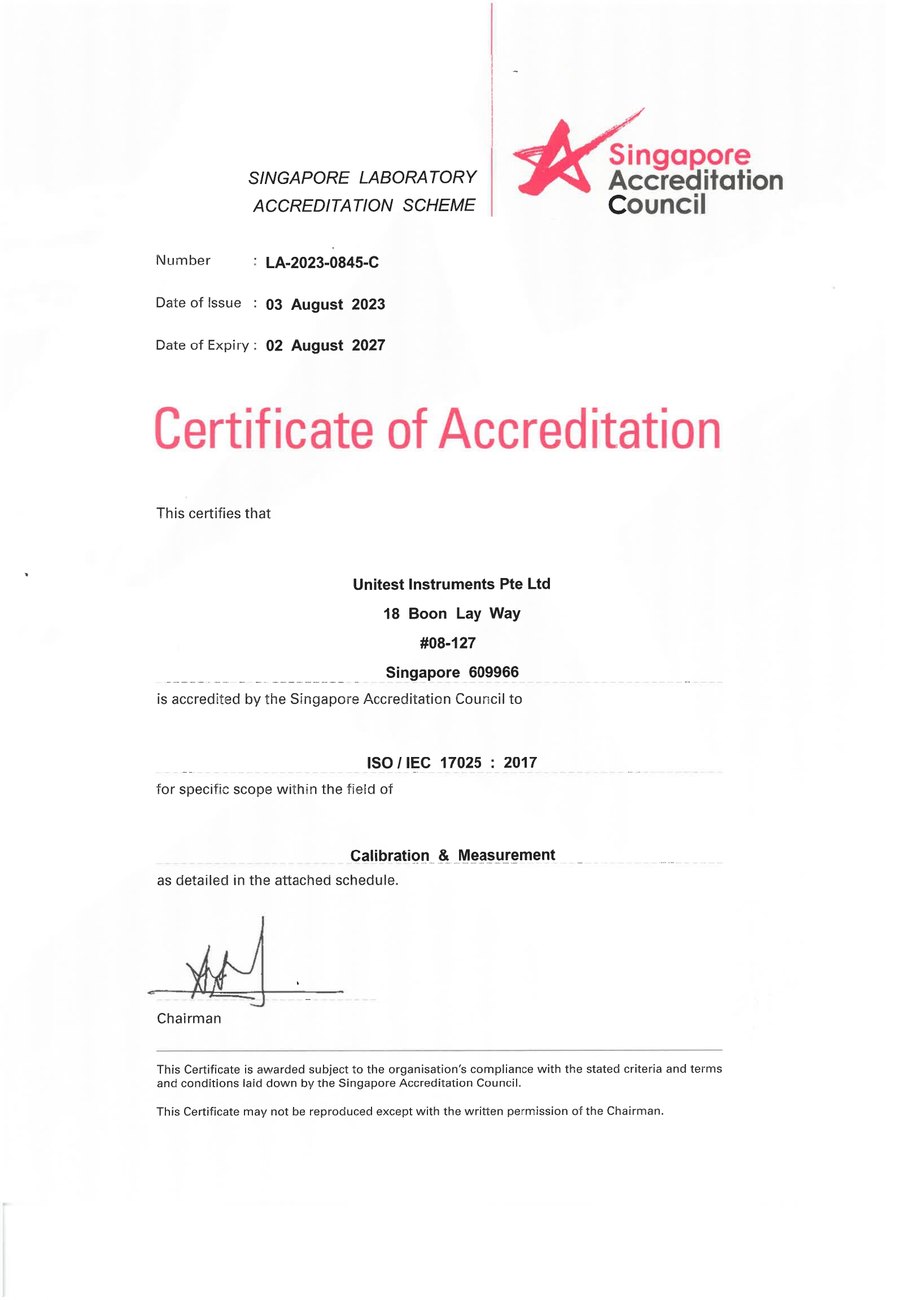
SAC-SINGLAS accredited calibration laboratory (Acc. No. LA-2023-0845-C) serving Singapore's industrial, pharmaceutical, and manufacturing sectors. All content reflects our ISO/IEC 17025 accredited scope and is reviewed by our technical calibration team.
Need GMP temperature and humidity calibration in Singapore?
Unitest Instruments is SAC-SINGLAS accredited (Acc. No. LA-2023-0845-C) to ISO/IEC 17025. Same-week turnaround, certificates accepted by ISO 9001 auditors.