
Key takeaways
- Data loggers store digital records exportable with tamper-evident audit trails. Essential for 21 CFR Part 11 and EU GMP Annex 11 compliance.
- Chart recorders produce a physical paper chart that is itself the primary record , legally admissible and still required by some auditors.
- Both require periodic calibration. Data loggers: sensor + clock; chart recorders: sensor + pen mechanism + chart drive speed.
- For SFA food storage and HSA pharmaceutical storage in Singapore, a calibrated continuous recording temperature monitor is required. The key is that the record is continuous and the calibration current.
- Standalone wireless data loggers (Testo 175, Ebro EBI 25) are the standard for Singapore pharmaceutical and food storage monitoring. No chart retrieval needed, remote alarm capability.
Why continuous environmental records matter
Temperature and humidity excursions are silent product killers. A pharmaceutical product stored at 10°C instead of 2–8°C for 48 hours may look identical to a product stored correctly, but its stability data no longer applies. A food product held above the critical limit at a HACCP control point has been compromised, whether or not the non-conformance was noticed in time. The only evidence that storage conditions were met (or that an excursion occurred and was responded to), is a continuous environmental record tied to a calibrated, traceable monitoring instrument.
In Singapore, this requirement cuts across multiple regulatory frameworks. The Singapore Food Agency (SFA) requires licensed cold storage premises to maintain temperature records demonstrating that food has been held within specification. The Health Sciences Authority (HSA) GMP guidelines require pharmaceutical manufacturers, importers, and distributors to maintain validated temperature monitoring systems for all storage areas holding products requiring controlled conditions. Including cold rooms, refrigerators, freezers, stability chambers, and ambient warehouses. NEA-regulated premises involved in vector control chemicals and other regulated substances have similar documentation requirements. In each case, the core compliance requirement is the same: a continuous, verifiable record that storage was within specification, produced by an instrument whose calibration is current and whose traceability to national measurement standards can be demonstrated.
Two instrument types have historically fulfilled this requirement: the chart recorder and the data logger. Understanding what each does, where each excels, and critically (what each requires in terms of calibration), is essential for anyone specifying or managing an environmental monitoring program in Singapore.
How chart recorders work
A chart recorder produces a continuous analogue trace on a paper chart by connecting a temperature or humidity sensor to a mechanical pen arm that moves across a rotating drum or advancing strip of paper. The pen position corresponds to the measured value; the chart rotation or advancement provides the time axis. The result is a physical trace that is simultaneously the sensor output and the permanent record. No separate data storage, no download, no software.
The most common configuration in Singapore legacy installations is the circular chart recorder, using a 100mm or 250mm circular paper chart that completes one full rotation over a defined period, most commonly 7 days. At the end of each period, the technician removes the chart, labels it with the location, instrument ID, and date range, and files it. Strip chart recorders use a continuous roll of paper advancing at a fixed rate, which is common for longer continuous records.
The temperature sensing element in most legacy industrial chart recorders is either a bimetallic spring (in simpler, lower-cost instruments) or a Bourdon tube filled with gas or liquid, which expands with temperature and drives the pen arm through a mechanical linkage. More sophisticated electronic chart recorders use a thermocouple, RTD, or thermistor input converted to a proportional voltage that drives a servo-controlled pen. Humidity measurement typically uses a hair hygrometer element (in older instruments) or a capacitive humidity sensor in electronic models. Brands commonly encountered in Singapore: Dickson, Honeywell, Partlow, Sifan, and ABB legacy recorders are found across pharmaceutical warehouses, food cold stores, and clinical laboratories installed in the 1990s and 2000s.
The fundamental limitation of a chart recorder is that it cannot alert anyone to a problem in real time. The paper chart records what happened, but only a person physically retrieving and reading the chart will know that an excursion occurred. A compressor failure at 2 am on a Saturday will not be discovered until someone checks the recorder on Monday morning, by which point the product may have been outside specification for 48 hours. For modern GMP and HACCP programs, this reactive-only monitoring posture is a significant gap.
How data loggers work
A data logger replaces the mechanical pen-and-chart recording mechanism with an entirely electronic chain: a sensor (thermocouple, RTD, thermistor, or capacitive humidity element) feeds a signal conditioning stage, an analogue-to-digital converter samples the conditioned signal at the configured interval, a microprocessor stores each timestamped reading in flash memory or EEPROM, and a communication interface (USB, Bluetooth, Wi-Fi, or NFC), allows the stored data to be downloaded to software for analysis, reporting, and archiving.
The sampling interval is configurable. Typically 1 minute to 60 minutes for pharmaceutical and food storage, with 15 minutes being a common default for stability chambers and 30 minutes for cold rooms. A logger with 16,000 reading capacity sampling every 15 minutes can log continuously for approximately 166 days before memory is full. The downloaded data produces a time-series graph, summary statistics (min, max, mean, STDEV), alarm event logs, and an audit trail of download access and any configuration changes.
The real-time clock (RTC) inside the logger is a critical component that is easy to overlook. All timestamps depend on the RTC accuracy. RTCs drift. Typically 10–30 seconds per month, though this varies significantly with temperature and battery age. Over a year, a logger with 20 seconds/month drift will have timestamps that are 4 minutes off. In a GMP audit where an alarm event is being investigated, timestamp accuracy matters. This is why calibration of the RTC (verifying clock drift against a reference time standard), is a component of data logger calibration that chart recorders do not require.
Data loggers commonly deployed in Singapore pharmaceutical and food storage include: Testo 175 T1/T2/H1 (temperature and temperature+humidity variants, widely used in Singapore pharma warehouses), Ebro EBI 25-T/TH (USB download, circular data display, compact form factor popular in Singapore food cold stores), Onset HOBO MX2301 (Bluetooth-enabled with direct smartphone download), and Rotronic Hygrolog HL-1D (high-accuracy humidity logging for stability chambers and cleanrooms). For networked multi-point monitoring, Vaisala viewLinc and Sensitech TempTale systems are found in larger pharmaceutical distribution centres.
Full comparison: data logger vs chart recorder
The table below covers all thirteen comparison dimensions relevant to instrument selection, compliance, and calibration planning.
| Feature | Data Logger | Chart Recorder |
|---|---|---|
| Recording medium | Electronic memory (flash/EEPROM) | Paper chart (circular or strip) |
| Data retrieval | USB/Bluetooth/WiFi download to PC | Physical chart removal and reading |
| Resolution | High , 0.01°C typical | Limited by pen width and chart scale |
| Accuracy typical | ±0.1–0.5°C | ±0.5–1°C |
| Audit trail | Software-generated, tamper-evident | The paper chart itself; annotation-based |
| Alarm output | Audible + email/SMS via gateway | Relay contact output; no remote notification |
| Battery life | 1–5 years | 1 year (spring-wound); mains for electronic models |
| Remote monitoring | Yes. Via Bluetooth/WiFi/cellular gateway | No. Physical inspection only |
| 21 CFR Part 11 | Yes, with appropriate software | Difficult. Paper records with manual annotation |
| Calibration parameters | Sensor accuracy + clock | Sensor + pen position + chart drive speed |
| Physical size | Small. Matchbox to palm-sized | Larger. Standard 100mm or 250mm charts |
| Maintenance | Minimal. Battery replacement | Regular. Chart paper, pen ink, drive mechanism |
| Typical cost (SG$) | S$150–S$2,000 | S$500–S$3,000 (new); many are legacy instruments |
The audit trail row is where the regulatory gap between the two technologies is most pronounced. A paper chart is a physical object that records the pen trace. It can be annotated, retained, and presented to an auditor, and for many decades it was the gold standard of environmental monitoring evidence. The limitation is that annotations are manual, modifications are difficult to prevent without physical controls, and the "audit trail" of who retrieved the chart, when, and what they saw is itself an informal paper-based process. For a 21 CFR Part 11 or EU GMP Annex 11 investigation, a data logger system with compliant software provides a far stronger evidentiary chain: each reading is timestamped at acquisition, downloads are logged with user credentials, and any attempt to modify the stored data is itself recorded.
The remote monitoring row reflects a difference that has become operationally decisive for most regulated Singapore operators. A data logger connected to a Wi-Fi gateway can send an SMS or email alert within minutes of a temperature excursion, at 3 am, on a public holiday, or when the storage area is unmanned. A chart recorder cannot. The value of this capability is not abstract: every undetected excursion in a pharmaceutical cold room is a potential product loss, a recall risk, and a GMP deviation that must be investigated and reported. Remote alarm capability converts that from a reactive discovery to a proactive response.
21 CFR Part 11 and EU GMP Annex 11: what data integrity actually requires
21 CFR Part 11 (the US FDA's regulation for electronic records and electronic signatures) and EU GMP Annex 11 (the European framework for computerised systems in GMP environments) are frequently cited as requirements for electronic data loggers, but it is important to understand exactly what they require, because compliance is a system-level property, not an instrument-level one.
The data integrity framework underlying both regulations is captured in the ALCOA+ principles: records must be Attributable (who made the record and when), Legible (readable and permanent), Contemporaneous (recorded at the time the activity occurred), Original (the first capture of data), and Accurate (correct, truthful, and complete). The "+" additions extend this to Complete, Consistent, Enduring (retained for the required lifetime), and Available (accessible for review and audit at any time).
A data logger satisfies Contemporaneous and Original by design. Readings are acquired and timestamped at the moment they occur. Legibility and durability are strong provided the software stores data in non-degrading formats and backups are maintained. Accuracy depends on the calibration being current and the stated measurement uncertainty being appropriate for the intended storage range.
Attributable and Accurate under 21 CFR Part 11 require additional controls at the software level: unique user IDs, access controls enforcing authority checks, and an audit trail recording who accessed or changed records and when. A basic logger that dumps data to an uncontrolled Excel spreadsheet does not meet this requirement (the spreadsheet can be modified without a record of the modification. Software designed for Part 11 compliance), such as Testo Comfort Software Pro or Ebro winlog.web. Implements access controls, an immutable audit log, and user authentication, and can be validated to produce a compliant electronic record system. This validation is an IQ/OQ/PQ exercise that must be performed and documented before the system is used for GMP-regulated monitoring.
Chart recorders are not inherently non-compliant, but meeting ALCOA+ with paper records requires disciplined manual processes: charts must be labelled at the time of installation (not retrospectively), annotations must identify the annotator and the time, charts must be retained under controlled conditions, and a procedure must prevent unauthorised chart removal or replacement. This is achievable but operationally demanding compared to a validated electronic system.
Calibration requirements for data loggers
Data logger calibration covers two separate and distinct parameters: the sensor accuracy and the real-time clock accuracy. Both must be addressed to produce a calibration certificate that supports a GMP audit.
Sensor calibration is the core of the exercise. The logger is placed in a calibrated reference environment. A temperature-controlled bath for temperature loggers, a temperature and humidity reference chamber for combined T/RH loggers. Alongside a reference standard instrument traceable to NMC Singapore. The logger's displayed or recorded readings are compared to the reference at multiple temperature (and humidity) points spanning the intended storage range. For a pharmaceutical cold room logger used between 2°C and 8°C, a minimum of three calibration points spanning that range is standard, for example, 0°C, 5°C, and 8°C. For a logger used across a wider range (for example, monitoring both a freezer at −20°C and an ambient warehouse at 25°C), calibration points must span the full operating range. Calibrating a logger only at 5°C and then using it at 25°C produces a certificate that does not cover its use. A point that GMP auditors and HSA inspectors increasingly understand and check.
Clock calibration verifies that the logger's RTC is advancing at the correct rate by comparing its internal timestamp against a reference time standard over a defined period. The result is expressed as seconds of drift per day. This matters because every calibration point, alarm event, and data record in the logger's memory is timestamped by that clock. If the clock is drifting significantly, all recorded timestamps are systematically offset from actual time.
The calibration certificate must state: the calibration points, the reference standard used and its calibration status, the deviation between the logger reading and the reference value at each point, and the expanded measurement uncertainty at each point (typically expressed at k=2, 95% confidence level). A certificate that lists only pass/fail results, or that states the logger was "within specification" without specifying what specification and what the actual deviation was, does not satisfy the requirements of ISO 9001:2015 clause 7.1.5 or GMP audit expectations.
Calibrate your temperature and humidity data loggers. Accredited certificates for GMP and HACCP
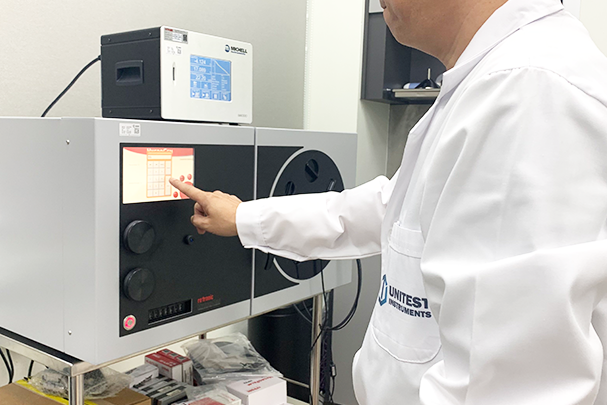
Unitest calibrates temperature and humidity data loggers with SAC-SINGLAS accredited certificates. Stated expanded uncertainty, NMC-traceable references. Audit-ready for HSA GMP, SFA, and 21 CFR Part 11 inspection.
Calibration requirements for chart recorders
Chart recorder calibration is more complex than data logger calibration because there are three separate parameters to verify. All of which must be correct for the chart to be a reliable record.
Parameter 1: Sensor accuracy. The temperature or humidity sensing element must be verified against a reference standard in the same way as a data logger sensor, at multiple points spanning the operating range, with documented deviation and expanded uncertainty. This is conceptually identical to data logger sensor calibration; the difference is that the result is recorded as a pen position on the chart rather than a digital reading in memory.
Parameter 2: Pen position. The mechanical or servo linkage between the sensor and the pen must correctly translate the sensor signal to the appropriate position on the chart scale. This requires a zero and span adjustment check: at the lowest calibration temperature, the pen must be at the correct position on the chart scale; at the highest calibration temperature, it must likewise be correct. Drift in the linkage mechanism (due to mechanical wear, corrosion of pivot points, or tension changes in the bimetallic element), causes the pen to trace a systematically offset record even if the sensor itself is correct. This parameter has no equivalent in data logger calibration.
Parameter 3: Chart drive speed. The most commonly missed calibration parameter for chart recorders is the verification that the chart is advancing at the correct rate. A 7-day circular chart recorder must complete exactly one full rotation in exactly 7 days. If the clockwork drive mechanism has worn, the chart might complete one rotation in 6.5 days, which means all timestamps recorded on the chart are systematically wrong by approximately 7.7%. A drug product whose chart records an apparent 48-hour cold storage window may have actually been stored for only 44 hours if the chart was running fast. Chart speed verification is performed by marking the chart at a known time, allowing it to run for a measured period, and confirming that the chart has advanced by the expected angular or linear amount. This step adds calibration time and requires a reference time standard. It is one reason why chart recorder calibration is typically more time-consuming and more expensive per instrument than data logger calibration.
The combination of these three verification requirements means that chart recorder calibration cannot simply be performed by placing the recorder in a reference bath and reading the chart. A complete calibration requires checking all three parameters and documenting the results and adjustments made. Many organisations migrating from chart recorders to data loggers cite the reduced calibration complexity, and the associated cost and time savings, as a practical driver alongside the compliance advantages.
Regulatory requirements in Singapore
Singapore's regulatory landscape for environmental monitoring spans multiple agencies, and the requirements differ in specifics but converge on the same core: continuous, calibrated, traceable records.
SFA food storage. Under the Environmental Public Health Act and SFA licensing requirements for cold chain food storage, licensed food establishments must maintain temperature records demonstrating cold storage is maintained within the required range for the stored food category. For refrigerated storage (typically 0–4°C), a continuous record must be maintained. SFA inspectors check that the monitoring instrument is calibrated, that the calibration certificate is current, and that records are retained. The instrument type (logger or recorder), is not specified; the requirement is the continuous calibrated record.
HSA GMP pharmaceutical storage. The HSA's Guide to GMP for Medicinal Products references WHO and PIC/S GMP guidelines, which require that all storage areas holding products with controlled temperature requirements are equipped with validated temperature monitoring systems. For stability chambers, cold rooms, refrigerators, and freezers holding registered medicinal products, the monitoring system must be validated, the instruments must be calibrated with traceable certificates, temperature mapping of the storage area must have been performed, and records must be retained. HSA inspectors increasingly expect electronic monitoring systems with formal audit trails for new installations. Existing chart recorder systems are accepted where they are validated and well-maintained, but a new cold room installation should be specified with electronic data loggers from the outset.
Vaccine storage. The Ministry of Health (MOH) and HSA requirements for vaccine cold chain are among the most demanding in the local regulatory landscape. Temperature records for vaccines must be continuous, must cover any excursion event, and must be retained as evidence for batch disposition decisions. The use of validated electronic temperature monitoring with remote alarm capability has become the expectation for primary healthcare facilities, hospitals, and distributors holding licensed vaccines.
Clinical laboratories. The Ministry of Health's laboratory accreditation requirements (referencing ISO 15189) require calibrated temperature monitoring for specimen storage, reagent storage, and incubation equipment. Electronic data loggers are standard in accredited clinical laboratories, enabling the continuous records and alarm response logs that accreditation assessors expect.
Industry certification. For ISO 22000 and FSSC 22000 food safety certification, temperature monitoring instruments at critical control points must be calibrated and the calibration records maintained. ISO 9001:2015 clause 7.1.5 applies to any organisation using temperature or humidity measurements as part of their quality management system. Across sectors from electronics manufacturing to chemical storage to building construction materials testing.
Migration from chart recorders to data loggers
For organisations managing legacy chart recorder installations in GMP or HACCP environments, migration to data loggers is frequently the right long-term decision, but it requires a structured approach to avoid creating a compliance gap during the transition.
Step 1: Document the existing recorder validation status. Before decommissioning any GMP monitoring instrument, confirm whether a formal validation (IQ/OQ/PQ) was performed for the existing system. If it was, the validation documentation must be retained and the decommissioning noted in the system's validation lifecycle record. If no formal validation was performed for the existing chart recorder system (common for legacy installations pre-dating current GMP expectations), document the current operational state before proceeding.
Step 2: Select the replacement logger system. Choose a data logger and software combination appropriate to the regulatory requirement. For 21 CFR Part 11 or EU GMP Annex 11 compliance, confirm that the software has been designed and validated for Part 11/Annex 11 use, with access controls, audit trail, and appropriate backup. For SFA food storage compliance without a pharmaceutical GMP requirement, a simpler logger with USB download may be proportionate.
Step 3: Qualify the new system (IQ/OQ/PQ). For GMP environments, installation qualification (IQ), operational qualification (OQ), and performance qualification (PQ) are required before the new monitoring system is used as the primary record. IQ confirms the system is installed correctly. OQ confirms it operates within specified limits across its operating range. PQ confirms it performs acceptably under actual use conditions. This typically includes a temperature mapping exercise to identify hot and cold spots and confirm the logger placement is representative.
Step 4: Obtain SAC-SINGLAS calibration certificates for the new loggers before go-live. The data loggers must be calibrated before they are placed into service, not after. Calibration at installation is a prerequisite for the OQ/PQ, not an afterthought. The calibration certificate range must span the full operating range of the storage environment.
Step 5: Run a parallel period. Where possible, operate the new data logger system in parallel with the existing chart recorder for a defined period (typically 2–4 weeks), before decommissioning the recorder. This parallel period validates that the new system captures the same conditions as the legacy system, provides an opportunity to identify any placement issues, and creates a transition record that can be referenced if an auditor asks about the changeover.
Step 6: Retain paper charts for the required retention period. Even after the chart recorder is decommissioned, the historical paper charts must be retained. For pharmaceutical products, the retention period is typically the longer of five years or the shelf life of the product monitored during that period. SFA requires cold storage temperature records to be retained for a minimum period specified in the licence conditions. Do not destroy historical chart records simply because the instrument has been replaced.
Unitest's calibration scope for data loggers and chart recorders
Unitest Instruments calibrates both data loggers and chart recorders under its SAC-SINGLAS accredited scope, covering temperature and relative humidity parameters across the ranges relevant to pharmaceutical storage, food cold chain, stability chamber monitoring, and cleanroom environmental control.
For temperature data loggers, calibration is performed in a temperature-controlled bath using a reference platinum resistance thermometer (PRT) traceable to NMC Singapore, at a minimum of three calibration points spanning the logger's intended operating range. The expanded uncertainty of the reference system supports stated certificate uncertainties appropriate for GMP calibration requirements. The real-time clock is verified against a reference time standard as part of the same service.
For combined temperature and humidity data loggers (such as the Testo 175 H1, Ebro EBI 25-TH, and Rotronic Hygrolog), calibration covers both parameters. Temperature in a reference bath and relative humidity in a reference humidity chamber with controlled temperature and reference hygrometer. Both temperature and humidity expanded uncertainties are stated on the certificate.
For chart recorders, the calibration service covers all three parameters: sensor accuracy, pen position alignment, and chart drive speed verification. The additional complexity of chart recorder calibration is reflected in the service time and the documented record, which must cover all three elements to be considered complete.
Calibration timing matters for GMP qualification work. Unitest recommends calibrating data loggers before a qualification run (OQ/PQ) and again at the annual interval thereafter. A logger calibrated after an OQ that found a passing result does not provide pre-qualification evidence that the instrument was calibrated when the OQ was performed. Calibrate before you qualify. Then retain that certificate as part of the qualification package. For audit timing, calibrating shortly before an HSA or SFA inspection is less valuable than maintaining a current certificate throughout the year. An auditor presented with a certificate due to expire next week will ask why it was not renewed earlier.
Frequently asked questions
The Singapore Food Agency requires continuous temperature monitoring for cold storage premises operating under a food establishment licence. The SFA does not mandate a specific instrument type, but the record must be continuous, legible, and available for inspection. A calibrated data logger with downloaded reports or a calibrated chart recorder with retained paper charts both satisfy this requirement provided the calibration certificate is current and traceable to national standards. In practice, most SFA-compliant operators use data loggers because they simplify record retrieval and enable remote alarms that allow rapid response to excursions.
21 CFR Part 11 governs electronic records and electronic signatures for FDA-regulated industries. For temperature data loggers to comply, the recording system must provide: access controls (unique user IDs, authority checks), audit trails that record who accessed or changed records and when, data integrity controls preventing unauthorised modification of stored records, validated software qualified for its intended use, and backup and recovery procedures. The physical logger itself is only part of the system. The software used to download, display, and store data must also meet these requirements. A basic logger exporting to an uncontrolled Excel file does not meet Part 11 without additional controls.
For pharmaceutical GMP environments under HSA guidelines, annual calibration of temperature monitoring instruments is the standard expectation for continuous monitoring systems. For HACCP cold chain, most food safety certification bodies (ISO 22000, FSSC 22000) also expect annual calibration at minimum, with risk-based frequency for higher-criticality critical control points. The calibration interval should be defined in your calibration plan and validated against the instrument's observed drift history. Instruments with a documented history of drift outside acceptable limits should be calibrated more frequently, typically every six months.
No. A calibration performed only at 5°C does not cover the instrument's performance at 25°C, and vice versa. A calibration certificate is only valid for the temperature range and points at which calibration was actually performed. If a logger is deployed across two significantly different storage environments, it must be calibrated at points spanning both ranges. A typical multi-environment calibration will cover at least 3–5 points across the full operating range, from the lowest storage temperature to the highest ambient condition where the logger will operate. Calibrating at only one point and applying that certificate across a wide range is a common audit finding.
Yes. Chart recorders are still acceptable for GMP pharmaceutical storage monitoring in Singapore provided the system is validated, the calibration is current and traceable, charts are retained for the required retention period (typically 5 years or product shelf life, whichever is longer), and record integrity can be demonstrated. HSA GMP inspectors increasingly expect new installations to use electronic systems with formal audit trails, but well-maintained legacy chart recorder systems that are validated are not routinely cited for mandatory replacement. The key is that the monitoring system (whatever the technology), produces reliable, continuous, calibrated records.
Yes. Unitest's SAC-SINGLAS accredited scope covers both temperature and relative humidity calibration. Combined temperature and humidity loggers (such as the Testo 175 H1, Ebro EBI 25-TH, and Rotronic Hygrolog series), are calibrated for both parameters within a single service visit. The calibration certificate states the expanded uncertainty for both temperature and humidity readings, with traceability to NMC Singapore. This is particularly important for stability chambers, cleanrooms, and pharmaceutical storage areas where both parameters are regulatory monitoring requirements.
Unitest calibrates a wide range of temperature and humidity data loggers from manufacturers commonly used in Singapore pharmaceutical and food storage: Testo (175 and 176 series), Ebro (EBI 25 series), Onset HOBO (U12, MX), Rotronic (Hygrolog HL series), Vaisala (HMT series), and loggers from local distributors. Both single-channel temperature loggers and combined temperature-and-humidity loggers fall within scope. Contact Unitest with your specific model if you are unsure whether it falls within the accredited calibration scope before sending instruments for service.
Unitest Instruments Pte. Ltd. is a SAC-SINGLAS accredited calibration laboratory (ISO/IEC 17025, no. LA-2023-0845-C) based in Singapore. We calibrate temperature and humidity data loggers and chart recorders for pharmaceutical, food, and industrial customers across Singapore, with accredited certificates ready for GMP, HACCP, and ISO 9001 audits.
Data logger and chart recorder calibration. SAC-SINGLAS accredited, audit-ready
Unitest calibrates temperature and humidity data loggers and chart recorders with accredited certificates. Stated expanded uncertainty. Ready for GMP, SFA, and ISO 9001 audits.
Verifiable at sac.gov.sg · Acc. No. LA-2023-0845-C