
Key Takeaways
- The Fluke 279 FC is a true multimeter first. It measures voltage, resistance, continuity, capacitance, and frequency, plus AC current via the included iFlex flexible probe.
- The Fluke 376 FC is a dedicated AC/DC clamp meter with a 40 mm rigid jaw, capable of measuring up to 2500 A AC and 2500 A DC. Far beyond the 279 FC's reach.
- The 279 FC includes a built-in data logger; the 376 FC does not. Giving the 279 FC an advantage for unattended monitoring sessions.
- Both meters carry the Fluke Connect wireless (Bluetooth) feature for remote reading and ShareLive video sharing.
- Both instruments require annual calibration to maintain measurement traceability. Unitest Instruments calibrates and supplies both models in Singapore.
Why This Comparison Matters for Singapore Engineers
Singapore's electrical maintenance landscape (from semiconductor fabs in Woodlands to data centres in Jurong, commercial high-rises in the CBD, and MRT infrastructure), demands instruments that can handle both everyday troubleshooting and demanding high-current measurements. The Fluke 279 FC and the 376 FC are both CAT III 1000 V / CAT IV 600 V rated, Fluke Connect-enabled tools that look similar on a spec sheet. But they are designed for fundamentally different primary tasks, and buying the wrong one for your team creates real frustration on site.
This comparison is written from the perspective of a calibration laboratory. We calibrate both instruments regularly and observe where each one's accuracy drifts, which ranges see the most field use in Singapore, and what questions engineers ask when they return instruments for servicing. We sell both tools, so this is not a sales pitch for one over the other. It is an honest assessment of where each belongs.
Specification Comparison: The Numbers Side by Side
The table below covers the specifications that matter most when choosing between these two instruments. Where Fluke's published figures differ between firmware revisions, we have used the current Singapore-market datasheets.
| Feature / Specification | Fluke 279 FC | Fluke 376 FC |
|---|---|---|
| Primary instrument type | True-RMS digital multimeter with AC clamp | True-RMS AC/DC clamp meter |
| AC current range | Up to 1000 A AC (via iFlex probe) | Up to 2500 A AC (jaw) |
| DC current range | Not available with standard clamp (adapter required) | Up to 2500 A DC (jaw) |
| Jaw opening | Flexible iFlex probe. Wraps around any conductor size | 40 mm rigid jaw |
| AC current accuracy | ±2.5% (iFlex, 1–1000 A) | ±1.5% (jaw, 60–2500 A) |
| DC voltage accuracy | ±0.5% | ±0.5% |
| AC voltage accuracy | ±1.0% | ±1.5% |
| Voltage measurement range | Up to 1000 V AC/DC | Up to 1000 V AC/DC |
| Resistance | Yes. Up to 50 MΩ | Yes. Up to 6 kΩ |
| Capacitance | Yes. Up to 10,000 µF | No |
| Frequency measurement | Yes | Yes |
| Temperature | Yes (with optional probe) | No |
| Built-in data logger | Yes. Records up to 65,000 readings | No |
| Fluke Connect wireless | Yes (Bluetooth Smart) | Yes (Bluetooth Smart) |
| Display backlight | Yes | Yes |
| Safety rating | CAT III 1000 V / CAT IV 600 V | CAT III 1000 V / CAT IV 600 V |
| IP rating | IP54 (dust and splash resistant) | IP54 (dust and splash resistant) |
| Calibration interval (Fluke recommended) | 12 months | 12 months |
| Typical Singapore street price (approx.) | S$850–S$1,100 | S$900–S$1,200 |
A few notes on the table above. The iFlex flexible probe included with the 279 FC is genuinely versatile (it can be threaded around cable bundles and bus bars where a rigid jaw cannot fit), but its accuracy of ±2.5% is somewhat looser than the 376 FC's jaw. For most field diagnostics that trade-off is acceptable; for billing-grade or acceptance testing, the 376 FC's jaw measurement is more defensible. The 279 FC's resistance range up to 50 MΩ is a major functional differentiator. The 376 FC's 6 kΩ limit means it cannot do meaningful insulation checks or motor winding resistance measurements.
Where the Fluke 279 FC Excels
The 279 FC is built around the assumption that the person carrying it is a generalist electrical technician or engineer who needs one instrument to handle a broad range of tasks throughout the day. In a Singapore commercial building maintenance context. Where a single technician may check lighting circuits, test motor starters, verify panel voltages, and investigate a tripped ELCB all in the same morning. The 279 FC's multimeter-first design pays off immediately.
The built-in data logger is a genuine standout feature. With capacity for up to 65,000 readings and configurable logging intervals, the 279 FC can be left in place to record voltage or current over a 24-hour period without any phone or laptop nearby. This is especially useful in Singapore's plant rooms, where access may be restricted during occupied hours. The 376 FC has no equivalent feature. To log with the 376, you need to keep your phone paired and the app running, which is impractical for unattended overnight sessions.
The iFlex probe included with the 279 FC kit also deserves mention. Because it is a flexible rope-type sensor rather than a rigid jaw, it can fit around a 200 mm bus bar, a bundle of parallel cables, or an awkward raceway corner where no conventional clamp jaw could ever close. In Singapore's older industrial buildings (where cable management is sometimes creative), this is a real practical advantage.
Need your Fluke 279 FC or 376 FC calibrated in Singapore?
Unitest Instruments is an SAC-SINGLAS accredited laboratory. We calibrate both instruments to traceable standards, typically within one to three business days. Certificates are accepted by ISO 9001 auditors and regulatory bodies.
Where the Fluke 376 FC Excels
The 376 FC is unambiguous about its purpose: it is a high-current, AC and DC clamp meter. The 40 mm rigid jaw accommodates the large-diameter cables found at main distribution boards, generator terminals, and utility intake panels. Its 2500 A AC and 2500 A DC ranges make it one of the more capable portable clamp meters Fluke produces, and its DC current measurement (measured directly via the Hall-effect sensor in the jaw), is a capability the 279 FC simply does not have without an external adapter.
For Singapore's growing base of solar PV installations, EV charging infrastructure, and UPS systems, DC current measurement is increasingly important. Battery bank monitoring in data centres (a significant use case in Singapore given the density of hyperscale and colocation facilities), requires DC current clamp capability as a baseline. The 376 FC handles this natively; the 279 FC does not.
The 376 FC's AC current accuracy of ±1.5% at its jaw is also tighter than the 279 FC's ±2.5% via iFlex. For acceptance testing of new electrical installations, where the contractor must demonstrate that load current is within specified limits, the 376 FC's accuracy gives more confidence. It is also worth noting that the 376 FC includes iFlex connectivity (it can accept an optional iFlex probe for measurements on conductors where the jaw cannot close), giving it some of the 279 FC's flexibility when needed.
Calibration Considerations for Both Instruments
Both the Fluke 279 FC and the 376 FC are precision instruments whose specified accuracies are only valid if the meter has been calibrated within the recommended interval. Fluke specifies a 12-month calibration cycle for both, and this interval is appropriate for most Singapore field environments. In high-temperature, high-humidity plant rooms (common throughout Singapore's industrial zones), we generally recommend not extending beyond 12 months without a prior calibration check.
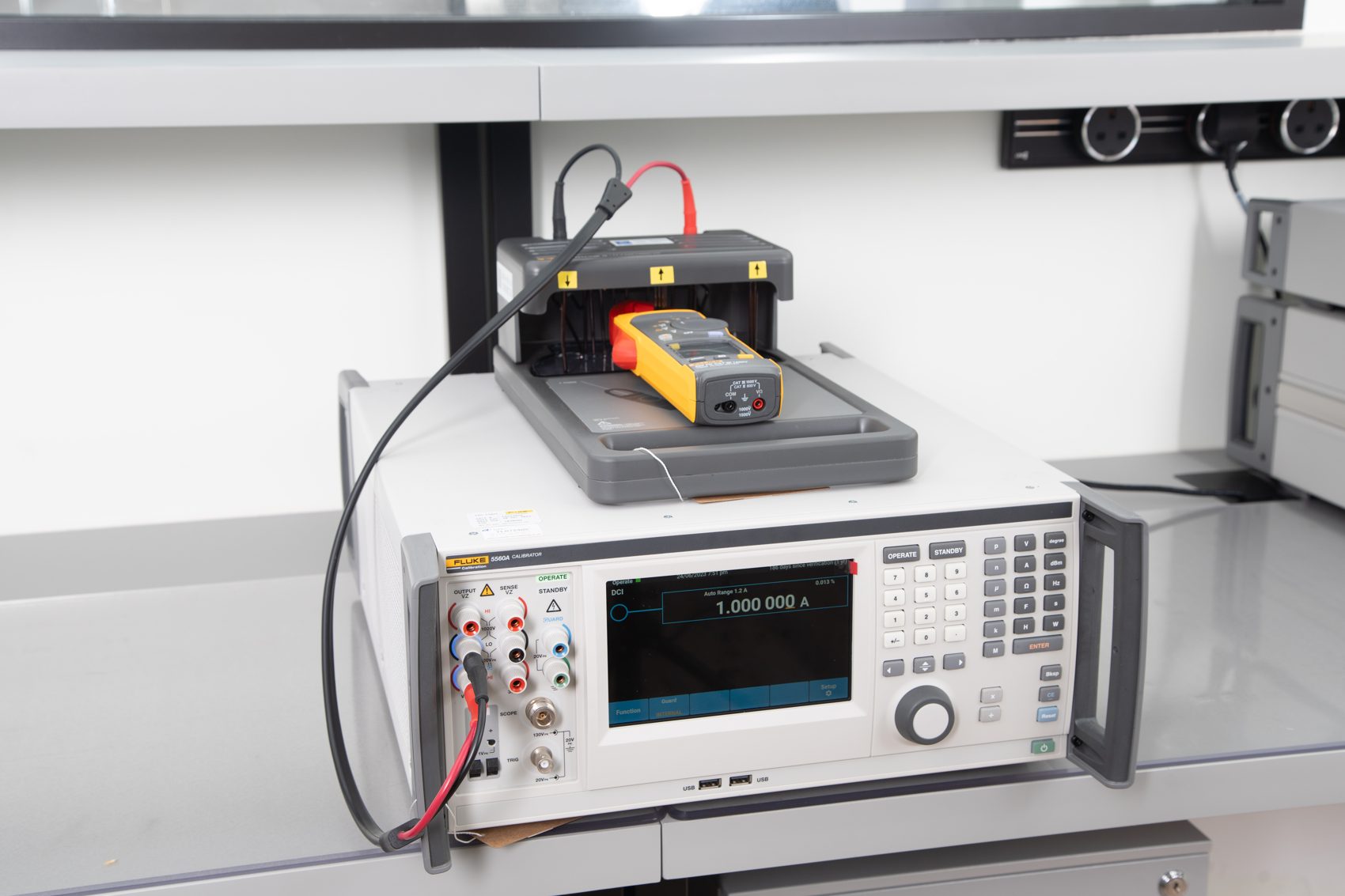
The calibration process for a clamp meter like the 376 FC involves verifying accuracy across multiple current ranges using a traceable AC and DC current source, and checking the jaw alignment and magnetic linearity. For the 279 FC, calibration additionally covers the full multimeter function suite (voltage, resistance, capacitance), making the calibration scope broader but the individual measurement points equally important. Understanding what your calibration certificate covers is important; a certificate that only verifies voltage ranges on a 279 FC is incomplete if you rely on the iFlex for current measurements.
For engineers procuring calibration services for either instrument, it is worth understanding what accreditation actually means. You can read more about this in our article on accredited vs non-accredited calibration. The short version is that an accredited certificate from a SAC-SINGLAS laboratory carries legal weight in Singapore that a non-accredited certificate does not. We have also published a plain-English guide on what a calibration certificate actually tells you, which is useful reading before you specify calibration requirements in a procurement contract.
Honest Trade-Offs: What Each Meter Cannot Do
No instrument is perfect for every job, and both of these tools have genuine limitations worth naming clearly.
Fluke 279 FC limitations
- Cannot measure DC current via the standard iFlex probe. Requires a separate DC current clamp adapter, adding cost and a second instrument to carry.
- The iFlex probe's ±2.5% current accuracy is adequate for diagnostic work but may be challenged on acceptance testing where tighter tolerances are specified.
- Rigid jaw is not included in the standard kit. If you prefer the feel and precision of a traditional clamp jaw for routine current checks, the 279 FC requires an accessory purchase.
- Larger and heavier than a dedicated clamp meter when carrying both the meter body and the iFlex cable.
Fluke 376 FC limitations
- No built-in data logger. Logging requires a paired smartphone running the Fluke Connect app, which is impractical for unattended monitoring.
- Resistance range tops out at 6 kΩ. Far too low for insulation checks, motor winding resistance, or earth electrode resistance measurements.
- No capacitance or temperature measurement capability.
- Cannot replace a general-purpose multimeter for fault-finding work that involves component-level checks.
The honest summary is that these two tools are more complementary than competitive. A maintenance team that carries both has a genuinely capable toolkit. A team that can only carry one needs to choose based on whether the primary daily task is general troubleshooting (choose the 279 FC) or high-current measurement and logging-free high-current clamp work (choose the 376 FC).
Which Meter to Buy for Your Use Case
Rather than a generic recommendation, here is a use-case-specific guide for the most common Singapore electrical maintenance scenarios:
| Use case | Recommended meter | Reason |
|---|---|---|
| General building maintenance technician (lighting, ACMV, small motors) | Fluke 279 FC | Replaces both a multimeter and a basic clamp; the iFlex covers most commercial cable sizes |
| MDB / SMDB panel testing at incoming feeder level | Fluke 376 FC | 40 mm jaw fits large feeders; 2500 A range covers most LV distribution scenarios |
| Generator load testing and commissioning | Fluke 376 FC | High current range and DC capability for generator output terminals; ±1.5% accuracy supports acceptance records |
| Solar PV / EV charging infrastructure | Fluke 376 FC | DC current measurement is a native jaw function. No adapter required |
| Data centre UPS and battery system monitoring | Fluke 376 FC | DC current capability; high current range for battery bus measurements |
| Overnight unattended power monitoring | Fluke 279 FC | Built-in data logger records up to 65,000 readings without a paired phone |
| Motor and drive troubleshooting (resistance, capacitance, current) | Fluke 279 FC | Full multimeter functions including 50 MΩ resistance, capacitance, and iFlex current |
| Contract M&E team carrying a single tool for varied sites | Fluke 279 FC | Broader measurement scope suits multi-site teams without dedicated current measurement requirements |
If your procurement budget allows both, the combination of a 279 FC (for multimeter functions and unattended logging) and a 376 FC (for high-current and DC clamp work) covers virtually every portable electrical measurement task in Singapore's LV environment. Both instruments are available through Unitest Instruments, and we can calibrate them together as a paired set, issuing a single purchase order and calibration service that covers both.
Understanding how calibration intervals affect your instrument's total cost of ownership is also worth factoring into the purchase decision. Our article on how often instruments should be calibrated provides practical guidance on setting appropriate intervals for field instruments like these, including how usage intensity and environment affect drift rates in Singapore's climate.
What Fluke Connect Actually Adds in Daily Field Use
Both instruments share Fluke Connect Bluetooth wireless connectivity, and it is worth being specific about what this feature does and does not change in practice, since it is often mentioned as a headline feature without explaining its real day-to-day value. The core function is live wireless display mirroring, a technician can position the clamp meter on a hard-to-reach conductor (inside a crowded MDB panel, at the top of a ladder, or on a live bus bar where standing close to read the display is itself a safety concern) and read the live measurement on a paired smartphone from a safer distance, which is a genuine safety improvement in CAT III/IV working conditions rather than just a convenience feature. Fluke Connect also supports ShareLive video calls, letting a junior technician on site share the live meter reading and a video feed with a senior engineer or the client's own facilities team remotely, a capability that saw real practical uptake in Singapore during periods when site access for senior staff was restricted, and remains useful for multi-site contracting teams who cannot always have their most experienced technician physically present.
Where the app's value tapers off is exactly the gap the 279 FC's built-in logger fills: Fluke Connect trend logging requires the app to remain open and the phone to stay within Bluetooth range of the meter for the duration of the logging session, which is workable for a supervised hour-long test but impractical for an unattended 24-hour or multi-day monitoring session, the kind routinely needed to catch an intermittent fault that only appears during a specific production shift or peak-load period. This is precisely why the 279 FC's standalone 65,000-reading internal logger remains relevant even in an app-connected world: it does the one thing the app-dependent 376 FC genuinely cannot do without additional hardware, log unattended over an extended period with no phone required.
Patterns We See Calibrating These Two Instruments
Having calibrated large numbers of both models for Singapore clients, a few recurring patterns are worth sharing because they inform what to check before an instrument's scheduled calibration date rather than after a problem occurs. On the 376 FC, the most common as-found deviation we see is a small current accuracy shift specifically at the low end of its range (under roughly 60 A), which is a known characteristic of jaw-based Hall-effect sensors reading small currents relative to their designed high-current span; teams using the 376 FC for both high-current MDB work and lower-current diagnostic checks on the same instrument should be aware that its accuracy specification is genuinely tightest in the higher-current range it was primarily designed for, and a reading near the bottom of its range deserves a slightly more sceptical eye than one in the middle of the span.
On the 279 FC, the most common finding relates to the iFlex probe rather than the meter body itself: the flexible coil's accuracy is sensitive to how tightly and consistently it is looped around the conductor, and a probe that has been repeatedly kinked, coiled too tightly in storage, or connected with an incomplete loop closure shows measurably more reading variability between uses than one handled and stored per Fluke's guidance, even when the meter body itself calibrates perfectly within specification. This is a genuinely different failure mode from anything a rigid clamp jaw experiences, and it is worth building "inspect and correctly coil the iFlex probe" into your team's pre-use routine specifically for 279 FC users, since the meter passing its scheduled calibration does not guarantee the probe was handled correctly in the field between calibration visits.
Frequently Asked Questions
The Fluke 279 FC is a true-RMS digital multimeter that also includes built-in AC current clamp capability via the iFlex flexible current probe. The Fluke 376 FC is a dedicated true-RMS AC/DC clamp meter with a rigid 40 mm jaw capable of measuring up to 2500 A AC and 2500 A DC. The 279 FC is optimised for versatility across voltage, resistance, and continuity measurements with occasional current checks; the 376 FC is optimised for high-current and large-conductor measurements where jaw size and DC capability matter most.
Not with its built-in clamp function alone. The 279 FC measures AC current via the iFlex flexible probe included in the kit, but DC current measurement requires an optional DC current clamp adapter. The Fluke 376 FC, by contrast, measures both AC and DC current up to 2500 A directly with its jaw. Making it the better choice for battery banks, DC bus systems, and solar inverter circuits common in Singapore's commercial buildings.
The Fluke 376 FC is the clear winner for high-current industrial work. Its 40 mm jaw accommodates large cables and bus bars, and it measures up to 2500 A AC and 2500 A DC. Specifications relevant to MDB and SMDB panels, generator testing, and chiller plant measurements common in Singapore's industrial parks and commercial facilities. The 279 FC tops out at 1000 A AC via iFlex and cannot measure DC current with the clamp without an add-on.
Yes, both the Fluke 279 FC and the 376 FC include Fluke Connect wireless capability (Bluetooth Smart), allowing readings to be streamed to the Fluke Connect mobile app or the Fluke Connect Assets cloud platform. Both also support ShareLive video calls. The 279 FC additionally features a built-in data logger that can record readings over time without needing a phone nearby. A useful advantage for unattended monitoring in confined plant rooms.
The Fluke 279 FC has a slight edge in voltage measurement accuracy, rated at ±0.5% for DC voltage and ±1.0% for AC voltage. The Fluke 376 FC is rated at ±0.5% for DC voltage and ±1.5% for AC voltage. For most field work the difference is negligible, but in environments where tight voltage tolerance matters (such as precision power quality checks or pre-calibration baseline surveys), the 279 FC's AC voltage spec gives a marginal advantage.
Yes. Both the Fluke 279 FC and the 376 FC are precision instruments whose accuracy can drift over time due to temperature cycling, mechanical shock, and component ageing. Fluke recommends a calibration interval of 12 months for both meters. In Singapore's humid, high-temperature environment (especially for meters used on construction sites or in plant rooms), annual calibration by a SAC-SINGLAS accredited laboratory like Unitest Instruments ensures your readings remain traceable and defensible for ISO 9001 and regulatory audits.
Yes. Unitest Instruments is a SAC-SINGLAS accredited calibration laboratory (Acc. No. LA-2023-0845-C) under ISO/IEC 17025, and we calibrate both the Fluke 279 FC and the 376 FC, as well as supply both instruments. Calibration certificates issued by Unitest are traceable to Singapore's National Metrology Centre (NMC) and are accepted by ISO 9001 auditors, regulatory bodies, and major EPCs in Singapore.
For a general electrical maintenance team that handles both troubleshooting (voltage, resistance, continuity) and periodic current checks, the Fluke 279 FC is typically the better single-instrument purchase. It replaces both a standalone multimeter and a basic clamp meter for most everyday tasks. If your team regularly works on large feeders, generators, or DC systems above 1000 A, purchase the 376 FC instead. The two tools are genuinely complementary, many Singapore contractors carry both.
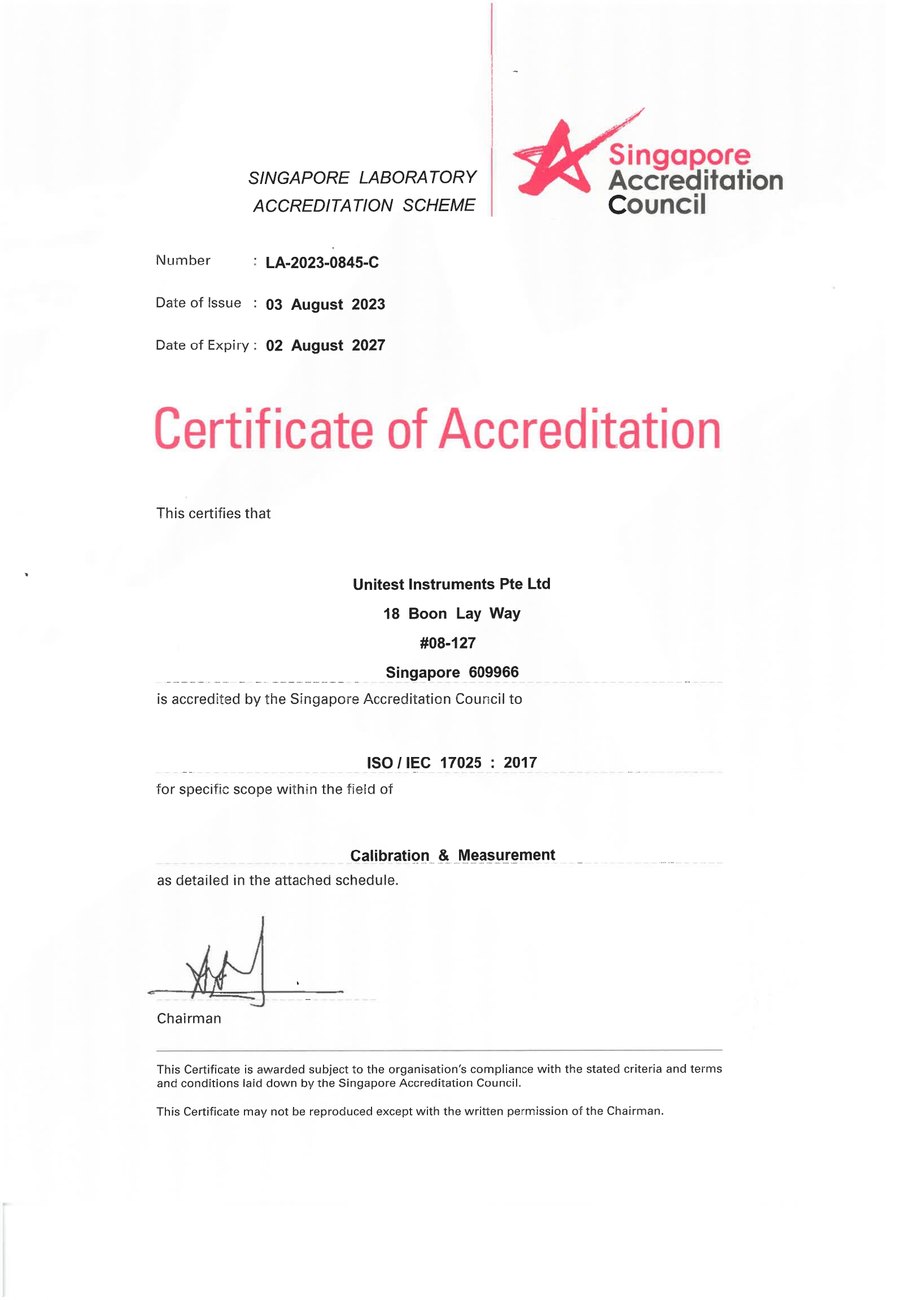
SAC-SINGLAS accredited calibration laboratory (Acc. No. LA-2023-0845-C) serving Singapore's industrial, pharmaceutical, and manufacturing sectors. All content reflects our ISO/IEC 17025 accredited scope and is reviewed by our technical calibration team.
Need clamp meter or multimeter calibration in Singapore?
Unitest Instruments is SAC-SINGLAS accredited (Acc. No. LA-2023-0845-C) to ISO/IEC 17025. Same-week turnaround, certificates accepted by ISO 9001 auditors.