
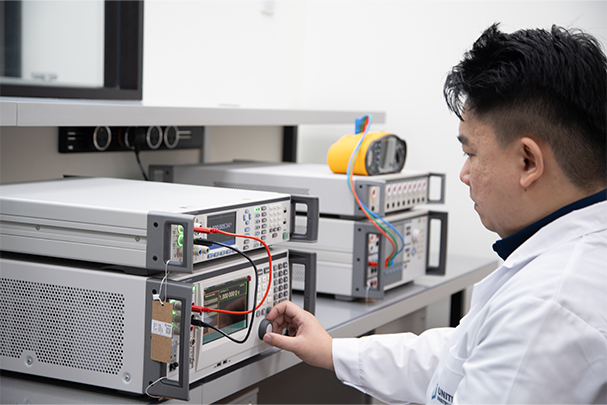
Key Takeaways
- At least eight distinct instrument classes in a typical utility require scheduled calibration, from revenue meters to relay test sets and SF6 pressure gauges.
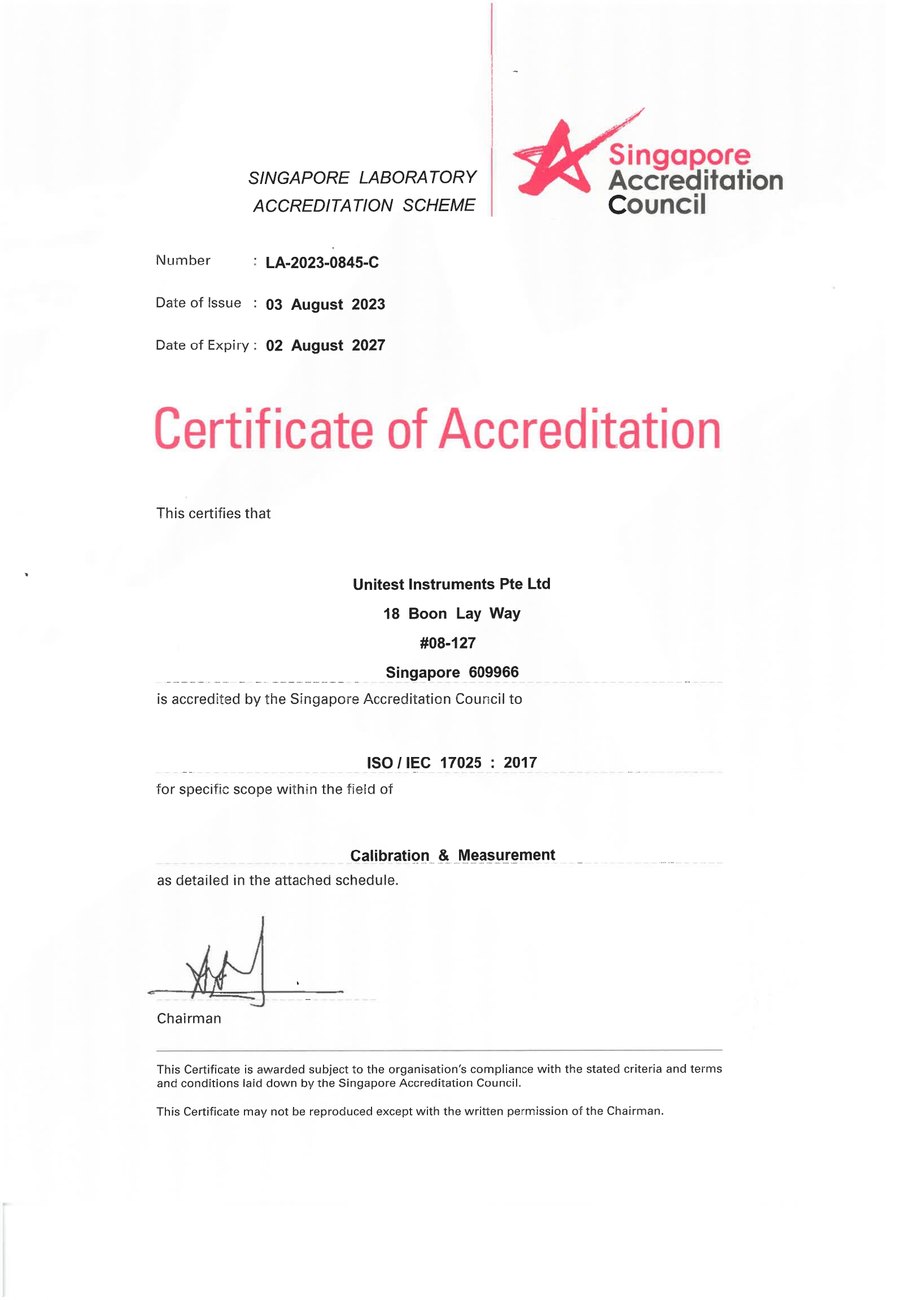
- SAC-SINGLAS accreditation (Acc. No. LA-2023-0845-C) provides internationally recognised traceability through APLAC and ILAC MRAs, accepted by EMA and grid auditors.
- Calibration intervals should be risk-stratified: billing and protection instruments warrant 12-month cycles; field maintenance tools may extend to 24 months with documented justification.
- Measurement uncertainty must be stated on every certificate and matched to the instrument's in-service accuracy requirement. A common gap found during ISO 9001 audits.
- A structured calibration recall system (with certificate expiry tracking and instrument status labelling), is the foundation of a defensible maintenance programme.
Why Calibration Is Non-Negotiable for Grid Operators
Electricity grids operate on precision. A protection relay that trips 40 milliseconds late due to an uncalibrated test set can allow a fault current to damage transformer windings. A billing energy meter reading 1.5% high may seem small, but at industrial-scale consumption it can represent hundreds of thousands of dollars in disputed invoices annually. A pressure gauge on an SF6 circuit breaker that reads low may give maintenance teams false confidence about gas density. A condition directly linked to equipment failure and arc-flash risk.
These are not theoretical risks. They are the documented root causes behind regulatory findings, insurance disputes, and major grid incidents across the Asia-Pacific region. Calibration is the process that closes the gap between what an instrument reads and what is actually happening in the physical system, and it only has value when it is performed by a laboratory whose measurements are themselves reliable and traceable.
In Singapore, that reliability is formally conferred by SAC-SINGLAS accreditation under ISO/IEC 17025. Unitest Instruments holds accreditation number LA-2023-0845-C, covering electrical, temperature, and pressure parameters. Every certificate we issue carries traceability back to Singapore's National Metrology Centre (NMC) and, through international mutual recognition agreements, to the SI units maintained by national metrology institutes worldwide.
Key Instrument Classes in the Utilities Sector
Understanding which instruments require calibration (and why), is the starting point for building any utility maintenance programme. The table below maps the principal instrument classes, the parameters they measure, and the typical calibration interval applied in Singapore's utilities and power-grid environment.
| Instrument Class | Parameter(s) Measured | Typical Use in Utilities | Recommended Interval | Compliance Driver |
|---|---|---|---|---|
| Revenue Energy Meters | kWh, kVARh, power factor | Billing metering at grid connection and industrial HV customers | 24 months (EMA-mandated cycles) | EMA Electricity (Metering) Regulations |
| Check / Reference Meters | kWh, W, VA | Cross-verification of revenue meters; dispute resolution | 12 months | ISO 9001, internal QMS |
| Protective Relay Test Sets | AC voltage, AC current, time interval, phase angle | Injection testing of distance, overcurrent, differential relays | 12 months | Grid code, SCADA maintenance records |
| Current Transformers (CTs) | Ratio error, phase displacement | Protection and metering; primary/secondary ratio accuracy | 24 months or after any fault event | IEC 61869-2, ISO/IEC 17025 scope |
| Power Quality Analysers | Harmonics, THD, flicker, sag/swell, frequency | Grid monitoring, power quality compliance surveys | 12 months | EN 50160, grid code power quality clauses |
| Insulation Resistance Testers | Insulation resistance (MΩ, GΩ), polarisation index | Transformer winding, cable, motor insulation assessments | 12 months | IEC 60364, maintenance programme |
| SF6 Gas Density Monitors / Pressure Gauges | Pressure (bar/kPa), gas density | Circuit breaker and GIS compartment gas monitoring | 12–24 months | IEC 62271-200, equipment OEM requirements |
| Temperature Transmitters & RTDs | Temperature (°C) | Transformer oil temperature, cooling system, switchgear thermal | 12–24 months | ISO 9001, SCADA data integrity |
| Clamp Meters & Handheld Multimeters | AC/DC voltage, current, resistance, continuity | Field maintenance, fault-finding, live-line checks | 6–12 months | Internal QMS, operational safety |
This is not an exhaustive list. Facilities teams at water utilities, gas pipeline operators, and district cooling providers will add flow meters, differential pressure transmitters, and gas chromatographs to their scope. The common thread is the same: every instrument whose output drives a decision (commercial, safety, or regulatory), must have a documented, traceable calibration history.
Understanding Calibration Intervals in a Utility Context
No universal rule sets calibration intervals for utility instruments. The appropriate interval is determined by a combination of manufacturer recommendation, regulatory requirement, instrument criticality, and the organisation's own track record of calibration results. A well-run utility calibration programme uses a risk-matrix approach: instruments that are safety-critical or billing-relevant get shorter intervals; low-criticality field instruments with stable drift histories can be extended.
Risk-Based Interval Setting
The standard approach is to start with the manufacturer's recommended interval. Typically 12 months for precision instruments. Then review the last three calibration results: if an instrument consistently passes well within its tolerance, extending the interval by 20–30% is defensible and reduces cost. If it has failed or drifted close to tolerance limits, shortening the interval is prudent. This process should be documented and approved by the maintenance or QA manager, and reviewed annually.
For protection relay test sets specifically, many utilities align calibration with their planned outage windows (typically once per year), so that the test set is freshly calibrated before any protection relay maintenance campaign. This avoids the risk of discovering an out-of-tolerance test set after completing a relay test programme.
Singapore Regulatory Requirements
Singapore's Energy Market Authority (EMA) regulates metering under the Electricity (Metering) Regulations. Revenue-grade meters used at contestable consumer connections must be tested and sealed according to EMA's approved metering code. While EMA does not prescribe the use of SAC-SINGLAS accredited laboratories by name in all instances, calibration certificates from accredited laboratories are the recognised standard of evidence in disputes and regulatory submissions. SP Group, as the market support services licensee, mandates calibration traceability for all meters in the regulated metering infrastructure.
Calibrate Your Utility Instruments with Confidence
Unitest Instruments is Singapore's SAC-SINGLAS accredited calibration laboratory for electrical, temperature, and pressure parameters. Same-week turnaround for most instruments. Certificates accepted by EMA, ISO 9001 auditors, and grid-code compliance teams.
SAC-SINGLAS Accreditation: What It Means in Practice
When a utility submits calibration records to an auditor, the question the auditor asks is not "was this instrument calibrated?" but "can you demonstrate that the calibration measurement is itself reliable?" That is precisely what SAC-SINGLAS accreditation answers.
Accreditation under ISO/IEC 17025 means that the calibration laboratory has been independently assessed against a rigorous set of technical and management requirements. The assessors verify that the lab's reference standards are themselves traceable to national standards, that measurement uncertainty is correctly calculated and stated on certificates, that laboratory staff are technically competent, and that the laboratory's quality management system ensures consistent, repeatable results.
For Unitest Instruments, accreditation number LA-2023-0845-C covers electrical parameters (voltage, current, resistance, power, energy, frequency) and temperature and pressure ranges relevant to utilities and industrial facilities. Our certificates carry the SAC-SINGLAS mark and are accepted internationally through APLAC and ILAC mutual recognition arrangements. Meaning a certificate issued in Singapore is recognised by regulators and auditors in Australia, Europe, the US, and across ASEAN without further endorsement.
For more detail on what distinguishes accredited from non-accredited calibration, see our article on accredited vs non-accredited calibration. A common source of confusion in procurement decisions.
What a Utility Calibration Certificate Must Contain
A calibration certificate is a legal and technical document. For utilities, understanding what a valid certificate must contain is essential. Both for accepting certificates from subcontractors and for ensuring your own instruments' certificates will withstand scrutiny.
Under ISO/IEC 17025, a calibration certificate must include: the name and address of the issuing laboratory; a unique certificate identifier; the date of calibration and next recommended calibration date (if stated); the instrument's identity (make, model, serial number, asset tag); the measurement standards used for calibration and their traceability; the environmental conditions at time of calibration; the calibration results (measured values at each test point); and the measurement uncertainty associated with each result.
The measurement uncertainty statement is frequently the weakest element on non-accredited certificates. For a protection relay test set, the uncertainty of the AC current output at 1A secondary matters enormously. If the test set itself has an uncertainty of ±2% at k=2, and the relay's pickup tolerance is ±5%, the uncertainty consumes a significant fraction of your allowable error budget. An accredited certificate will state this clearly; a non-accredited one often will not.
Our article on how to read a calibration certificate walks through each field in detail with annotated examples. Useful for training QA teams who review incoming certificates from instrument suppliers.
Building a Practical Calibration Programme for Utilities Teams
A calibration programme is only as strong as its execution. Many utilities have instrument registers that are accurate in principle but broken in practice. Instruments that are due for calibration sit in the field for months beyond their due date because the recall system is manual, or because the calibration lab turnaround is slow, or because no one is responsible for tracking overdue instruments.
Step 1: Build a Complete Instrument Register
Start with a full audit of instruments in service. For each instrument, record: asset tag, make, model, serial number, location, measurement parameter and range, calibration interval, date of last calibration, certificate number, and next due date. Many CMMS (Computerised Maintenance Management System) platforms support this natively. At minimum, a shared spreadsheet with colour-coded due-date alerts is better than nothing.
Step 2: Assign Calibration Criticality Tiers
Tier 1 (billing, protection, safety): instruments whose miscalibration directly affects grid protection, revenue billing, or personnel safety. Calibrate on fixed intervals, never extend without technical justification, always use an accredited laboratory. Tier 2 (process monitoring): instruments used for operational decision-making but not safety-critical. May use risk-based interval extension after three consecutive passes. Tier 3 (reference only): instruments used for rough checks, not relied upon for decisions. Internal calibration or manufacturer certificate acceptable.
Step 3: Establish Recall Procedures
Set automated reminders 60 and 30 days before each instrument's calibration due date. For field instruments, coordinate with operations to schedule withdrawal windows that do not coincide with peak demand periods or planned maintenance outages on the same equipment. Maintain a pool of calibrated spare instruments for Tier 1 items so that the primary instrument can be sent for calibration without a gap in coverage.
Step 4: Label Instruments Clearly
Every calibrated instrument must carry a physical label showing the calibration date, the next due date, and the certificate reference number. Use tamper-evident labels for billing and protection instruments. Instruments found without a calibration label must be immediately withdrawn from service pending calibration. This is a standard requirement in ISO 9001 audits and is frequently cited as a non-conformance when missing.
Step 5: Review and Continuously Improve
At least annually, review the calibration results database for trends. Which instruments are consistently failing? Which are drifting towards tolerance limits? Persistent failures on a specific instrument model may indicate a procurement quality issue, a storage or handling problem, or an environment that causes accelerated drift. Act on these patterns before they become audit findings or, worse, measurement errors in the field.
Singapore Context: Regulatory Bodies and Standards That Apply
Singapore's utilities calibration landscape involves several overlapping regulatory frameworks. The Energy Market Authority (EMA) governs electricity metering under the Electricity Act and its subsidiary legislation. SP Group's grid code specifies performance and testing requirements for connected parties. The Building and Construction Authority (BCA) references calibration requirements for building electrical installations under SS638. For water utilities, PUB's water supply regulations include requirements for flow measurement accuracy.
Across all of these, ISO/IEC 17025 accredited calibration is the common standard of evidence. When in doubt, an accredited certificate from a SAC-SINGLAS laboratory will satisfy the requirement. A non-accredited certificate may not, and the cost of re-calibrating instruments after an audit finding, plus the reputational cost of a non-conformance, typically far exceeds the marginal cost of using an accredited laboratory in the first place.
Understanding your measurement uncertainty obligations is particularly important in this regulatory context. Our guide to measurement uncertainty explains how uncertainty is calculated and what the values on a certificate mean for your compliance position. Essential reading for QA teams preparing for regulatory submissions.
What Goes Wrong When Calibration Is Neglected on the Grid
The failure modes that follow neglected calibration in a utility environment tend to be quiet for a long time before they become visible, which is what makes them dangerous. A revenue meter drifting slowly high does not trip an alarm; it simply generates invoices that a large industrial customer eventually disputes, and by the time the dispute reaches a formal review, the utility may be facing a multi-month billing correction and a damaged commercial relationship, all traceable to a single meter that missed its 24-month recalibration window. Protection relay test sets present a sharper risk profile: a test set that has drifted on its current injection accuracy can make a relay appear to pick up correctly during a routine maintenance test when its actual field threshold has shifted, meaning the relay may fail to clear a fault within the coordinated time-grading scheme during a real event, an outcome that can cascade into wider equipment damage or a larger-than-necessary outage footprint. SF6 gas density monitors compound this risk further: a pressure gauge reading falsely high on a circuit breaker gas compartment can mask a genuine slow leak until the gas density falls low enough to compromise the breaker's interrupting capability, precisely the condition the monitor exists to catch.
None of these failure modes are hypothetical for Singapore's grid infrastructure; they are the generic patterns documented across utility maintenance literature and regulatory post-incident reviews internationally, and they share a common root cause: an instrument whose calibration status was assumed rather than verified. This is why Tier 1 instruments in a well-run utility programme are never left to a "calibrate when convenient" schedule, and why the cost of accredited calibration, typically a small fraction of a percent of the equipment value it protects, is treated as a fixed operating cost rather than a discretionary maintenance line item.
Coordinating Calibration Around Outage Windows and Grid Availability
A practical constraint unique to the utilities sector is that many instruments cannot simply be pulled from service on demand; taking a protection relay test set, a CT, or an SF6 monitor out of active use often depends on a planned outage window, a switching schedule, or a maintenance campaign that may only occur once or twice a year. This makes calibration planning fundamentally different from, say, a laboratory sending a pipette for calibration whenever convenient. Utility calibration programmes that work well in practice build their calibration calendar around the outage and switching schedule rather than the other way round, submitting Tier 1 instruments for calibration in the weeks immediately before a planned maintenance window so the freshly calibrated instrument is available exactly when the outage opens, rather than racing an expired certificate against a fixed switching date that cannot move.
Maintaining a pool of pre-calibrated spare instruments for the highest-criticality categories, protection relay test sets and reference check meters in particular, removes this scheduling pressure entirely: the spare is swapped in immediately, the primary instrument goes for calibration on a normal turnaround, and no outage window is ever put at risk by an instrument still sitting at the calibration laboratory. For utilities without the budget for a full spare fleet, working with a calibration provider like Unitest that can commit to guaranteed same-week turnaround for Tier 1 instrument categories achieves much of the same protection at a fraction of the capital cost.
Frequently Asked Questions
Power utilities typically calibrate: current transformers (CTs) and voltage transformers (VTs), power quality analysers, energy meters (billing and check meters), protective relay test sets, high-voltage insulation testers, temperature and pressure transmitters on turbines and cooling systems, and DC battery charger voltage monitors. Any instrument whose reading influences a safety, billing, or protection decision should be on a calibration schedule.
Calibration intervals depend on instrument type, manufacturer recommendation, and criticality. Protective relay test sets and precision power analysers are typically calibrated annually. Revenue-grade energy meters follow EMA billing-meter regulations, often on 2-year cycles. Insulation testers and clamp meters used in field maintenance are commonly on 12-month cycles. High-use handheld instruments may require 6-month intervals. A risk-based review of past calibration history is the most rigorous approach to setting intervals.
SAC-SINGLAS (Singapore Accreditation Council – Singapore Laboratory Accreditation Scheme) is Singapore's national accreditation programme for testing and calibration laboratories, operating under ISO/IEC 17025. For utilities, calibration certificates from a SAC-SINGLAS accredited lab (such as Unitest Instruments, Acc. No. LA-2023-0845-C) carry formal recognition by regulators, auditors, and grid operators. They confirm that measurement results are traceable to Singapore's National Metrology Centre and are internationally recognised through mutual recognition agreements (MRAs) with APLAC and ILAC.
The most critical parameters for grid calibration include AC voltage (kV and mV ranges), AC current (both primary and secondary CT output), power and energy (kW, kWh, power factor), frequency (Hz), insulation resistance (MΩ, GΩ), contact and lead resistance (mΩ), temperature (°C, for transformer oil and switchgear), and pressure (bar/kPa, for SF6 switchgear and cooling systems). Each parameter must be measured with uncertainty appropriate to the grid's protection or billing function.
For most regulatory and billing-related instruments in Singapore's electricity sector, a SAC-SINGLAS accredited certificate is required or strongly preferred. Non-accredited calibration may be acceptable for low-risk, non-billing instruments in internal maintenance programmes, but it will not satisfy ISO 9001 auditors, EMA compliance checks, or SP Group's grid-code metering requirements. Using an accredited lab removes ambiguity and protects the utility from audit findings.
An energy meter calibration certificate will state the nominal test points (e.g. 100%, 50%, 10% of rated current, at unity and 0.5 power factor), the measured error at each point, and the expanded measurement uncertainty (typically at k=2, 95% confidence). Look for the accreditation logo, lab reference number, and a statement of traceability. The certificate is only valid for the specific instrument serial number and the date of calibration. Check it against the meter's nameplate before filing.
Most routine electrical instrument calibration (clamp meters, insulation testers, power analysers, multimeters), can be completed within 3 to 5 working days at an accredited lab in Singapore. High-voltage test sets and current transformers may require 5 to 10 working days depending on range and complexity. Unitest Instruments offers same-week turnaround for most instruments and can discuss priority scheduling for planned outage windows.
Yes. Calibrating the test equipment used for protective relay testing (such as a Megger OMICRON, Doble, or equivalent injection test set) requires a calibration laboratory with an accredited scope covering AC voltage, AC current, time interval, and phase angle at the relevant ranges. An ISO/IEC 17025 accredited lab with a SAC-SINGLAS scope covering electrical parameters (such as Unitest Instruments), is the appropriate choice. The calibrated test set's certificate then underpins the traceability of your relay-trip time records.
SAC-SINGLAS accredited calibration laboratory (Acc. No. LA-2023-0845-C) serving Singapore's industrial, pharmaceutical, and manufacturing sectors. All content reflects our ISO/IEC 17025 accredited scope and is reviewed by our technical calibration team.
Need electrical calibration for your utility in Singapore?
Unitest Instruments is SAC-SINGLAS accredited (Acc. No. LA-2023-0845-C) to ISO/IEC 17025. Same-week turnaround, certificates accepted by ISO 9001 auditors and Singapore grid-code compliance teams.