
Key Takeaways
- Class A (IEC 61000-4-30) is required for SP Group grid compliance reporting and dispute-resolution measurements. Class S is for diagnostics only.
- Singapore's SS638 and BCA Green Mark programs require documented power quality data; a calibrated Class A instrument creates auditable evidence.
- The Fluke 435-II covers all IEC 61000-4-30 Class A parameters and is the most common choice for Singapore's manufacturing and data centre sectors.
- Newly purchased analyzers should be calibrated by an SAC-SINGLAS accredited laboratory before first use to establish a traceable baseline.
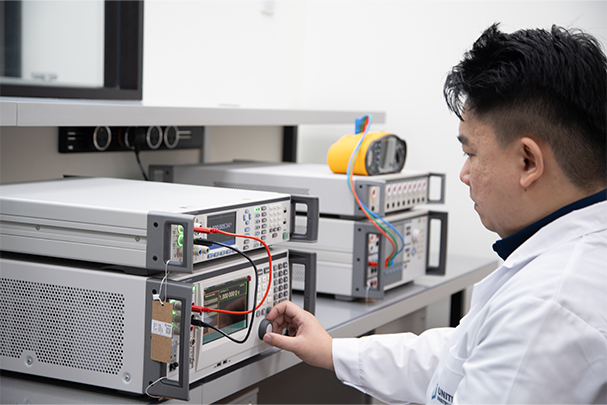
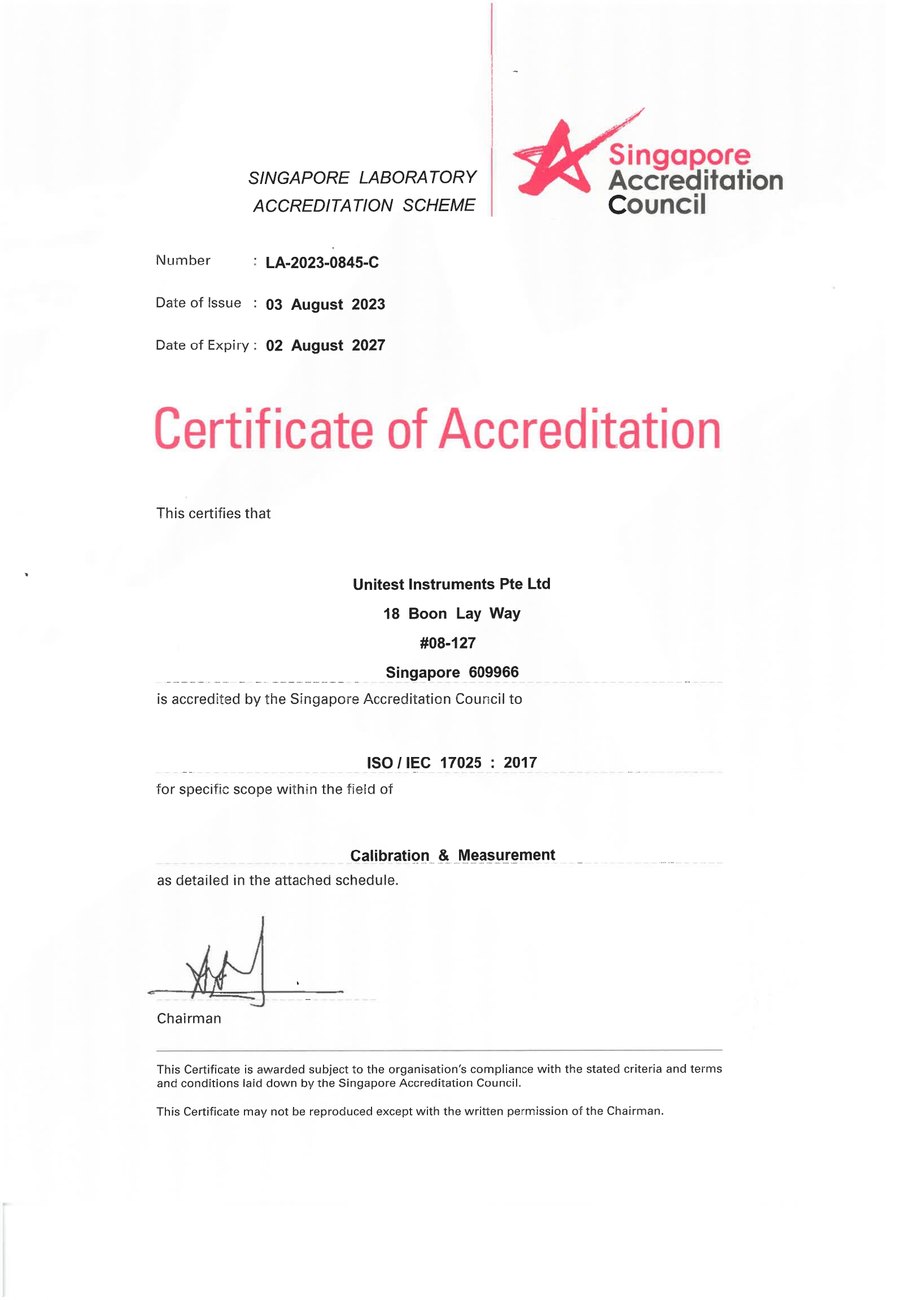
- All analyzers in this guide are available from Unitest Instruments at unitestshop.com and can be calibrated under our SAC-SINGLAS accreditation (Acc. No. LA-2023-0845-C).
Who Needs a Power Quality Analyzer in Singapore?
Power quality problems cost Singapore businesses millions of dollars annually in premature equipment failures, production downtime, and wasted energy. Variable frequency drives (VFDs), UPS systems, LED lighting retrofits, electric vehicle chargers, and data centre server loads all inject harmonic currents into electrical systems. Distorting voltage waveforms, overheating neutral conductors, and triggering nuisance tripping of sensitive equipment.
The following categories of professionals and facilities have the most immediate need for a dedicated power quality analyzer:
- Electrical engineers and M&E contractors commissioning new installations or investigating unexplained equipment failures.
- Facilities managers in commercial buildings, hospitals, and hotels managing SS638 compliance and BCA Green Mark certification.
- Manufacturing and semiconductor facilities where harmonic distortion from production equipment can violate SP Group's network connection conditions.
- Data centre operators monitoring UPS performance, generator load acceptance, and PUE (Power Usage Effectiveness) metrics.
- Energy auditors and consultants conducting ISO 50001, SS530, or ESCO audits requiring metered power quality evidence.
If your facility draws more than 1 MVA from the SP Group network, or if you operate sensitive process equipment, a power quality analyzer is not optional. It is a diagnostic and compliance tool that pays for itself in the first incident it prevents.
Key Specifications to Evaluate Before You Buy
Not all power quality analyzers are equal. The specification gap between a Class A instrument and a basic clamp meter with power logging is enormous. Before comparing models, understand the six criteria that matter most for Singapore applications.
1. Measurement Class (IEC 61000-4-30)
Class A is the highest accuracy tier, with tightly defined measurement methods, synchronisation requirements, and aggregation intervals. It is mandatory for any measurement that may be used in a contractual, regulatory, or dispute-resolution context. Including SP Group grid compliance assessments. Class S is a simplified specification suitable for statistical surveys and general diagnostics. For most Singapore industrial and commercial users who need defensible data, Class A is the correct choice.
2. Harmonic Analysis Range
Singapore's 50 Hz grid means harmonic orders are multiples of 50 Hz. Most industrial standards (IEC 61000-3-2, IEC 61000-3-12) require measurement up to the 40th harmonic (2 kHz). For facilities with VFDs, PWM inverters, or switch-mode power supplies, the 50th harmonic (2.5 kHz) or higher is advisable. High-bandwidth analyzers like the Vitrek PA900 extend measurement to several MHz for power electronics characterisation.
3. Transient Capture and Event Detection
Voltage sags, swells, and interruptions cause the majority of production downtime in Singapore's manufacturing sector. Look for instruments that can capture waveform snapshots at the cycle level (20 ms at 50 Hz) and flag events against IEC 61000-4-11 thresholds. Transient capture at 1 MHz or higher is important for detecting switching transients from capacitor banks.
4. CAT Safety Rating
Singapore's low-voltage distribution system operates at 415 V three-phase (230 V single-phase). Panel-level measurements require a minimum of CAT III 1000 V. All analyzers in this guide carry at least CAT III 1000 V rating, which is non-negotiable for safe measurement at distribution boards and MCC panels.
5. Data Logging and Software
Long-duration surveys (7-day or 30-day) are standard practice for grid compliance and energy audits. Evaluate onboard storage capacity (SD card or internal flash), logging interval configurability, and compatibility with Windows-based analysis software. SP Group's power quality reporting templates require specific data export formats.
6. Local Calibration Availability
An analyzer is only as trustworthy as its calibration certificate. In Singapore, accredited calibration versus non-accredited calibration makes a significant difference. SAC-SINGLAS certificates are recognised by SP Group, BCA, and ISO 9001 auditors. Confirm that your chosen instrument can be calibrated locally before purchasing.
Top Power Quality Analyzers Available in Singapore
The following five instruments are stocked and calibrated by Unitest Instruments in Singapore. They represent the most practical options across different use cases and budgets, from full Class A compliance analyzers to cost-effective building survey tools.
| Model | Brand | Class | Harmonic Range | Price Range (SGD) | Best For |
|---|---|---|---|---|---|
| Fluke 435-II | Fluke | Class A (IEC 61000-4-30) | Up to 50th (2.5 kHz) | S$6,500–7,800 | Grid compliance, manufacturing, data centres |
| Fluke 434-II | Fluke | Class S (IEC 61000-4-30) | Up to 50th (2.5 kHz) | S$4,800–5,600 | Energy audits, M&E diagnostics, commercial buildings |
| Amprobe PQ55A | Amprobe | Class S | Up to 50th (2.5 kHz) | S$2,200–2,800 | Building surveys, SS638 audits, routine maintenance |
| Vitrek PA900 | Vitrek | Precision power analyser | DC to 2 MHz | S$12,000–18,000 | Motor/inverter characterisation, lab R&D, precision power |
| Fluke 1760 | Fluke | Class A (IEC 61000-4-30) | Up to 50th (2.5 kHz) | S$18,000–24,000 | Permanent substation monitoring, utility-grade logging |
Model Deep-Dive: The Top Three for Most Singapore Users
Fluke 435-II. The Class A Standard
The Fluke 435-II is the most widely deployed Class A power quality analyzer in Singapore's industrial and critical infrastructure sectors. It measures all IEC 61000-4-30 Class A parameters including voltage and current harmonics to the 50th order, flicker (Pst and Plt per IEC 61000-4-15), voltage unbalance, frequency deviation, rapid voltage changes, and energy/power parameters. Its energy loss calculator translates power quality events into real-time monetary loss. A compelling feature for justifying capital expenditure on power conditioning equipment.
The 435-II logs waveform snapshots at the cycle level, captures transient events down to 1 ms, and stores data to an SD card with compatible Fluke Energy Analyze Plus software for Windows. For SP Group grid compliance submissions, the Class A measurement credentials of this instrument are accepted without challenge. At unitestshop.com, the Fluke 435-II ships with four Fluke iFlex flexible current probes, which are essential for panel work in Singapore's congested distribution boards.
Amprobe PQ55A. Best Value for Building Surveys
The Amprobe PQ55A sits at a significantly lower price point than the Fluke 435-II while delivering solid Class S measurement capability for commercial building applications. It measures THD, harmonic spectrum to the 50th order, power factor (true and displacement), voltage sags and swells, and logs data over multi-week periods. Its compact form factor and simple four-channel setup make it the preferred choice for energy auditors running SS638 surveys across multiple tenants or floors in a commercial building.
The PQ55A is not suitable for SP Group compliance submissions (Class A required) but is accepted for internal ISO 50001 energy management audits, BCA Green Mark preliminary assessments, and M&E troubleshooting. It represents the most cost-effective entry point for facilities teams that need more than a clamp meter but do not require full Class A certification. Browse the full range of Amprobe power quality analyzers at unitestshop.com.
Vitrek PA900. Precision for Power Electronics
The Vitrek PA900 is a precision power analyser rather than a field-portable power quality logger. Its strength lies in wideband measurement from DC to 2 MHz, making it the instrument of choice for characterising VFDs, inverters, motor drives, UPS output waveforms, and switch-mode power supplies in Singapore's precision manufacturing and electronics testing sectors. With up to 0.04% basic power accuracy and simultaneous multi-channel measurement, it supports IEEE 519 harmonic compliance testing of equipment before grid connection.
The PA900 is primarily a bench or rack-mounted laboratory instrument, not a portable field analyzer. If your requirement is characterising equipment under test rather than surveying a live installation, the PA900 is the correct tool. It is available for purchase and rental through Unitest Instruments.
Need your new power quality analyzer calibrated before first use?
Unitest Instruments provides traceable calibration certificates for Fluke, Amprobe, and Vitrek analyzers. Accepted by SP Group, BCA, and ISO 9001 auditors. Same-week turnaround available.
Singapore Regulatory Context: What Standards Apply?
Singapore's power quality regulatory landscape is shaped by three overlapping frameworks, each with different measurement requirements and enforcement mechanisms.
SS638: Code of Practice for Energy Efficiency of Building Services
SS638 sets minimum energy efficiency requirements for building services equipment in new and existing buildings. Power factor correction, harmonic mitigation, and load balancing are all addressed. Facilities seeking BCA Green Mark certification above the base tier must demonstrate measured power quality data, not just calculated estimates. A calibrated Class S or Class A analyzer is the minimum requirement for producing evidence acceptable to BCA assessors.
SP Group Network Connection Conditions
Any consumer connecting to the SP Group network above certain load thresholds must comply with SP Group's published harmonic current injection limits, derived from IEC 61000-3-6 and IEC 61000-3-12. Non-compliance can result in mandatory power conditioning equipment at the consumer's cost. SP Group's own field verification teams use Class A instruments. Your own Class A measurements provide the only credible counter-evidence in a dispute.
ISO 50001 Energy Management
ISO 50001 requires metered energy data with documented uncertainty. Power quality parameters such as power factor, harmonic losses, and peak demand directly affect energy performance indicators. Understanding measurement uncertainty in your power quality readings is important for ISO 50001 auditors who will scrutinise whether your energy meters and analyzers carry valid calibration certificates from an accredited laboratory.
Calibration: The Step Most Buyers Miss
A power quality analyzer shipped from the factory carries a manufacturer's calibration certificate, which is typically not traceable to Singapore's National Metrology Centre (NMC). For Singapore regulatory submissions (SP Group, BCA, or ISO audit purposes), you need a certificate issued by an SAC-SINGLAS accredited laboratory.
Unitest Instruments holds SAC-SINGLAS accreditation (Acc. No. LA-2023-0845-C) under ISO/IEC 17025 for electrical measurement parameters including AC voltage, AC current, frequency, and power. Our calibration certificates are traceable to NMC Singapore and are accepted by all major Singapore regulatory bodies. We recommend calibrating any newly purchased power quality analyzer within the first month of ownership, before its first compliance measurement.
For a detailed explanation of what a calibration certificate contains and why accreditation matters, see our guide on how to read a calibration certificate and what each field means for your compliance obligations.
Typical calibration intervals for power quality analyzers are 12 months for general use and 6 months for instruments used in compliance or contractual measurement. Your quality management system (ISO 9001 or ISO 50001) will specify the required interval, and your calibration records must show no gaps.
Where to Buy and What to Expect
All five instruments reviewed in this guide are available at unitestshop.com, Unitest Instruments' online store for Singapore and the region. Pricing is in Singapore dollars and includes local warranty support. Unitest Instruments is an authorised distributor for Fluke, Amprobe, and Vitrek in Singapore, meaning instruments come with full manufacturer warranty and access to local technical support.
When purchasing a new power quality analyzer for compliance use, we recommend the following workflow:
- Purchase the instrument at unitestshop.com or contact our sales team for a quotation on the correct model for your application.
- Submit the new instrument to Unitest Instruments for an initial SAC-SINGLAS calibration before first use. This establishes the traceable baseline required by your QMS.
- Record the calibration certificate number and due date in your instrument register.
- Set a calendar reminder for recalibration 30 days before the certificate expiry date.
For facilities with multiple instruments, Unitest Instruments offers scheduled collection and return services for batch calibration. Reducing administrative burden and ensuring no instrument goes out of calibration during peak audit seasons.
Common Power Quality Problems We See in Singapore Buildings
Reviewing survey data across the buildings and plants our clients monitor, a handful of power quality signatures recur often enough to be worth flagging before you even connect an analyzer, since knowing what you are likely looking for shapes how you set up the survey. Triplen harmonic build-up on the neutral conductor is the most common finding in commercial buildings with heavy LED lighting and switch-mode power supply loads (computers, monitors, chargers); because triplen harmonics (3rd, 9th, 15th) add arithmetically rather than cancelling across phases in a three-phase system, an undersized or shared neutral conductor in an older building can run hotter than the phase conductors themselves, a genuine fire risk that a standard clamp-meter current check on the phases alone will never reveal, since it requires a dedicated neutral current measurement to catch.
Voltage sags coinciding with large motor or chiller start-up events are the second recurring pattern, particularly in buildings where a large chiller or lift motor shares a distribution board with sensitive equipment such as server racks or medical devices; a Class A analyzer left logging for a full week typically captures several of these events, and correlating the timestamp against the building's plant start-up schedule (rather than treating each sag as an unexplained anomaly) usually identifies the root cause quickly and points toward a soft-starter or VFD retrofit rather than a grid-side problem. The third common finding, particularly relevant as more Singapore buildings retrofit EV chargers and solar PV, is harmonic current injection from power electronics interacting unpredictably with existing building loads, which is exactly the scenario SP Group's connection conditions are designed to catch, and running your own Class A survey before a retrofit goes live (rather than waiting for SP Group to flag a problem after the fact) is the more controllable, lower-cost way to catch it.
Planning a Survey That Actually Answers Your Question
A power quality survey is only as useful as its design, and a poorly planned survey (wrong duration, wrong measurement point, undersized current probes) can produce a report full of data that does not actually answer the question that prompted the survey in the first place. Duration matters more than most first-time users expect: IEC 61000-4-30 Class A methodology and most utility submission requirements expect a minimum of one full week of continuous logging, because a shorter survey window risks missing the specific operational cycle (a Monday production ramp-up, a weekend HVAC setback, an end-of-month billing-cycle load peak) that is actually driving the problem you are investigating. Surveys run for only a day or two are common in rushed troubleshooting scenarios, but they should be treated as a preliminary look rather than compliance-grade evidence.
Current probe selection is the second decision worth getting right before, not during, the survey. Standard rigid clamp CTs are adequate for most panel work but become physically impractical on the busbar geometry found in many older Singapore MCC panels and switchboards, which is where flexible Rogowski-coil probes (such as Fluke's iFlex range) earn their keep, wrapping around irregular or congested conductor arrangements that a rigid clamp simply cannot fit around. Measurement point selection should be driven by where the suspected problem actually originates, not just where access is most convenient: a survey run at the main incoming supply will catch grid-side disturbances and whole-building harmonic totals but will average out and potentially hide a problem specific to one distribution board or one piece of equipment, so a two-stage approach (a broad survey at the main board, followed by a targeted survey at the suspect sub-board or load once the main survey narrows the search) is usually more time-efficient than trying to diagnose everything from a single measurement point.
Frequently Asked Questions
A power quality analyzer is an instrument that measures electrical parameters beyond basic voltage and current. Including harmonics, flicker, sags, swells, interruptions, and power factor. In Singapore, facilities managers, electrical engineers, and maintenance teams in manufacturing, data centres, hospitals, and commercial buildings use them to diagnose equipment failures, comply with SS638 (Code of Practice for Energy Efficiency of Building Services), and meet SP Group's power quality requirements for grid-connected facilities.
For high-precision environments such as data centres and semiconductor fabs, the Fluke 435-II or Vitrek PA900 are the top choices. The Fluke 435-II offers Class A measurement per IEC 61000-4-30, captures transients down to 1 ms, and logs energy loss costs in real time, essential for 24/7 critical facilities. The Vitrek PA900 suits precision power measurement for motor drives and UPS systems up to the MHz range. Both instruments should be calibrated by an SAC-SINGLAS accredited laboratory before deployment.
Yes. Key references for Singapore facilities include SS638 (Code of Practice for Energy Efficiency of Building Services and Equipment), SP Group's Code of Practice for Electricity Distribution (which sets harmonic injection limits for grid-connected consumers), and IEC 61000-4-30 (the international standard that defines Class A and Class S power quality measurement). Facilities seeking BCA Green Mark certification or ISO 50001 energy management accreditation must be able to demonstrate measured power quality data. Making a Class A analyzer an auditable asset rather than just a diagnostic tool.
Most manufacturers and international standards (IEC 61557, ISO 9001) recommend annual calibration for power quality analyzers used in compliance or contractual measurements. For instruments used in critical or high-accuracy applications (such as energy billing disputes, grid connection assessments, or ISO 50001 audits), calibration every 6 months is advisable. Unitest Instruments provides SAC-SINGLAS accredited calibration with certificates traceable to Singapore's National Metrology Centre (NMC), accepted by ISO 9001 auditors.
Class A (defined in IEC 61000-4-30) is the highest accuracy tier, required for contractual, compliance, and dispute-resolution measurements. It uses synchronised 10/12-cycle measurement windows, strictly defined aggregation intervals, and provides full uncertainty traceability. Class S is a simplified tier designed for statistical surveys and general diagnostics. It allows more flexibility in measurement methods and is typically found in mid-range or portable instruments. For Singapore grid compliance reporting to SP Group, Class A measurements are required.
Yes. The Amprobe PQ55A and PQ65A are well-suited for SS638 energy audits in commercial buildings. They measure power factor, THD, and 50 Hz harmonic orders up to the 50th, log data over extended periods, and generate reports compatible with standard energy audit workflows. While they do not carry full Class A IEC 61000-4-30 certification, they are accepted for internal energy management audits, BCA Green Mark preliminary assessments, and routine maintenance diagnostics. Ensure the instrument is calibrated annually by an accredited laboratory to maintain data integrity.
Key selection criteria include: (1) Measurement class (Class A for compliance, Class S for diagnostics; (2) Harmonic analysis range), minimum up to 50th order for industrial loads, higher for VFD-heavy plants; (3) Sampling rate and transient capture. Important for detecting motor-start sags or capacitor switching events; (4) Data logging capacity and software compatibility (look for instruments with USB/SD card storage and Windows-compatible analysis software; (5) CAT rating), CAT III 1000V minimum for panel measurements in Singapore's 415V 3-phase LV systems; (6) Local after-sales support and calibration availability from an SAC-SINGLAS accredited laboratory such as Unitest Instruments.
Yes. Unitest Instruments is a Singapore-based distributor for Fluke, Amprobe, and Vitrek instruments, and is an SAC-SINGLAS accredited calibration laboratory (Acc. No. LA-2023-0845-C) operating under ISO/IEC 17025. We supply new power quality analyzers via unitestshop.com and offer traceable calibration services with certificates accepted by regulatory bodies, ISO 9001 auditors, and BCA assessors. Same-week calibration turnaround is available for most models.
SAC-SINGLAS accredited calibration laboratory (Acc. No. LA-2023-0845-C) serving Singapore's industrial, pharmaceutical, and manufacturing sectors. All content reflects our ISO/IEC 17025 accredited scope and is reviewed by our technical calibration team.
Need power quality analyzer calibration in Singapore?
Unitest Instruments is SAC-SINGLAS accredited (Acc. No. LA-2023-0845-C) to ISO/IEC 17025. Same-week turnaround, certificates accepted by ISO 9001 auditors and SP Group.