
Key Takeaways
- HSA requires IEC 60601-1 (third edition) compliance for Class B, C, and D medical electrical devices registered under the Health Products Act.
- The five core safety tests are: earth continuity, dielectric strength (hipot), enclosure leakage, patient leakage, and creepage/clearance verification.
- All test instruments must carry valid calibration certificates traceable to Singapore's National Metrology Centre (NMC) via an SAC-SINGLAS accredited laboratory.
- MOM enforces workplace electrical safety of in-service medical equipment under the Workplace Safety and Health Act. A separate but parallel obligation to HSA registration.
- Non-compliance penalties reach S$50,000 per offence for individuals and S$100,000 for corporations; directors can be personally liable.
What Is IEC 60601-1 and Why Does It Apply to Singapore?
IEC 60601-1, formally titled Medical electrical equipment. Part 1: General requirements for basic safety and essential performance, is published by the International Electrotechnical Commission and is adopted as the de facto global benchmark for electrical safety in healthcare technology. The standard governs any device that is electrically powered and intended for use in medical diagnosis, treatment, or monitoring of patients.
Singapore adopts IEC 60601-1 third edition (2005, consolidated with Amendment 1 of 2012) as the accepted standard within the HSA's medical device regulatory framework. When a manufacturer or local authorised representative submits a product for registration under the Health Products Act, the technical documentation must demonstrate conformance to this standard. The HSA aligns with the Global Harmonisation Task Force (GHTF) and its successor, the International Medical Device Regulators Forum (IMDRF), meaning the evidence requirements are consistent with those accepted in Australia, Canada, the EU, Japan, and the United States. A meaningful advantage for manufacturers seeking multi-market registration.
The standard is structured around two fundamental obligations: basic safety (freedom from unacceptable risk of physical injury, including electric shock) and essential performance (performance necessary to avoid unacceptable risk). Both must be maintained under normal conditions and under single-fault conditions. A stricter requirement than most general electrical safety standards applied to consumer or industrial equipment.
The Three-Layer Standard Structure: General, Collateral, and Particular
Understanding IEC 60601 requires recognising that it is not a single document but a family of standards with three layers. Facilities managers and compliance officers often miss the collateral and particular standards until they are flagged during an HSA Technical File review or a third-party audit.
IEC 60601-1 (General standard) covers all medical electrical equipment and establishes the foundational safety requirements. Electrical insulation, protective earthing, leakage current limits, mechanical strength, temperature limits, and marking. Every compliant device must satisfy this layer.
Collateral standards (IEC 60601-1-X series) add requirements for specific hazard categories that apply across many device types. Key collateral standards relevant to Singapore facilities include IEC 60601-1-2 (electromagnetic disturbances. EMC), IEC 60601-1-6 (usability), IEC 60601-1-8 (alarm systems), and IEC 60601-1-11 (home healthcare environments). If a device operates in an environment or incorporates a function covered by a collateral standard, that standard is mandatory in addition to the general standard.
Particular standards (IEC 60601-2-X series) modify the general standard for specific device types. Examples relevant to Singapore hospitals and clinics include IEC 60601-2-1 (medical electron accelerators), IEC 60601-2-24 (infusion pumps and controllers), IEC 60601-2-25 (electrocardiographs), IEC 60601-2-33 (MRI equipment), and IEC 60601-2-54 (X-ray equipment). Where a particular standard exists for a device type, it takes precedence over the general standard in those clauses where it provides a modification.
| Standard Layer | Examples | Who It Applies To | Mandatory for HSA? |
|---|---|---|---|
| IEC 60601-1 (General) | All medical electrical equipment | Every powered medical device | Yes. All Classes B/C/D |
| IEC 60601-1-2 (EMC) | Infusion pumps, monitors | All equipment near other devices | Yes. Routinely required |
| IEC 60601-1-6 (Usability) | Surgical robots, ventilators | Complex user-interface devices | Where applicable |
| IEC 60601-1-8 (Alarms) | Patient monitors, ICU equipment | Devices with alarm functions | Where applicable |
| IEC 60601-2-X (Particular) | ECG, X-ray, MRI, infusion pumps | Named device types only | Yes. Where standard exists |
Step-by-Step IEC 60601-1 Compliance Process for Singapore
Step 1. Determine Your Device Risk Classification
The HSA classifies medical devices into four risk classes: A (lowest), B, C, and D (highest) based on intended use, invasiveness, duration of contact, and energy delivered. Class A devices include non-powered bandages and tongue depressors; most medical electrical equipment falls into Class B or above. Your risk class determines the registration route. Class B uses a Product Registration Notification, while Class C and D require a full Technical File or Design Dossier with third-party audit evidence.
Step 2. Identify All Applicable Standards
Before testing begins, prepare a Standards Applicability Matrix listing IEC 60601-1 plus every collateral and particular standard that applies to your device. HSA reviewers cross-check this list against the device description. A missing applicable standard (particularly IEC 60601-1-2 for EMC), is one of the most common causes of Technical File rejection and delayed registration timelines.
Step 3. Classify the Applied Parts
IEC 60601-1 defines three applied part types that determine the leakage current limits for patient-contacting components. Type B (Body) applied parts have the least stringent limits and are not intended for direct cardiac contact. Type BF (Body Floating) applied parts are isolated from earth and may contact the patient's body. Type CF (Cardiac Floating) applied parts must meet the most stringent leakage limits and are suitable for direct cardiac application. The patient leakage current limit for CF parts under single fault conditions is just 50 microamperes AC. Correctly classifying applied parts is essential because the wrong classification will result in incorrect limits being used during type testing.
Step 4. Conduct the Core Safety Tests
The five mandatory electrical safety measurements are performed in sequence. Earth continuity is measured first: the resistance between the mains earth pin and every accessible metal part must not exceed 0.2 ohm. Dielectric strength testing (hipot) applies a minimum of 1.5 kV AC or 2.2 kV DC for one minute across the primary insulation with no breakdown or flashover permitted. Patient leakage current is then measured in all operating modes and under the specified single-fault conditions. Enclosure leakage and earth leakage are measured simultaneously. Finally, creepage distances and electrical clearances are verified against the requirements for the relevant pollution degree, over-voltage category, and working voltage.
Step 5. Document and Compile the Technical File
Test reports must identify the instrument used, its calibration certificate number, the calibration date, and the traceability chain to national standards. A test report that references an instrument with an expired calibration certificate (even if the measurements themselves are technically correct), is not acceptable evidence for an HSA submission. As we explain in our guide to accredited versus non-accredited calibration, the difference between an SAC-SINGLAS accredited certificate and an unaccredited one is precisely this formal traceability chain that regulators require.
Need calibration for your IEC 60601 test instruments?
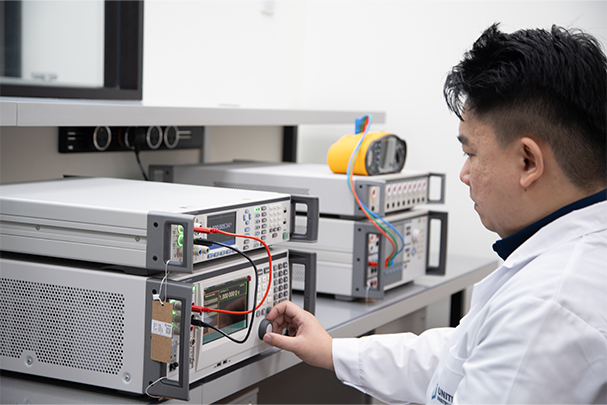
Unitest Instruments calibrates safety analysers, digital multimeters, and ground bond testers with full traceability to Singapore's NMC. Certificates accepted by HSA Technical File reviewers and MOM auditors.
Singapore Regulatory Bodies and Their Specific Requirements
Health Sciences Authority (HSA)
HSA is the primary regulator for medical device market access in Singapore. Under the Health Products (Medical Devices) Regulations, any person who supplies, imports, or places a medical device on the Singapore market must ensure it is registered on the Singapore Medical Device Register (SMDR), unless a specific exemption applies. For medical electrical equipment, the Technical File must include a Declaration of Conformity to IEC 60601-1 (and applicable collateral/particular standards), test reports, a risk management file per ISO 14971, and instructions for use. HSA may request original test reports from the laboratory that conducted the testing; these must be on laboratory letterhead and signed by a competent technical signatory.
Ministry of Manpower (MOM). Workplace Safety and Health
MOM's jurisdiction under the Workplace Safety and Health Act (WSHA) and the subsidiary Electricity at Work Regulations covers the in-service electrical safety of equipment used in healthcare workplaces. Hospitals, clinics, diagnostic centres, and dental practices. MOM-appointed Workplace Safety and Health Officers (WSHOs) may inspect equipment maintenance records, periodic testing logs, and the calibration status of test instruments used during in-house safety checks. Facilities that cannot demonstrate periodic electrical safety testing of life-supporting equipment face stop-use orders and fines under the WSHA.
Energy Market Authority (EMA) and SP Group
The electrical installation supplying power to medical equipment must comply with the Code of Practice for Electrical Installations (SS CP5). EMA-licensed electrical workers must commission and certify any new or modified electrical installation in a healthcare facility. Where medical equipment is connected to a dedicated supply (as is common for imaging equipment, surgical lasers, and high-power electrosurgical units), the supply circuit must be separately tested and certified before the equipment is energised for clinical use.
Ministry of Health (MOH). Healthcare Institution Licensing
Under the Healthcare Services Act 2020 (HCSA), all licensed healthcare institutions must maintain their equipment in safe operating condition as a condition of their licence. MOH's Healthcare Regulation Group (HRG) conducts facility inspections that include review of biomedical engineering maintenance programmes, including the electrical safety testing schedule and calibration records for biomedical test instruments.
Calibration Instrument Requirements for IEC 60601 Testing
The measurement traceability requirements embedded in IEC 60601-1 and the associated measurement procedures standard IEC 62353 are non-negotiable for regulatory purposes. Every instrument used to make a measurement that appears in a compliance test report must have an unbroken traceability chain from the measurement result back to a national or international standard of measurement.
In Singapore, this traceability chain runs through the National Metrology Centre (NMC), which is part of A*STAR and holds Singapore's primary measurement standards. An SAC-SINGLAS accredited calibration laboratory (such as Unitest Instruments (Acc. No. LA-2023-0845-C)), is authorised to issue calibration certificates that are formally recognised as establishing this traceability. As our article on reading a calibration certificate explains, each certificate must state the measurement standards used, the uncertainty of measurement, and the date of calibration. A certificate that omits measurement uncertainty is not compliant with ISO/IEC 17025 and should not be used to support regulatory submissions.
Primary Instruments Required
A medical electrical safety analyser (such as models from Fluke Biomedical, Rigel, or Metrosonics) is the central instrument for IEC 60601-1 testing. It performs earth continuity, leakage current measurements to the specific test circuits defined in IEC 60601-1 Annex B, and provides a patient load circuit for applied part testing. These analysers must themselves be calibrated at least annually. More frequently if used in high-volume testing environments. A calibrated digital multimeter with at least 4.5-digit resolution supports supplementary resistance and voltage verification. A high-voltage insulation tester capable of delivering the specified hipot voltages at controlled current limits is required if the safety analyser does not include a hipot function at the required voltage levels.
Calibration Interval Considerations
The calibration interval for safety analysers used in medical device testing should be determined using a risk-based approach consistent with ISO 10012 and the guidance in ILAC-G24. Annual calibration is the standard starting point, but facilities that perform high volumes of testing (or that operate in environments with significant temperature or humidity variation), should consider six-monthly intervals. Instruments that fail calibration should be removed from service immediately and all test results generated since the previous valid calibration should be reviewed for potential impact on compliance evidence.
Penalties for Non-Compliance in Singapore
Singapore takes a strict approach to medical device regulation, and the penalties reflect the patient safety risk that non-compliant electrical equipment represents.
Under the Health Products Act (Chapter 122D), supplying an unregistered medical device (including one that lacks the required IEC 60601-1 compliance evidence), carries a fine of up to S$50,000 and/or imprisonment of up to two years for an individual on a first offence. For a body corporate (company), the maximum fine rises to S$100,000. Repeat offences attract higher penalties. HSA also has the power to issue mandatory recall notices, stop-supply orders, and to publicise non-compliant products on its public website. A reputational consequence that can be more damaging commercially than the monetary fine for importers and distributors in a relationship-driven market like Singapore's healthcare procurement sector.
Under the Workplace Safety and Health Act, a duty holder (which includes the employer, occupier, and any person who manages or controls a workplace) who fails to maintain the electrical safety of equipment in use may be fined up to S$50,000 per offence. Where the failure results in serious injury or death, the penalties escalate significantly. Directors, partners, and managers can be held personally liable where the offence is committed with their consent, connivance, or is attributable to their neglect. This is not a theoretical risk. MOM has prosecuted healthcare facility operators following electrical incidents involving medical equipment.
In-Service Testing: Maintaining Compliance After Registration
Post-market compliance is where many facilities experience gaps. A device may be correctly registered with HSA at the point of import, but if in-service electrical safety checks are not performed and documented on a defined schedule, the facility is exposed to MOM enforcement action and MOH licensing risk.
The international guidance standard for in-service testing is IEC 62353, which provides simplified test methods and acceptance criteria adapted for periodic checks by biomedical engineering staff. Rather than the full type-test procedures of IEC 60601-1. The key distinction is that IEC 62353 allows slightly relaxed earth continuity limits (0.3 ohm rather than 0.2 ohm for equipment that has been in service) to accommodate normal contact resistance increases over time. However, the leakage current limits and the instrument calibration requirements are equally stringent.
A well-structured in-service testing programme should cover: a written testing schedule identifying each device by asset tag, model, and serial number; the test frequency for each risk category; the test procedure and acceptance criteria used; the instrument(s) used and their current calibration certificate references; the pass/fail outcome and tester identity; and the action taken when a device fails, which must include removal from clinical service until rectified and retested. This register is the primary documentary evidence requested during MOM WSH inspections and MOH HCSA licensing audits.
Frequently Asked Questions
Yes. The Health Sciences Authority (HSA) requires medical electrical equipment placed on the Singapore market to demonstrate compliance with IEC 60601-1 (third edition or later) as part of the product registration process under the Health Products Act. Devices in Class B, C, and D risk categories must submit a Technical File or Full Quality System dossier, which typically includes IEC 60601-1 test reports from a recognised laboratory. Class A devices with electrical supply may also require documentary evidence of basic safety compliance.
IEC 60601-1 is the general safety standard covering fundamental requirements for all medical electrical equipment. Insulation, earth continuity, leakage current, and creepage/clearance distances. Collateral standards (IEC 60601-1-X series) add requirements for specific topics such as electromagnetic compatibility (IEC 60601-1-2), alarm systems (IEC 60601-1-8), and software (IEC 60601-1-4). Particular standards (IEC 60601-2-X series) apply to specific device types such as diagnostic X-ray equipment (IEC 60601-2-54) or infusion pumps (IEC 60601-2-24). A device must comply with the general standard plus any applicable collateral and particular standards.
The core tests under IEC 60601-1 include: (1) Protective earth continuity. Resistance between the earth terminal and accessible metal parts must not exceed 0.2 ohm; (2) Dielectric strength (hipot) (applied voltage of at least 1.5 kV AC for one minute with no breakdown; (3) Leakage current measurements), earth leakage, enclosure leakage, and patient leakage currents, with limits varying by applied part type (B, BF, or CF); (4) Creepage distances and clearances. Minimum separation distances through air and over surfaces between conductive parts at different potentials; (5) Protective impedance and separating impedance checks. All measuring instruments used must have calibration traceability to national standards.
Multiple Singapore agencies have overlapping jurisdiction. The Health Sciences Authority (HSA) governs product registration and post-market surveillance under the Health Products Act. The Ministry of Manpower (MOM) enforces workplace electrical safety for devices used in healthcare workplaces under the Workplace Safety and Health Act and the Electricity at Work Regulations. The Energy Market Authority (EMA) through SP Group regulates electrical installations supplying medical equipment. For facilities receiving public funds, MOH circulars may specify additional periodic safety testing schedules. Importers and distributors are jointly responsible with manufacturers for maintaining compliant Technical Files.
There is no single universal interval prescribed by regulation, but best-practice frameworks (including IEC 62353 for in-service testing) and MOH facility guidelines typically require: annual preventive maintenance safety checks for general clinical equipment; semi-annual checks for life-supporting or high-risk equipment; and after-repair testing before return to service. Facilities accredited under JCI or the MOH's HCSA licensing framework must demonstrate a documented periodic testing programme. The calibration interval for test instruments used in these checks should itself be reviewed using a risk-based approach.
The primary instruments required are: a medical electrical safety analyser (measures earth continuity, leakage currents to IEC 60601 limits, and performs hipot tests); a calibrated digital multimeter (for supplementary resistance and voltage checks); and a ground bond tester. All instruments used in formal compliance testing must carry current calibration certificates traceable to a national metrology standard, in Singapore, this means traceability to the National Metrology Centre (NMC) via an SAC-SINGLAS accredited laboratory. Instruments without valid, traceable calibration cannot support a compliant Technical File or audit evidence package.
Under the Health Products Act (Chapter 122D), supplying an unregistered medical device that requires registration carries a fine of up to S$50,000 and/or imprisonment of up to 2 years for a first offence by an individual. For a body corporate, the fine can reach S$100,000. HSA may also issue stop-supply orders, recall notifications, and publicise non-compliant products. Under the Workplace Safety and Health Act, failing to ensure electrical safety of in-service medical equipment may attract fines of up to S$50,000 per offence. Directors and senior managers can be held personally liable where the offence is attributable to their neglect.
Routine in-service safety checks (per IEC 62353) can be performed by trained in-house biomedical engineering staff using properly calibrated safety analysers, provided the facility maintains competency records and calibration documentation. However, for initial regulatory registration with HSA, type-testing must generally be conducted by an accredited testing laboratory recognised in the relevant jurisdiction. Typically one holding ISO/IEC 17025 accreditation in the relevant scope. Post-market periodic testing records maintained in-house are acceptable for MOM/WSH and MOH HCSA licensing audits if instruments are calibrated and staff competency is documented.
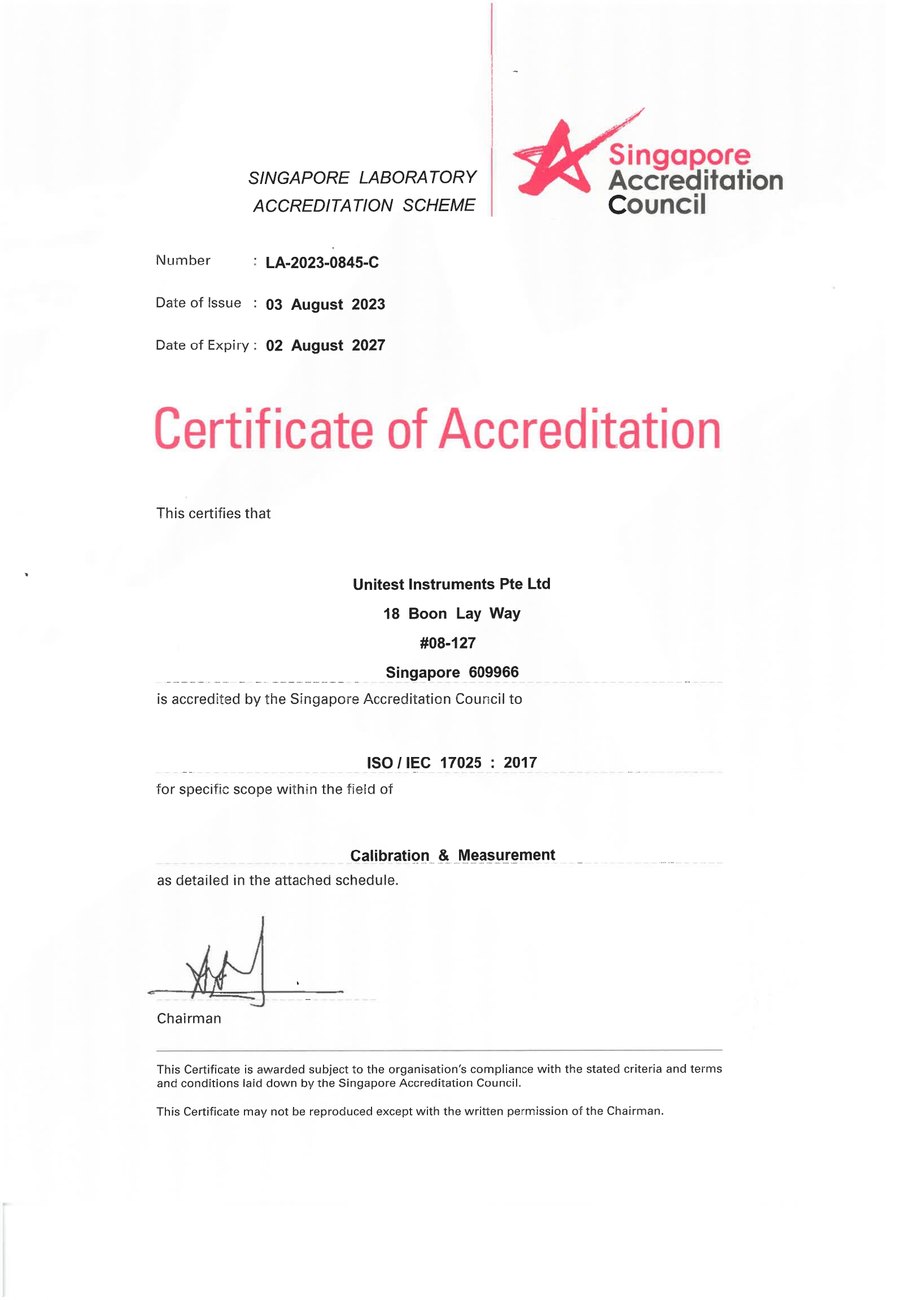
SAC-SINGLAS accredited calibration laboratory (Acc. No. LA-2023-0845-C) serving Singapore's industrial, pharmaceutical, and manufacturing sectors. All content reflects our ISO/IEC 17025 accredited scope and is reviewed by our technical calibration team.
Need medical electrical safety instrument calibration in Singapore?
Unitest Instruments is SAC-SINGLAS accredited (Acc. No. LA-2023-0845-C) to ISO/IEC 17025. Same-week turnaround, certificates accepted by ISO 9001 auditors.