
Key takeaways
- Fluke's CAT III 1000V and CAT IV 600V ratings are independently tested and certified. Budget brands that print the same ratings without independent certification may not survive the same transient events in practice.
- The Fluke 87V and 17B+ carry a 10A HRC current input fuse; some budget meters including basic Extech models use a 440 mA fuse, which offers significantly less protection against fault current on the current input.
- Fluke's accuracy specifications hold across −15°C to 55°C; many budget meters specify accuracy only at 18–28°C, meaning outdoor or plant-room measurements may carry uncharacterised error.
- Both brands require annual calibration to maintain traceability, but Fluke's tighter factory tolerances and more stable components mean it is more likely to remain in specification at the 12-month mark.
- Extech is a legitimate and reputable brand for its intended applications: general-purpose indoor testing, educational labs, HVAC, and backup instruments where measurement stakes are low.
Why this comparison is worth making carefully
The Fluke-versus-budget-meter debate is common in Singapore's electrical and instrumentation community, and it frequently generates more heat than light. On one side are experienced electricians who have used Fluke for their entire careers and regard any alternative with suspicion. On the other side are procurement managers who see a 3–5× price difference and conclude that the premium is brand markup rather than engineering reality.
Both positions are partly right and partly wrong. The Fluke premium is real and partly reflects brand equity. But the engineering differences between a Fluke 87V and an Extech EX330 are also real and documented. They show up in independently verified safety ratings, input protection architecture, accuracy specifications, and operating temperature range. The question for any Singapore electrician or technician is not whether these differences exist, but whether they matter for the specific application at hand.
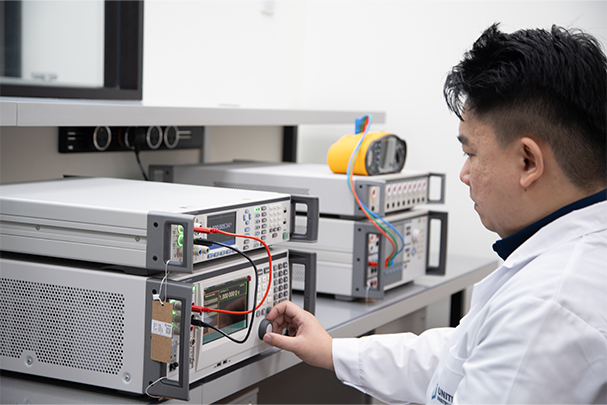
This comparison is written from the perspective of an ISO/IEC 17025 accredited calibration laboratory. We calibrate both Fluke and Extech instruments regularly, and we see the practical consequences of instrument selection choices in calibration results, in drift rates between calibration cycles, and occasionally in instruments that have survived (or not survived), transient events in the field. The advice here is based on measurement reality, not brand loyalty or marketing.
What Fluke does better: the genuine advantages
CAT safety ratings that are independently verified
The most important specification on any multimeter used in professional electrical work is not accuracy. It is the CAT safety rating. The CAT rating defines the level of transient overvoltage the instrument is designed to withstand at the measurement input without causing injury or fire. A CAT III 1000V rating means the meter has been designed and tested to survive an 8 kV impulse transient superimposed on the working voltage. A CAT IV 600V rating implies survival of a 12 kV transient.
Fluke's CAT ratings are independently certified by recognised testing bodies. UL, TÜV, and CSA, depending on the product. This means the rating is not simply a manufacturer's claim; it has been verified by a third-party laboratory that applied the actual transient impulse to the instrument and confirmed it survived without producing a safety hazard to the user. The Fluke 87V and Fluke 17B+ carry CAT III 1000V / CAT IV 600V ratings that have undergone this independent verification.
Extech multimeters also carry CAT ratings. The EX410 series states CAT III 600V; the EX330 states CAT III 300V. The issue is not that Extech labels its instruments incorrectly in all cases. It is that the budget multimeter market contains a range of products where the stated CAT rating reflects the manufacturer's aspiration or calculation rather than verified testing. A meter that claims CAT III on the front but has not been independently tested to IEC 61010-1 may fail catastrophically when a real transient event occurs on a live switchboard. In Singapore's 230V/50Hz system, most professional electrical work falls in the CAT III environment. That is not a trivial safety context.
When selecting a multimeter for switchboard work, panel maintenance, or any application where unexpected transient overvoltage is possible, the difference between an independently certified CAT rating and a printed one is the difference between an instrument that was engineered to survive that environment and one where you are relying on the manufacturer's word that it was.
Input protection and fusing
Directly related to safety rating is input protection. What happens when the wrong input is used in the wrong measurement mode. The most dangerous misuse of a multimeter is connecting the meter in current measurement mode to a voltage source. In current mode, the meter's input impedance is very low (it is essentially a short circuit through the current shunt). If a technician forgets to move the probe from the current input to the voltage input and then touches a live circuit, the result is a dead short, which generates an arc flash and can destroy the meter violently.
The fuse on the current input is the primary protection against this event. The Fluke 87V and Fluke 17B+ use a 10A, 1000V HRC (High Rupturing Capacity) fuse on the current input. This fuse is rated to safely interrupt the fault current that flows when the current input is accidentally connected to a live circuit. Some budget multimeters (including entry-level Extech models), use a 440 mA ceramic fuse on the current input. A 440 mA fuse cannot safely interrupt the fault current in many electrical environments; it may vaporise and fail to clear the circuit, producing an arc that continues after the fuse has blown.
The fuse rating is not a specification that appears prominently in marketing materials, but it is one of the most safety-relevant differences between professional and budget instruments. Any electrician who regularly uses the current measurement function in live panel environments should verify the fuse rating of their meter before assuming the input protection is adequate.
True RMS accuracy and operating temperature range
Fluke professional multimeters specify their DC and AC accuracy at a stated operating temperature range of −15°C to 55°C. This means the stated accuracy specification holds across the full range of temperatures a meter might encounter in Singapore's industrial environments, from an air-conditioned server room to an outdoor switchroom, a cable basement, or a rooftop plant room in the middle of the day.
Many budget multimeters, including several Extech models, state their accuracy specification at 18–28°C. A narrow ambient temperature window corresponding roughly to a comfortable air-conditioned office. Outside this range the accuracy may degrade, but the specification does not quantify by how much. For measurements taken in plant rooms, on building rooftops, or in outdoor switchgear enclosures (all common in Singapore's construction and facilities maintenance sector), this matters. You may be making a measurement under conditions where the meter's accuracy is uncharacterised.
Fluke's IP54 rating (on the 17B+ and higher models) adds a further layer of practical durability: the meter is protected against dust ingress and water splashes from any direction. In Singapore's humid outdoor environment and on construction sites where instruments are exposed to rain, this rating has real-world significance. Most budget meters including basic Extech models carry no IP rating, meaning they have no verified protection against the environment.
Warranty and calibration starting point
Fluke provides a 3-year warranty on its professional handheld multimeters. Extech provides a 1-year warranty on most models. Beyond the warranty itself, Fluke instruments are typically delivered from the factory calibrated within their published specification tolerances. The tight factory calibration is a function of component selection and manufacturing process. Fluke uses precision internal references that are pre-aged and selected for stability.
At Unitest's calibration laboratory, we observe that Fluke instruments brought in for initial or first-year calibration typically show errors well within specification, often comfortably within half the tolerance band. Budget instruments show more variability at initial calibration. Most pass, but a meaningful fraction arrive with errors closer to the edge of their specification, or occasionally outside it. Over the following 12-month period, Fluke instruments drift less, meaning they are more likely to return within specification at their next calibration. Budget instruments drift faster on average, which increases the probability of a specification failure at the 12-month calibration point.
Where Extech is adequate: the honest assessment
Extech Instruments is not a disreputable brand. It is a genuine American test and measurement company, now part of FLIR/Teledyne, that has been selling instruments since 1971. Its products are manufactured to consistent quality standards and sold through legitimate professional channels. The EX330 and EX410 series are competent instruments for the applications they are designed for.
For educational settings (universities, polytechnics, ITE, and training programmes), multimeters are used for learning and demonstration rather than safety-critical electrical work. The measurements are made at low voltages on protected training circuits. In this environment, Extech's lower price point makes sense: the institution can equip more students with instruments for the same budget, and the measurement risk is low.
For general-purpose voltage and resistance testing in clean indoor environments (checking socket voltages, verifying circuit continuity, testing resistance values in a workshop), the accuracy and protection requirements are modest. A functioning Extech meter will give you the correct reading on a 230V socket or confirm whether a fuse is blown. The 3–5× price premium of a Fluke does not translate into a meaningfully better reading in these low-risk applications.
For backup or secondary instruments (a spare meter kept in a van or a tool kit for general checks, not for critical measurements), an Extech provides adequate functionality at a sensible cost. The primary instrument used for safety-critical work should still be a professional-grade meter with verified CAT ratings.
For HVAC work and temperature measurement in controlled indoor environments, where the primary measurement is temperature via thermocouple or basic voltage on equipment control circuits, Extech's HVAC-oriented models offer a practical feature set at reasonable cost. The safety exposure in HVAC control work is typically lower than in switchboard or panel work, and the measurement accuracy requirements are less stringent.
The CAT rating reality in Singapore's electrical system
Singapore operates on a 230V, 50 Hz electrical system. Most professional electrical work. Installing and maintaining distribution boards, testing switchgear, commissioning building services, maintaining industrial plant. Occurs in what IEC 61010-1 classifies as the CAT III environment: three-phase distribution, fixed installation wiring, distribution boards, and permanently connected equipment.
In a CAT III environment, the potential transient overvoltage during a fault condition is specified as 8 kV for a system rated at 1000V. This 8 kV figure is what the meter's input protection must survive without causing injury. It arises from the inductance and capacitance of the wiring infrastructure. When a fault occurs on a distribution system, the energy stored in the distribution wiring discharges as a high-voltage impulse superimposed on the normal working voltage.
The 8 kV figure is not theoretical. Transients at this level are measured on distribution systems regularly, and they are the reason why IEC 61010-1 exists. A meter rated CAT III 1000V by a manufacturer who tested it against the IEC standard is a meter whose input circuitry absorbed an 8 kV impulse in a testing laboratory and continued to function safely. A meter that prints CAT III 300V or CAT III 600V without independent testing verification may have been designed with the intention of meeting the standard but may never have been subjected to the actual impulse.
For Singapore electricians and maintenance engineers working on switchboards, distribution boards, and building services: you are working in CAT III. The safety case for using an independently certified CAT III 1000V meter rather than a budget uncertified CAT III meter is the difference between an instrument whose protection has been proven and one whose protection is assumed.
Calibration: what it reveals about the price difference
One of the most instructive ways to evaluate the real-world difference between Fluke and budget meters is through calibration data. At Unitest's SAC-SINGLAS accredited laboratory, we calibrate instruments from both tiers against the same traceable reference standards, and the calibration results tell a consistent story.
When a Fluke 87V or 17B+ arrives for calibration (whether fresh from the factory or after 12 months of use), its measured values at the calibration points are typically well within its published specification. DC voltage errors on a Fluke 87V at the 100V range are commonly in the range of ±0.02–0.04%, against a stated specification of ±0.05%. At 12 months, after a year of use in a professional environment, Fluke meters continue to perform within specification the great majority of the time.
Budget meters show more variability at initial calibration. Most pass their manufacturer's specification when new, but the distribution of errors is wider. Some instruments sit comfortably within the tolerance band, others arrive near the edge of it. Over 12 months, the drift rate is higher. At the 12-month calibration point, a larger fraction of budget meters have drifted outside their stated specification tolerance. An instrument that has drifted out of specification has been making inaccurate measurements for an unknown period, and any decisions made on those measurements were made on uncertain data.
There is also a replacement cost implication. If a budget meter fails calibration at 12 months and is beyond economic repair, the cost of replacement must be added to the original purchase cost. The effective cost of ownership over a multi-year horizon narrows the gap between a Fluke and a budget meter more than the upfront price comparison suggests.
Both Fluke and Extech instruments can be calibrated at Unitest's SAC-SINGLAS accredited laboratory. The calibration process is identical regardless of brand. The same reference standards, the same procedures, the same certificate format. What the calibration reveals is different: Fluke instruments typically show tight, stable errors; budget instruments show wider variability and more frequent calibration failures over time.
Calibrate your multimeter against traceable reference standards
Unitest calibrates Fluke and Extech multimeters under our SAC-SINGLAS accreditation. Every certificate states measurement uncertainty. Audit-ready for ISO 9001 clause 7.1.5 and EHS compliance.
Practical recommendation matrix
The table below summarises which instrument tier is appropriate for the most common use cases encountered in Singapore's electrical and instrumentation sectors. These recommendations are based on measurement risk, safety exposure, and the accuracy requirements of each application.
| Use Case | Recommendation | Reason |
|---|---|---|
| Switchboard and distribution board testing | Fluke recommended | CAT III environment; independently verified transient protection; 10A fused current input essential |
| Industrial panel and MCC maintenance | Fluke recommended | High transient risk; True RMS required for variable-speed drive loads; full temperature range accuracy needed in plant environments |
| Data centre and UPS systems | Fluke recommended | High-value equipment; measurement accuracy critical for load assessments; True RMS required for distorted waveforms on switching loads |
| HVAC control circuit testing (indoor, low-voltage) | Extech adequate | Lower CAT exposure; indoor temperature range; moderate accuracy requirements; EX330/EX410 feature set appropriate |
| Residential socket and circuit verification | Extech adequate with caveats | CAT II environment; lower transient risk; adequate for voltage presence and continuity checks; verify CAT rating matches exposure |
| Educational and training labs | Extech adequate | Protected training circuits; low voltage; learning application. Cost efficiency is more important than professional-grade specification |
| Backup instrument (professional use) | Extech adequate | Not the primary measurement tool; used only when primary instrument is unavailable; cost-justified when backup is stored, not used daily |
| ISO 9001 / GMP compliance measurements | Fluke recommended | Tighter factory calibration; better drift stability; more likely to pass 12-month calibration without replacement. Lower total compliance cost |
The pattern across this matrix is consistent. The difference between Fluke and Extech matters most when the measurement environment is dangerous (CAT III/IV), when the accuracy requirement is stringent, when the operating conditions fall outside a narrow indoor temperature range, and when calibration compliance is a documented requirement. It matters least when the measurement task is routine, the environment is benign, and the consequence of a slightly less accurate reading is low.
Singapore's electrical sector contains both types of work. A large electrical contractor doing switchboard commissioning and industrial maintenance is doing work where the Fluke premium is justified on every job. A small business doing HVAC maintenance or basic electrical checks in light commercial environments may find that Extech is adequate for most of its day-to-day work, with a Fluke reserved for the higher-risk tasks.
The worst outcome is not choosing the wrong brand. It is failing to make a conscious choice at all. A technician using an Extech EX330 (CAT III 300V, average-responding, accuracy specified only at 18–28°C) on a 400V industrial switchboard is using a meter outside both its safety rating and its accuracy specification. The meter may work without incident many times, and then fail catastrophically on one occasion. Understanding what the instrument was designed for, and using it only within that envelope, is the professional practice that makes the brand decision meaningful.
Frequently asked questions
For electricians working on switchboards, industrial panels, commercial distribution boards, or any installation in Singapore's 230V/50Hz system, the Fluke premium is generally worth paying. The core reasons are independently verified CAT safety ratings (CAT III 1000V, CAT IV 600V), robust input protection with a 10A fuse on the current input, accurate True RMS measurement across the full operating temperature range, and a 3-year warranty. The situations where the premium is less justified include educational settings, backup instruments used infrequently, and low-risk measurement tasks in clean indoor environments. If you are billing clients, working in CAT III or CAT IV environments, or your measurements feed into quality or compliance decisions, buy the Fluke.
The CAT (Category) rating on a multimeter defines the level of transient overvoltage (sudden voltage spikes), that the instrument is designed to withstand safely without injury to the user or damage to the meter. CAT I covers electronic equipment and protected circuits. CAT II covers household appliances and single-phase loads plugged into wall sockets. CAT III covers three-phase distribution, fixed installations, switchboards, and building wiring. CAT IV covers the supply origin. Utility meters, outdoor conductors, and the point where power enters a building. In Singapore's 230V/50Hz system, most professional electrical work occurs in CAT III environments. A CAT III 1000V rating means the instrument has been designed to survive an 8 kV transient overvoltage impulse. Budget multimeters that print "CAT III" on the front without independent certification from a recognised testing body such as UL, TÜV, or CSA may not have been tested to this level. A distinction that matters when a transient occurs on a live switchboard.
Average-responding multimeters measure AC voltage and current by calculating the average of a rectified waveform and then multiplying by a fixed scaling factor (1.1107) that gives the correct RMS value for a pure sine wave. This works correctly on perfectly sinusoidal power at 50 or 60 Hz, but produces significant errors on non-sinusoidal waveforms. In Singapore's industrial environments (variable-speed drives, switching power supplies, UPS systems, LED drivers, and variable-frequency drives), current and voltage waveforms are heavily distorted by harmonics. An average-responding meter will typically read 10 to 40 percent low on these waveforms. A True RMS meter computes the RMS value mathematically from the actual waveform, regardless of its shape. All Fluke professional multimeters include True RMS. Extech's EX330 is average-responding; the EX410 series includes True RMS. Any multimeter used for professional electrical work in Singapore's industrial sector should include True RMS as a minimum requirement.
Both Fluke and Extech recommend a 12-month calibration interval as a standard starting point. The appropriate interval for your specific instrument depends on how intensively it is used, the harshness of the working environment, whether it has been subjected to overload events or mechanical shock, and the accuracy requirements of the measurements it is used for. High-use instruments in demanding industrial environments may warrant a 6-month interval. Instruments used occasionally in controlled indoor environments may support extension to 18 or 24 months with a documented risk assessment and calibration history showing consistently low drift. The calibration certificate from each cycle provides the drift data needed to make an evidence-based interval decision. Instruments used beyond their calibration due date are making measurements of unknown accuracy. A compliance issue under ISO 9001 clause 7.1.5.
Yes, a budget multimeter can pass accredited calibration. If its actual measurements fall within the manufacturer's published specification tolerances at the time of calibration. Most budget meters from reputable brands such as Extech pass when new. The more relevant question is whether the instrument remains in specification over its full calibration interval. Budget meters generally use lower-grade internal reference components that drift faster than those in professional instruments such as Fluke. If a budget meter fails calibration at 12 months and must be replaced, the purchase savings are partially or fully erased by replacement cost. For applications where calibration compliance and audit evidence are required, Fluke's tighter tolerances and more stable drift characteristics represent genuine long-term value.
For most electrical contractors and maintenance electricians in Singapore, the Fluke 17B+ is the practical entry point: CAT III 1000V / CAT IV 600V ratings, True RMS measurement, a 10A fused current input, and a 3-year warranty at a street price that represents fair value for a professional instrument. The Fluke 87V is the benchmark professional handheld for switchgear and industrial maintenance work. Adding IP67 protection, 20 kHz True RMS bandwidth, frequency measurement, and tighter accuracy specifications. The Fluke 289 adds data logging capability, valuable for capturing intermittent fault events over time. For most daily electrical contracting work in Singapore (switchboard testing, circuit verification, load measurements, fault diagnosis), the 17B+ or 87V covers all requirements.
Extech Instruments is an American test and measurement brand founded in 1971 and now a subsidiary of FLIR Systems (itself part of Teledyne Technologies). Extech products are sold through professional tool distributors worldwide and have been widely used in educational, HVAC, and light commercial electrical applications for decades. The brand is genuine and its instruments are manufactured to consistent quality standards. Extech positions its products at a lower price point than Fluke, which reflects design trade-offs in input protection, CAT rating independent certification, accuracy specifications, and operating temperature range. For its intended applications (general-purpose voltage, resistance, and continuity testing in clean indoor environments), Extech performs competently. For critical safety environments, precision measurements, or any application where instrument failure has serious consequences, Fluke is the appropriate choice.

Unitest Instruments Pte. Ltd. is a SAC-SINGLAS accredited calibration laboratory (ISO/IEC 17025, no. LA-2023-0845-C) based in Singapore. We calibrate electrical instruments (including Fluke and Extech multimeters), against traceable reference standards for manufacturers, contractors, and regulated industries across Singapore and the region.
Send your multimeter for accredited calibration
Unitest calibrates Fluke and Extech multimeters against SAC-SINGLAS accredited reference standards. Stated uncertainty, NMC traceability, ready for ISO 9001 audit.
Verifiable at sac.gov.sg · Acc. No. LA-2023-0845-C