
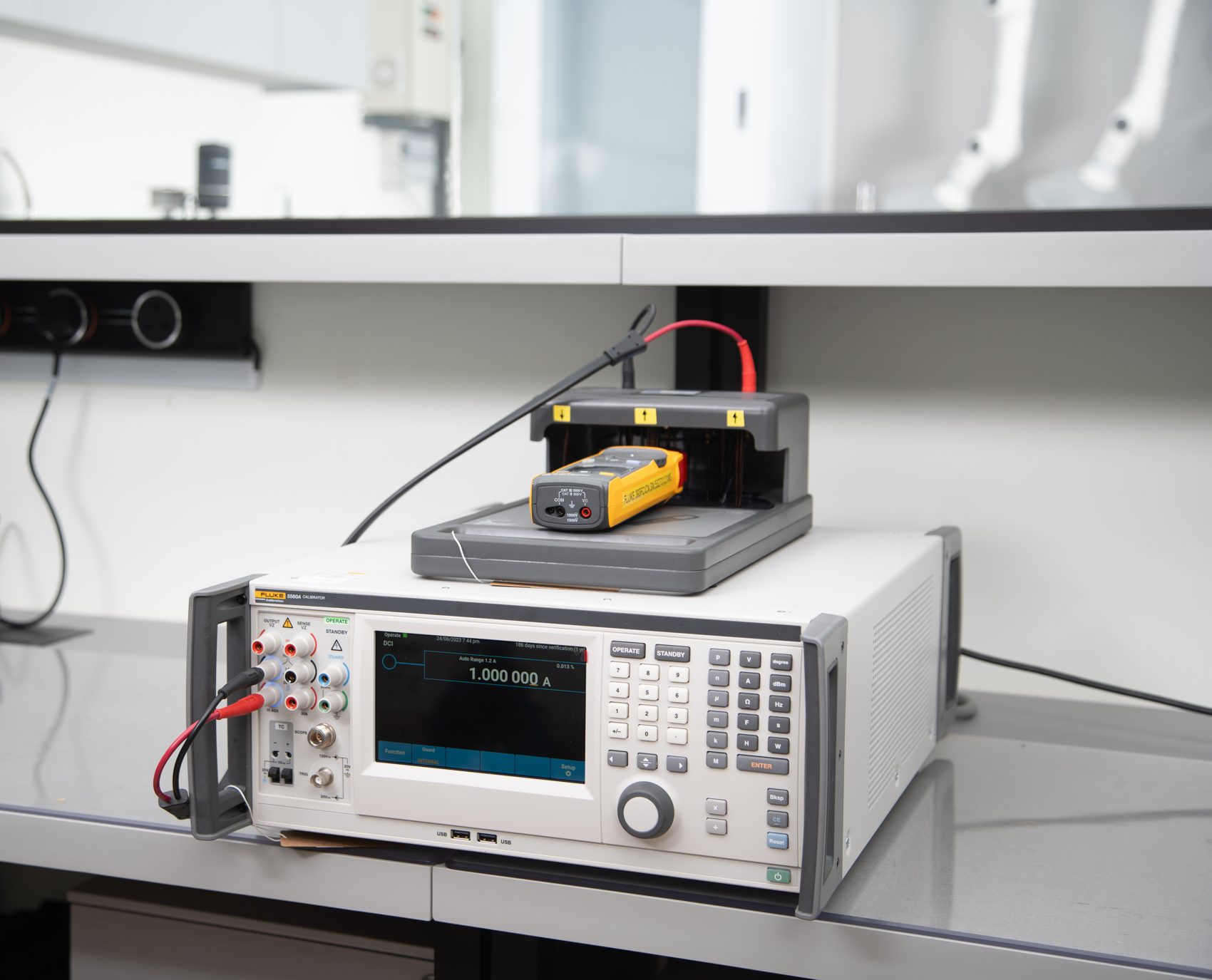
Key Takeaways
- Temperature and humidity data loggers used in GDP-regulated storage must be calibrated by a SAC-SINGLAS accredited laboratory at minimum annually. Every 6 months for refrigerated and frozen zones.
- Calibration certificates must include measurement uncertainty and traceability to Singapore's NMC; certificates without these details will not satisfy HSA inspectors or ISO 9001 auditors.
- Temperature mapping studies (required at installation and after major facility changes) must use calibrated loggers. The mapping exercise is only as valid as the instruments used.
- Overdue calibration is classified as a Major non-conformance under PIC/S GDP and can jeopardise a wholesale dealer licence.
- A maintained calibration register (linking every asset ID to its certificate, calibration date, and next-due date), is the single most practical control for audit readiness.
Why Calibration is Non-Negotiable in a Pharma Warehouse
Pharmaceutical products are uniquely sensitive to their storage environment. Temperature excursions degrade active ingredients, reduce shelf life, and in some cases create products that are outright unsafe. Humidity drives moisture ingress, promotes microbial growth, and accelerates chemical degradation. The entire assurance framework rests on a simple premise: you can only trust the data your instruments give you if those instruments have been verified against known standards.
In Singapore, the regulatory anchor is the Health Sciences Authority (HSA) Good Distribution Practice (GDP) guidelines, which mirror the PIC/S Guide to GDP for Medicinal Products (PE 011). Both frameworks mandate that all instruments used to monitor or control storage conditions must be calibrated at defined intervals, with calibration traceable to national measurement standards. A temperature logger that has never been calibrated (or whose calibration has lapsed), provides no defensible evidence that your storage conditions were within specification. In a regulatory inspection, that is not a minor paperwork gap; it is a fundamental quality failure.
Beyond regulatory compliance, calibrated instruments protect your business commercially. A temperature excursion detected by a calibrated, traceable logger is a documented, investigated event with a disposition decision. An excursion suspected only because an uncalibrated sensor "looked high" forces a recall decision under uncertainty. Far more costly than a timely calibration programme.
Which Instruments Require Calibration
The scope of calibration in a pharmaceutical warehouse is broader than most QA teams initially anticipate. The instruments fall into three categories: primary monitoring, secondary verification, and ancillary quality-related instruments.
Primary Environmental Monitoring Instruments
Temperature and humidity data loggers are the workhorse of pharmaceutical warehouse monitoring. Modern loggers record at programmable intervals (typically every 5–15 minutes), store thousands of data points, and upload to environmental monitoring software. Every unit (including backup and spare loggers), must be on the calibration programme. Calibration is performed at multiple temperature and humidity setpoints relevant to the storage zone, with as-found and as-left readings documented and uncertainty stated.
Cold-room and refrigerator thermometers (including both the fixed display thermometers visible through the unit door and any independent verification probes), require separate calibration. The display thermometer is often the instrument used by warehouse staff for daily visual checks; if it is inaccurate, daily checks provide false assurance.
Differential pressure gauges and sensors used to verify the positive or negative pressure differential across cleanroom ante-areas, cold-room doors, and HVAC return/supply points must also be calibrated. These instruments confirm that cold air is contained and that cross-contamination barriers are functioning.
Secondary Verification and Receipt Inspection Instruments
Infrared (non-contact) thermometers used during goods receipt to spot-check the surface temperature of incoming cold-chain shipments must be calibrated. An uncalibrated infrared thermometer used to accept or reject a cold-chain consignment has no standing in a product quality investigation.
Calibrated reference thermometers (typically Pt100 or glass-liquid reference standards), used in-house for periodic verification checks of installed loggers between formal calibration events should themselves carry valid accredited calibration certificates.
Ancillary Quality Instruments
Weighing balances used for sampling, labelling, or dispensing operations within the warehouse, barometric pressure sensors in atmospheric-sensitive storage areas, and any pH or conductivity meters used in quality checks are also within calibration scope under a comprehensive GDP programme.
| Instrument | Parameter Measured | Storage Zone | Recommended Interval | Regulatory Driver |
|---|---|---|---|---|
| Temperature/Humidity Data Logger | Temperature (°C), RH (%) | Ambient, Controlled, Cold, Frozen | 12 months (ambient); 6 months (cold/frozen) | HSA GDP, PIC/S PE 011 |
| Cold-Room Display Thermometer | Temperature (°C) | Refrigerated (2–8 °C), Frozen (≤-15 °C) | 6 months | HSA GDP, ISO 9001 |
| Infrared Thermometer | Surface temperature (°C) | Goods receipt / loading bay | 12 months | HSA GDP, cold-chain SOP |
| Differential Pressure Gauge | Pressure differential (Pa) | Cleanroom ante-area, cold-room seals | 12 months | PIC/S GDP, GMP Annex 1 |
| Reference Thermometer (Pt100) | Temperature (°C) | Used in mapping and verification | 12 months or before use in mapping | ISO/IEC 17025, mapping protocol |
| Weighing Balance | Mass (g / kg) | Sampling / dispensing area | 12 months (external); daily internal verification) | HSA GDP, GMP Annex 15 |
| Barometric Pressure Sensor | Pressure (hPa / mbar) | Atmospheric-sensitive storage | 12 months | Product-specific storage requirements |
Storage Zones and Their Calibration Requirements
Not all pharmaceutical warehouses are homogeneous. Modern GDP-compliant facilities in Singapore typically operate across multiple storage zones, each with distinct environmental limits and, consequently, distinct calibration programme requirements.
Ambient Storage (15–25 °C or 30 °C / 75% RH)
Products labelled "Store below 25 °C" or "Store in a cool, dry place" are typically held in air-conditioned ambient zones. Singapore's climate means that maintaining these limits requires continuous HVAC operation and robust door management at loading bays. Temperature and humidity loggers in ambient zones are typically calibrated annually, with calibration points spanning at least 15 °C, 25 °C, and 30 °C for temperature, and 40%, 60%, and 75% RH for humidity.
Refrigerated Storage (2–8 °C)
Refrigerated storage is the highest-risk zone from a calibration standpoint. Excursions above 8 °C or below 2 °C can irreversibly degrade biological medicines, vaccines, insulin, and certain antibiotics. Loggers in refrigerated zones should be calibrated at 2 °C, 5 °C, and 8 °C setpoints. Calibration intervals of 6 months are standard for instruments in this zone. Walk-in cold rooms used for bulk cold-chain storage require mapping with a minimum of 9 loggers (typically more) placed at defined grid positions, all bearing current calibration certificates.
Frozen Storage (≤ -15 °C or ≤ -25 °C)
Deep-frozen pharmaceutical products, including certain biological therapies and plasma derivatives, require specialised ultra-low temperature storage. Calibration at these temperatures requires specialist equipment and is typically performed by laboratories with the relevant low-temperature calibration capability confirmed in their SAC-SINGLAS scope. Unitest Instruments' accredited scope covers calibration at temperatures relevant to pharmaceutical cold-chain requirements.
Need pharmaceutical warehouse calibration in Singapore?
Unitest Instruments (Acc. No. LA-2023-0845-C) provides GDP-compliant calibration for temperature loggers, humidity sensors, cold-room thermometers, and differential pressure gauges, with certificates traceable to Singapore's NMC. Same-week turnaround available.
The Role of SAC-SINGLAS Accreditation in Pharma Compliance
When an HSA inspector or a qualified person from a principal manufacturer reviews your calibration records, the first thing they check is whether the issuing laboratory holds SAC-SINGLAS accreditation for the measurement parameters in question. SAC-SINGLAS is Singapore's national accreditation body for laboratories, operating under the Singapore Accreditation Council (SAC). SAC-SINGLAS accreditation means the laboratory has been independently assessed to ISO/IEC 17025. The international standard for testing and calibration laboratories.
The practical implication for pharmaceutical warehouses is significant. A certificate from an accredited laboratory carries a formal uncertainty statement. A quantified expression of how confident you can be in the calibration result. This uncertainty figure is used by your QA team to determine whether an instrument's as-found reading was actually outside acceptable limits, accounting for measurement noise. Without an uncertainty statement, you cannot make a mathematically sound determination of compliance. To understand how uncertainty figures work in practice, see our guide to measurement uncertainty explained.
Beyond the technical content of the certificate, SAC-SINGLAS accreditation provides audit confidence. Regulators and multinational principal manufacturers who audit Singapore warehousing partners accept SAC-SINGLAS accredited certificates without further qualification. Non-accredited calibration results require additional justification and are frequently challenged. Unitest Instruments holds SAC-SINGLAS accreditation under Acc. No. LA-2023-0845-C, covering the temperature, humidity, and pressure calibration parameters most relevant to pharmaceutical warehouse compliance.
It is equally important to understand the difference between accredited and non-accredited calibration when evaluating service providers. Our article on accredited vs non-accredited calibration walks through the specific differences in certificate content, traceability chains, and audit acceptability. A useful reference when briefing your procurement team on calibration vendor selection.
Temperature Mapping: What QA Teams Need to Know
Calibration of individual instruments is necessary but not sufficient for GDP compliance. The facility itself must be qualified through temperature mapping. A systematic study that places multiple calibrated loggers throughout a storage space simultaneously to characterise the temperature distribution under representative conditions.
Mapping is required at: initial qualification of a new storage area, after any significant modification to the facility or HVAC system, after a change in product storage density or layout, and periodically (typically every 2–3 years) as a re-qualification exercise. The PIC/S GDP Guide specifically requires that the results of mapping be used to determine the optimal placement of routine monitoring sensors. Placing a logger in the "best" spot in the room while monitoring excursions in the worst spot defeats the purpose of continuous monitoring.
Practical Steps for a Mapping Exercise
A typical pharmaceutical warehouse mapping study in Singapore involves the following steps: defining the room volume and drawing a three-dimensional sensor grid (a minimum of one sensor per 20 m³ is a commonly applied heuristic, adjusted for room geometry); deploying calibrated loggers at each grid point plus near doors, HVAC supply and return vents, and floor level; running the study for a minimum of 24 hours, ideally including a weekend to capture HVAC setback periods and loading dock activity; analysing the data to identify worst-case locations; and preparing a mapping report signed by the Qualified Person or QA Manager. All loggers used in the study must have calibration certificates current at the time of the study. Loggers whose certificates expire during the mapping period compromise the study's validity.
Building a Practical Calibration Programme
The most common reason pharmaceutical warehouses in Singapore face audit findings related to calibration is not ignorance of the requirements. It is a failure to operationalise them. A calibration programme exists on paper but instruments are not tracked systematically, certificates expire unnoticed, or the calibration register is maintained in an uncontrolled spreadsheet that does not match the actual instruments on the floor.
The Calibration Register
The calibration register is the operational backbone of your programme. It should contain: a unique asset ID for every instrument in scope, the instrument description (make, model, serial number), the calibration date, the expiry date, the certificate reference number, the issuing laboratory and its accreditation number, and the storage location of the physical or digital certificate. The register should be reviewed monthly (not quarterly), to identify instruments approaching their calibration due date with sufficient lead time to arrange calibration without creating a gap.
Calibration Intervals: How to Set Them Defensibly
HSA and PIC/S GDP do not prescribe specific numerical calibration intervals. They require that intervals be "defined" and "justified." In practice, the industry has converged on 12-month intervals for ambient monitoring instruments and 6-month intervals for cold-chain instruments, because these periods balance cost against risk and are accepted without challenge by inspectors. If you wish to extend intervals (e.g. to 24 months for low-criticality instruments), you must produce historical calibration data demonstrating instrument stability. Typically three consecutive calibrations showing drift well within acceptance criteria. Our article on calibration intervals: how often is often enough provides a framework for making this risk-based determination.
Out-of-Tolerance Findings and Their Consequences
When an instrument is returned from calibration with an "as-found" reading outside its acceptance criteria, this is an out-of-tolerance (OOT) event. For pharmaceutical warehouses, an OOT finding triggers a mandatory retrospective review: was any product stored in the affected area, monitored by this instrument, potentially affected by undetected excursions? The review must be documented and a disposition decision made. This process is exactly why calibration certificates must include as-found readings. Without them, an OOT event cannot be identified and investigated. Calibration providers who only report as-left results (post-adjustment) without as-found results are providing incomplete certificates that do not meet GDP requirements.
Alarm Systems and Backup Power: The Link to Calibration Integrity
A calibrated logger is only useful if its alarm actually reaches someone capable of acting on it, and this is a surprisingly common gap in otherwise well-run GDP programmes. Many warehouses configure temperature and humidity alarms to trigger on the local logger display or a building management system dashboard, but do not verify end-to-end that the alarm actually escalates to a mobile notification or a monitored control room, particularly outside normal working hours. An excursion that begins at 11pm on a Friday and is only discovered when staff return Monday morning has defeated the entire purpose of continuous monitoring, regardless of how accurately the logger recorded the event. Periodic alarm testing, deliberately inducing a simulated excursion condition and confirming the notification chain actually functions end to end, should be part of the same qualification discipline applied to instrument calibration, and PIC/S GDP inspectors increasingly ask to see evidence of this testing alongside the calibration records themselves.
Backup power for refrigerated and frozen storage carries a parallel calibration dimension that is often overlooked: standby generators and UPS systems protecting cold-chain product also need their transfer time and voltage stability verified periodically, since a generator that starts correctly but takes longer to reach stable output than the refrigeration system's thermal buffer allows will still result in a temperature excursion despite the backup power system technically "working." Warehouses that have invested in calibrated monitoring but never verified their backup power transfer performance under realistic load have a genuine gap in their cold-chain assurance that a calibration certificate alone cannot close.
Common Findings in GDP Calibration Audits
Across HSA and PIC/S-aligned GDP audits of Singapore pharmaceutical warehouses, a recurring set of calibration-related findings accounts for a disproportionate share of observations. The most common is a mismatch between the physical instrument in use and the register entry supposedly describing it, typically because a logger was replaced or swapped between storage zones without the register being updated, meaning the calibration certificate on file technically corresponds to a different physical unit than the one actually monitoring product. The second is calibration performed at setpoints that do not bracket the storage zone's actual operating range; a refrigerated zone calibrated only at 5°C without verification at the 2°C and 8°C boundary conditions leaves genuine uncertainty about instrument performance exactly at the limits that matter most for an excursion decision. The third, specific to mapping studies, is reusing a mapping study well beyond its intended revalidation interval without documented justification, particularly after a facility has changed its storage layout or product density in ways that could plausibly alter the airflow and thermal pattern the original mapping characterised. Each of these findings traces back to the same root cause as the OOT documentation gap: a calibration programme that exists correctly on paper but has drifted out of sync with what is physically happening on the warehouse floor, which is precisely why the monthly register review discipline described above matters as much as the calibration events themselves.
Frequently Asked Questions
Pharmaceutical warehouses in Singapore are required to calibrate temperature loggers, humidity sensors (often combined as temperature-humidity data loggers), pressure gauges or differential pressure sensors for cold rooms and cleanroom ante-areas, refrigerator and cold-room thermometers, and any weighing balances used for dispensing or sampling. HVAC control sensors that feed the environmental monitoring system must also be on a formal calibration programme. Instruments used to verify product integrity during receipt inspection (such as infrared thermometers), should also be included.
The HSA Good Distribution Practice (GDP) guidelines and PIC/S GDP Guide (PE 011) recommend that all monitoring instruments be calibrated at defined intervals with traceability documented. Industry practice in Singapore aligns with annual calibration as the standard interval for temperature and humidity data loggers, with more frequent calibration (every 6 months) recommended for instruments in cold-chain or controlled-temperature areas (2–8 °C refrigerators, -20 °C freezers). High-criticality instruments (those in direct GDP regulatory scope), are often placed on a 6-month cycle to reduce audit risk.
HSA GDP guidelines and ISO 9001 auditors strongly prefer (and most Quality Agreements require), calibration certificates issued by a SAC-SINGLAS accredited laboratory (ISO/IEC 17025). Accredited calibration provides metrological traceability to national standards (Singapore's NMC), uncertainty statements, and independent third-party credibility that in-house calibration cannot provide. For pharmaceutical warehouses seeking HSA licensing or preparing for PIC/S inspection, using an accredited calibration provider such as Unitest Instruments (Acc. No. LA-2023-0845-C) significantly reduces the risk of non-conformance findings.
For general (ambient) pharmaceutical storage, the WHO and HSA guidelines specify a maximum of 25 °C with relative humidity not exceeding 60% RH, or alternatively up to 30 °C / 75% RH in countries with tropical climates. Singapore typically applies the 30 °C / 75% RH limit for ambient-labelled products. Cold-chain products require 2–8 °C (refrigerated) or ≤ -15 °C (frozen). Air-conditioned controlled areas for temperature-sensitive but non-refrigerated products are typically maintained at 15–25 °C. All limits must be continuously monitored and excursions documented.
Temperature mapping (also called thermal mapping or temperature distribution studies) involves placing multiple calibrated loggers throughout a storage area simultaneously to identify hot spots, cold spots, and areas of poor air circulation. It is required under PIC/S GDP and is expected by HSA inspectors for all licensed wholesale dealers. Mapping is required at installation/qualification, after significant changes to the facility (new HVAC, layout change, renovation), and periodically (typically every 2–3 years). All loggers used in mapping exercises must hold valid calibration certificates from an accredited laboratory.
In-house calibration is permissible only if the in-house laboratory itself holds SAC-SINGLAS accreditation for the relevant measurement parameters, which is rarely the case for pharmaceutical warehouses. Without accreditation, in-house results lack the independent traceability and uncertainty quantification that regulators and auditors require. The practical and cost-effective solution for most pharmaceutical warehouses is to outsource to an ISO/IEC 17025 accredited provider on a scheduled basis. Typically annually or semi-annually depending on instrument criticality.
For pharmaceutical compliance, a calibration certificate must include: the unique identification of the instrument calibrated (asset ID, serial number, make/model), the calibration date and next-due date, the calibration results at all test points with as-found and as-left readings, the measurement uncertainty for each result, a statement of traceability to national standards (e.g. Singapore's NMC), the identity of the accredited laboratory and its accreditation number, and the signature of the authorised calibration technician. Certificates from SAC-SINGLAS accredited laboratories (bearing the SAC mark) satisfy all these requirements automatically.
An overdue calibration is a GDP non-conformance and will be raised as a finding. Typically a Major deficiency if monitoring instruments are involved, since this directly affects product quality assurance. Consequences can include a Corrective and Preventive Action (CAPA) requirement, suspension of storage activities for affected areas, a follow-up inspection, and in serious cases, risk to the warehouse's wholesale dealer licence. A well-maintained calibration schedule, documented in a calibration register and managed proactively, is the only reliable way to prevent this outcome.
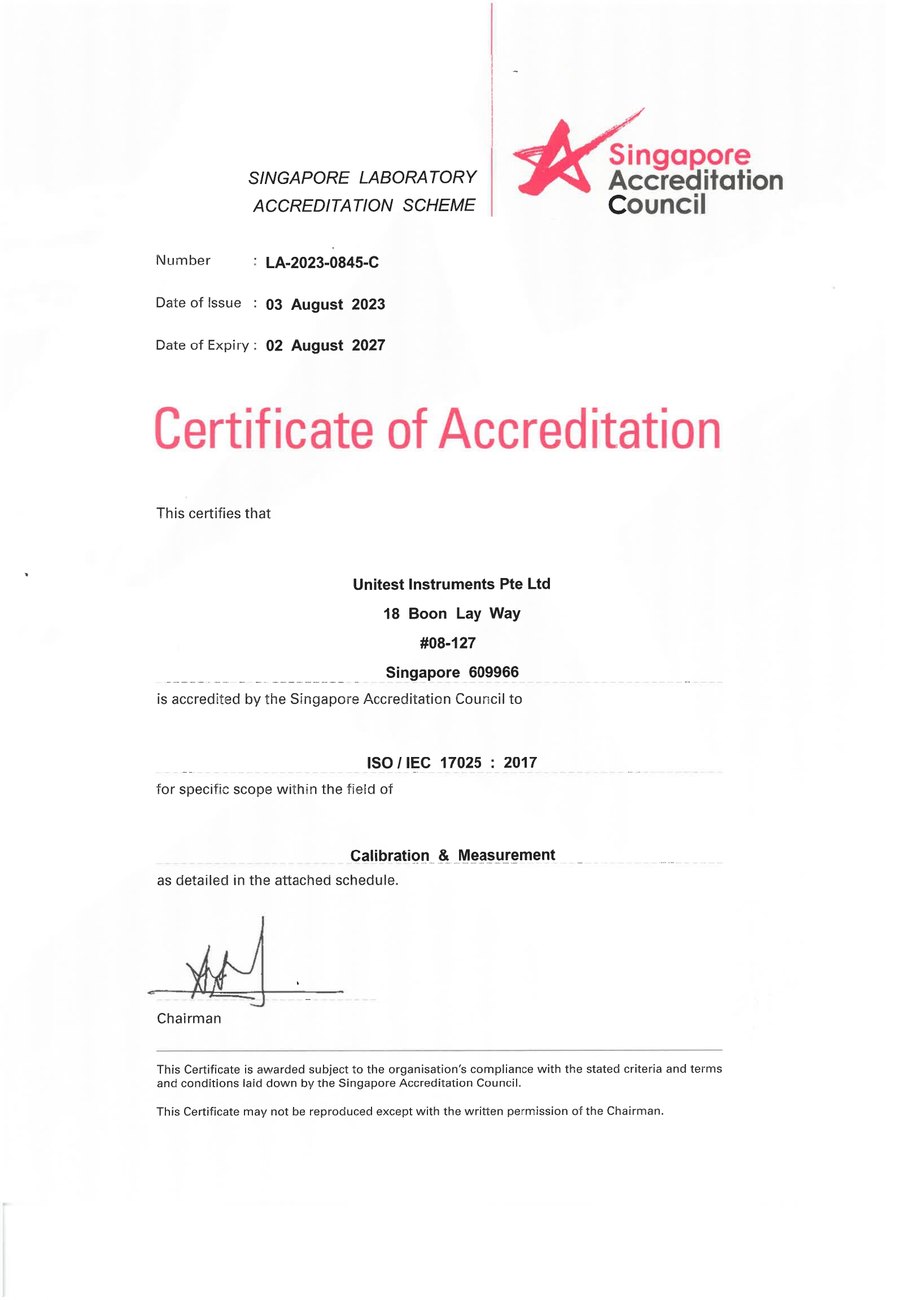
SAC-SINGLAS accredited calibration laboratory (Acc. No. LA-2023-0845-C) serving Singapore's industrial, pharmaceutical, and manufacturing sectors. All content reflects our ISO/IEC 17025 accredited scope and is reviewed by our technical calibration team.
Need pharmaceutical warehouse calibration in Singapore?
Unitest Instruments is SAC-SINGLAS accredited (Acc. No. LA-2023-0845-C) to ISO/IEC 17025. Same-week turnaround, certificates accepted by ISO 9001 auditors and HSA inspectors.