
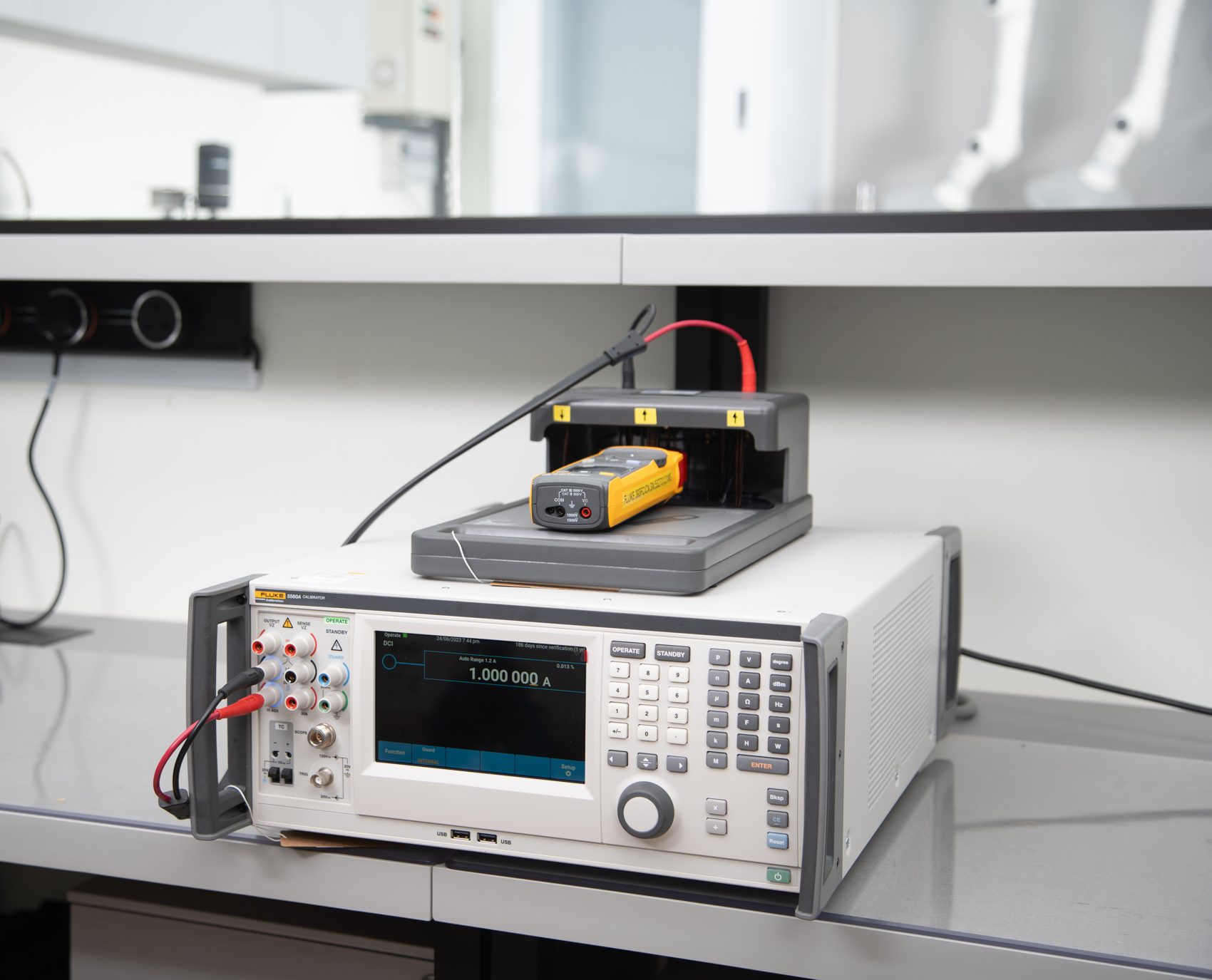
Key Takeaways
- Purified Water and Water for Injection must not exceed 1.3 µS/cm at 25°C (USP <645> Stage 1) and 500 µg/L TOC (USP <643>). These are the pharmacopoeial limits HSA auditors reference.
- All critical water monitoring instruments (conductivity sensors, TOC analysers, and temperature probes), must be formally calibrated at documented intervals by an accredited laboratory.
- HSA GMP (PIC/S-aligned) classifies uncalibrated critical instruments as a major or critical deficiency, triggering mandatory CAPA with defined closure dates.
- Temperature compensation is not optional: conductivity values must be corrected to 25°C reference temperature, which requires calibrated temperature probes in every sensor assembly.
- System qualification (IQ/OQ/PQ) of the water system is a one-time exercise; ongoing monitoring with calibrated instruments is the continuous obligation that keeps the system in a validated state.
Why Pharmaceutical Water Quality Is Uniquely Demanding
Water is the single most widely used raw material in pharmaceutical manufacturing. It appears in drug formulations, cleaning processes, steam sterilisation, and equipment rinsing. Unlike most raw materials, water is not tested in a discrete batch and released; it must meet specification continuously, in real time, at every point of use in a circulating distribution loop.
This creates a compliance challenge that is fundamentally different from typical raw material control. You cannot hold a shipment of water while waiting for laboratory results. Instead, the facility must demonstrate through a validated system design, continuous online monitoring, and calibrated instrumentation that water leaving every point of use is safe to use in manufacture, every hour of every day.
Conductivity and Total Organic Carbon (TOC) are the two primary in-process attributes monitored online precisely because they are fast, continuous, and non-destructive. Conductivity detects ionic contamination (inorganic salts, dissolved minerals) while TOC detects organic contamination from microbial metabolites, cleaning agent residues, and system leachables. Together, they provide a real-time window into water quality that point-in-time microbiological tests alone cannot.
Singapore's Regulatory Framework for Pharmaceutical Water
In Singapore, pharmaceutical manufacturing sites holding a Manufacturer's Licence from the Health Sciences Authority (HSA) must comply with the HSA Good Manufacturing Practice guidelines. These guidelines are written to be consistent with the PIC/S Guide to Good Manufacturing Practice for Medicinal Products (PE 009), which is the international harmonised GMP standard accepted across Singapore's major export markets including the EU, Australia, and the United States.
PIC/S PE 009 Annex 1 (sterile manufacturing) and the main guide chapter on production specify that water of appropriate quality must be used in manufacturing, that systems must be validated, and that all instruments used in quality-critical measurements must be calibrated and their performance maintained. These requirements flow directly into HSA's audit expectations for Singapore sites.
Which Pharmacopoeial Standard Applies?
Singapore does not publish its own water quality pharmacopoeia. Instead, HSA auditors accept compliance with the major recognised pharmacopoeias: the United States Pharmacopeia (USP), the European Pharmacopoeia (EP), and the Japanese Pharmacopoeia (JP). Most Singapore pharmaceutical manufacturers use USP as their reference standard, which means USP <645> (Water Conductivity) and USP <643> (Total Organic Carbon) are the primary test methods applied.
| Water Grade | USP Conductivity Limit (25°C) | TOC Limit (USP <643>) | Typical Use |
|---|---|---|---|
| Purified Water (PW) | 1.3 µS/cm (Stage 1) | ≤ 500 µg/L | Non-sterile manufacturing, equipment cleaning, reagent preparation |
| Water for Injection (WFI) | 1.3 µS/cm (Stage 1) | ≤ 500 µg/L | Sterile manufacturing, parenteral formulations, final equipment rinse |
| Highly Purified Water (HPW) | 1.3 µS/cm (EP reference) | ≤ 500 µg/L | Sterile preparations where WFI is specified by EP but not required for all markets |
| Potable / Drinking Water | No pharmacopoeial limit (PUB regulated) | Not pharmacopoeially specified | Feed water to purification systems, general facility use |
Note that while PUB (Singapore's Public Utilities Board) regulates potable water quality at the point of supply to the building, potable water used as feed to pharmaceutical purification systems is not itself a pharmaceutical grade. Its treatment into Purified Water or WFI is the site's responsibility under HSA GMP.
Understanding USP Conductivity Testing: Stage 1, 2, and 3
USP <645> defines a three-stage conductivity test. Most pharmaceutical facilities operating online monitoring systems use Stage 1, which is the simplest and most practical for continuous online measurement. It is important that your compliance team understands which stage your water system qualification protocol commits to, because the calibration and instrument requirements differ between online and offline measurement.
Stage 1, in-Process Online Measurement
Stage 1 sets a single temperature-specific limit based on the measured temperature at the time of the conductivity reading. At 25°C, the limit is 1.3 µS/cm. This is the stage used by online conductivity transmitters installed directly in the water distribution loop. The transmitter must have a calibrated temperature sensor integrated into the probe assembly, because temperature compensation to the reference temperature is mandatory. Raw conductivity readings without temperature correction are not compliant.
Stage 2 and 3. Laboratory Verification
Stages 2 and 3 are applied in laboratory settings when Stage 1 is inconclusive or when the system is being qualified. Stage 2 involves measuring conductivity after pH adjustment (to remove CO₂ equilibrium effects); Stage 3 is a laboratory reference measurement with strict sample handling requirements. These stages require calibrated laboratory benchtop conductivity meters rather than online transmitters. Understanding the distinction matters for your calibration scope. You need both your online sensors and your laboratory reference instruments to have current calibration certificates.
TOC Monitoring: Instrument Qualification and Calibration Requirements
Total Organic Carbon analysers used for pharmaceutical water testing must satisfy both USP <643> system suitability requirements and the facility's instrument qualification and calibration programme. These are two separate but related obligations that are frequently confused during audits.
USP System Suitability vs. Calibration
System suitability (as described in USP <643>) is an operational check the operator performs before each analytical run using two reference solutions: a sucrose standard (to test the analyser's oxidation efficiency) and a 1,4-benzoquinone standard (to test system response to hard-to-oxidise compounds). Both must achieve a response factor within USP-specified limits before the instrument can be used for compliance measurements. This check is the operator's daily assurance that the analyser is working correctly.
Calibration, however, is a separate metrological activity that establishes the relationship between the instrument's output signal and known TOC concentrations traceable to a national measurement standard. Calibration is performed by an accredited laboratory at defined intervals (typically every 6 to 12 months for pharmaceutical applications), and produces a calibration certificate with stated measurement uncertainty. System suitability does not replace calibration; both are required.
Need Accredited Calibration for Pharmaceutical Water Monitoring Instruments?
Unitest Instruments (Acc. No. LA-2023-0845-C) calibrates conductivity meters, TOC analysers, and temperature probes to HSA GMP and international pharmacopoeial standards. Certificates accepted by regulatory auditors across Singapore and major export markets.
Instruments Requiring Calibration in a Pharmaceutical Water System
A typical pharmaceutical water system. Comprising a purification skid (reverse osmosis, electrodeionisation, or distillation) and a recirculating distribution loop. Contains a range of instruments that must be included in the site's calibration programme. Facilities managers often focus only on the primary quality attributes (conductivity and TOC), overlooking the supporting sensors whose failure would compromise the entire monitoring system.
| Instrument Type | Critical Quality Attribute | Typical Calibration Interval | Calibration Standard / Method |
|---|---|---|---|
| Online conductivity transmitter | Conductivity (µS/cm) | 6–12 months | Traceable KCl standard solutions (NIST/NMC traceable) |
| Temperature probe (in conductivity sensor) | Temperature (°C) for compensation | 6–12 months (with conductivity unit) | Comparison against calibrated reference thermometer |
| Laboratory conductivity meter | Conductivity reference measurement | 12 months | Traceable KCl standard solutions |
| Online TOC analyser | TOC (µg/L) | 6–12 months | NIST SRM 1994 sucrose / certified TOC standards |
| pH meter | pH (for trend monitoring) | 12 months | pH buffer solutions traceable to NMC or NIST |
| Pressure transmitters (loop monitoring) | Distribution pressure (kPa) | 12 months | Dead-weight tester or calibrated pressure reference |
| Flow meters | Distribution flow rate (L/min) | 12 months | Gravimetric or volumetric reference method |
Understanding which instruments require accredited calibration versus in-house verification is a foundational decision in your calibration programme. For more on building a defensible calibration programme, see our guide on ISO/IEC 17025 calibration requirements, which explains the traceability chain that makes your certificates audit-proof.
Step-by-Step Compliance Process for Singapore Pharmaceutical Facilities
Achieving and maintaining compliance with HSA GMP water system requirements follows a structured lifecycle. New facilities must complete the full qualification cycle before releasing any water for pharmaceutical use; established facilities must maintain ongoing compliance through continuous monitoring and periodic requalification activities.
Step 1. Design Qualification (DQ)
Before installing the water system, document that the design meets the intended purpose. This includes selecting appropriate materials (e.g. 316L stainless steel or PVDF for distribution piping), specifying loop velocity to prevent biofilm formation (>1 m/s is the common criterion), and confirming that instrument specifications match the measurement requirements. Your DQ should identify every instrument that will require calibration as part of the validated system.
Step 2. Installation Qualification (IQ)
Verify that the installed system matches the approved design. IQ for water systems includes confirming that all instruments are of the specified make and model, that calibration tags are in place with current calibration due dates, and that calibration certificates are on file before the system is used for any pharmaceutical purpose. Auditors frequently check that IQ documentation includes the calibration status of each instrument at installation.
Step 3. Operational Qualification (OQ)
Demonstrate that the system operates within defined parameters across its operating range. For water quality monitoring, OQ testing includes challenging the system at minimum and maximum design flow rates, confirming that conductivity and TOC readings are within specification across the challenge conditions, and verifying that all alarms and interlocks function correctly. All instruments used during OQ testing must have current calibration certificates, and a calibration certificate must be filed for each instrument with the OQ report.
Step 4. Performance Qualification (PQ)
Demonstrate that the system consistently produces water of the required quality under actual production conditions. USP guidance suggests a three-phase PQ approach over approximately one year, covering seasonal variation and full operational variability. PQ is the evidence base that allows the site to release the water system for routine production use. Ongoing monitoring data collected during PQ must come from calibrated instruments. Any out-of-calibration period during PQ invalidates the data collected in that window.
Step 5. Routine Monitoring and Calibration Maintenance
After system release, the facility must maintain the validated state through continuous monitoring, periodic re-calibration of all instruments, trend analysis of quality data, and periodic requalification when changes are made to the system. Your calibration programme must track due dates for every instrument, initiate re-calibration before expiry, and manage any periods where instruments are found to be out of tolerance. Including a retrospective impact assessment on data collected since the last in-tolerance calibration.
Penalties for Non-Compliance in Singapore
HSA's enforcement approach for GMP non-compliance is risk-based. Minor deficiencies (e.g. a slightly overdue calibration that is still within tolerance) result in observations that must be addressed in a CAPA plan submitted to HSA. Major deficiencies. Including uncalibrated critical instruments, missing calibration records, or systemic failures in the water monitoring programme. Trigger mandatory CAPA with defined closure dates and may result in follow-up inspection.
Critical deficiencies, which include situations where uncalibrated instruments were used to release batches that have already been distributed, can result in product recall, GMP certificate suspension, and requirements for third-party auditing at the facility's expense before the certificate is reinstated. For export-oriented manufacturers, an HSA GMP suspension also triggers notifications to regulators in importing countries, which can disrupt export registrations and supply agreements.
Beyond HSA's direct enforcement, pharmaceutical manufacturers selling into the EU, Australia, or the US must maintain GMP compliance acceptable to those authorities. European QP (Qualified Person) certification and FDA import alert listing are additional commercial consequences that can flow from water system non-compliance identified during HSA audits.
Calibration Traceability: What Auditors Look For
A calibration certificate is only as good as the traceability chain behind it. HSA auditors and international GMP inspectors will look beyond the certificate itself to confirm that the calibration laboratory issuing the certificate holds recognised accreditation. Either SAC-SINGLAS (Singapore), UKAS (UK), A2LA (US), NATA (Australia), or another ILAC MRA signatory body. Certificates from non-accredited laboratories, or from the equipment manufacturer's service department without independent accreditation, are frequently challenged as inadequate for GMP purposes.
The certificate must state the measurement uncertainty of each calibration point, the reference standard used, and the traceability chain back to a national or international measurement standard. For conductivity, this means traceability to a certified KCl reference standard with a stated concentration uncertainty; for TOC, traceability to NIST Standard Reference Material 1994 (sucrose) or equivalent certified reference material.
For a deeper explanation of what makes a calibration certificate defensible under audit, see our article on accredited vs non-accredited calibration, which explains the specific differences auditors look for and why accreditation status matters in a regulated industry.
Frequently Asked Questions
Under USP <645>, Purified Water (PW) must not exceed 1.3 µS/cm at 25°C (Stage 1 in-process limit). Water for Injection (WFI) has the same conductivity limit at 25°C. Both HSA and international GMP inspectors reference USP limits as the accepted pharmacopoeial standard in Singapore. Your online conductivity meters must be calibrated against these limits with traceable certificates.
HSA GMP guidelines (aligned with PIC/S PE 009) require that all critical process instruments, including conductivity meters and TOC analysers used for water quality monitoring, be calibrated at defined intervals documented in your qualification protocols. Industry practice is 6–12 months for online sensors and annually for portable reference meters, with interim verification checks (e.g. conductivity standard solutions) at a frequency defined in your SOP. Calibration must be performed by an accredited laboratory such as Unitest Instruments (SAC-SINGLAS LA-2023-0845-C) to produce certificates accepted by HSA auditors.
USP <643> and EP 2.2.44 set a Total Organic Carbon (TOC) limit of 500 µg/L (500 ppb) for both Purified Water and Water for Injection. This is an alert and action limit; many facilities set internal alert limits lower (e.g. 200–300 ppb) to provide a buffer before the pharmacopoeial action limit is breached. TOC analysers must be qualified, calibrated, and verified with sucrose standard solutions traceable to NIST or equivalent national standards.
The Health Sciences Authority (HSA) is the primary regulator for pharmaceutical manufacturing in Singapore. HSA enforces GMP standards aligned with PIC/S (Pharmaceutical Inspection Co-operation Scheme) guidelines, which incorporate USP, EP, and JP pharmacopoeial water quality requirements. Facilities manufacturing medicinal products for Singapore or export markets must maintain HSA GMP certification, which includes documented water system validation, ongoing monitoring, and calibrated instrumentation.
HSA may issue a warning letter, require a corrective action and preventive action (CAPA) plan, suspend or revoke the Good Manufacturing Practice (GMP) certificate, or impose a recall of affected batches. In serious cases involving systemic failures, HSA can restrict or prohibit the sale of products manufactured during the non-compliant period. Facilities with uncalibrated critical instruments (including water monitoring equipment), face 'critical' or 'major' audit observations that trigger mandatory CAPA with defined closure timelines.
The key instruments requiring periodic calibration include: online conductivity transmitters and sensors (with temperature compensation), laboratory benchtop conductivity meters used for verification, TOC analysers (both online process units and laboratory instruments), temperature sensors used for temperature-compensated conductivity measurement, pH meters (for system trend monitoring), and pressure and flow sensors used in distribution loop monitoring. All calibration must produce UKAS, A2LA, or SAC-SINGLAS accredited certificates with stated measurement uncertainty.
System suitability (as defined in USP <643>) is a routine operational check performed by the operator using sucrose and 1,4-benzoquinone standards to verify the analyser responds correctly, it does not replace calibration. Calibration is a formal metrological process performed by an accredited laboratory that establishes the traceable relationship between the instrument's readings and known reference standards. System suitability must pass before each batch of water samples is analysed; calibration must occur at defined intervals (typically 6–12 months) with a documented accredited certificate.
In-house verification checks (using certified reference solutions) are acceptable for interim performance checks, but formal calibration for GMP purposes must be performed by a laboratory with documented traceability to national measurement standards. Either an accredited external laboratory or a well-controlled in-house calibration facility that itself holds accreditation. In Singapore, most pharmaceutical sites outsource conductivity and TOC instrument calibration to SAC-SINGLAS accredited laboratories such as Unitest Instruments to ensure HSA and international GMP inspector acceptance without challenge.
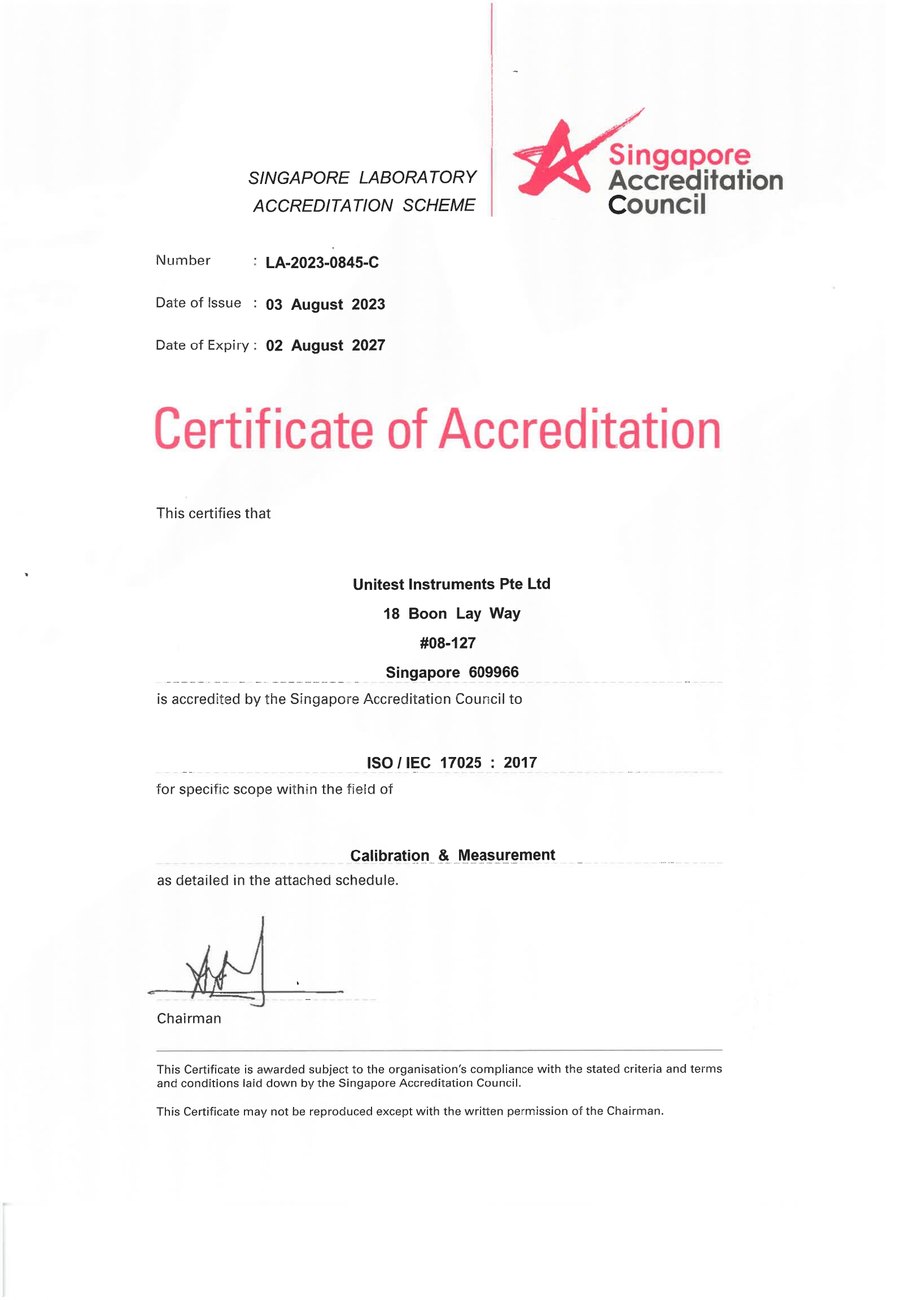
SAC-SINGLAS accredited calibration laboratory (Acc. No. LA-2023-0845-C) serving Singapore's industrial, pharmaceutical, and manufacturing sectors. All content reflects our ISO/IEC 17025 accredited scope and is reviewed by our technical calibration team.
Need pharmaceutical water instrument calibration in Singapore?
Unitest Instruments is SAC-SINGLAS accredited (Acc. No. LA-2023-0845-C) to ISO/IEC 17025. Same-week turnaround, certificates accepted by ISO 9001 auditors.